Hoi An
From the 15th to 19th centuries, Hoi An ranked among Southeast Asia's most important trading ports. Its position on the Thu Bon River drew merchants from China, Japan, India, and Europe - all leaving their mark on a town built for commerce. Walk the old quarter today and their architecture survives: the Japanese Covered Bridge, the Chinese assembly halls, merchant houses whose ground floors opened to trade while families lived above. Then the river silted. Trade shifted to Da Nang, and Hoi An slipped into the backwater obscurity that preserved it. UNESCO recognition in 1999 brought protection and tourism; the town now holds 120,000 people, its old quarter transformed into a destination where lanterns light ancient streets and tailors produce custom suits in 24 hours.
The Ancient Town
Roughly two square kilometers of preserved architecture make up old Hoi An - yellow-painted buildings, tile roofs, and wooden storefronts creating visual coherence that Vietnamese cities rarely achieve. Decline, ironically, deserves much of the credit. When trade left for Da Nang's deeper harbor, the wealth that might have modernized the town departed too. Neglect prevented demolition and allowed the 20th century to pass without erasing the 19th.
Each building tells the story of the trading culture that used it. Chinese assembly halls gathered merchants from different provinces under one roof. Japanese merchant houses date from the era when Japan still allowed foreign trade. Vietnamese tube houses extend deep into their narrow lots, showing how commerce organized community. None of this is museum. It remains a working business district, though the shops filling the ground floors now sell to tourists rather than maritime traders.
The Tailors
Custom clothing has made Hoi An famous. Shops line every street, measuring, fitting, and delivering suits and dresses within 24 hours. Visitors choose from displayed patterns; fabrics range from cheap to expensive; skill levels vary from competent to excellent. How can the prices seem so impossibly low? Vietnamese labor costs explain much of it, while craft tradition and experience account for the quality.
This is genuine industry, not tourist performance. Thousands of workers cut, sew, and finish garments for markets well beyond the visitors who photograph them. A commissioned suit serves as entry point to an industry exporting globally. Nowhere else offers comparable work at similar prices, and visitors arriving with measurements routinely leave with entire wardrobes.
The Lanterns
Silk and bamboo lamps hang from every shopfront, light the old town each evening, and appear on every postcard and Instagram feed - Hoi An's lanterns have become its defining symbol. Production remains visible in workshops where artisans bend bamboo and stretch silk by hand. On full moon nights, electric lights go dark so lantern illumination can take over, creating the atmospheric evenings that tourism promotes.
Photographs promise magic, and reality sometimes delivers. Lantern glow reflecting in the Thu Bon River, light filtering through colored silk, commercial streets transformed into something romantic - this is what lighting has always done best: create mood. Yes, the mood is manufactured. The commerce is obvious. And still the beauty persists.
The Japanese Bridge
Built in the late 16th century, the Japanese Covered Bridge connected the Japanese merchant quarter to the Chinese quarter, blending architectural styles from both cultures. It appears on Vietnamese currency today, its distinctive form serving as the symbol of Hoi An. When Japan closed to foreign trade in the 17th century, the merchants who built it departed. Their bridge stayed behind and became Vietnamese heritage.
Every visitor comes here first. Access tickets to the old town include it as a principal destination, and the interior holds a small temple worth pausing for. Outside, the photograph practically takes itself. Lovely and overcrowded, significant yet overwhelmed - the bridge embodies the paradox of preservation meeting its own success.
The Beach Town
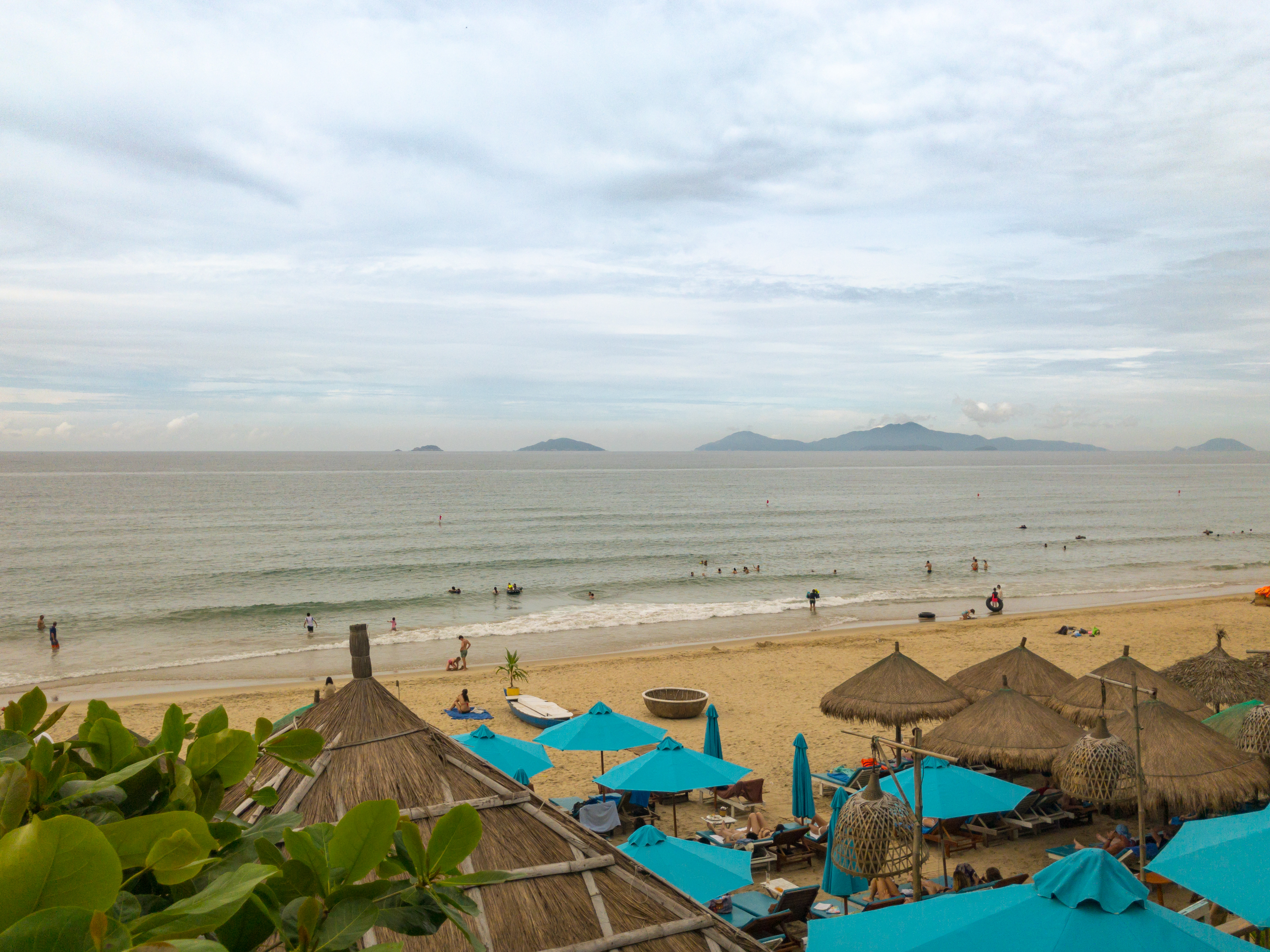
Four kilometers from the old town, the beaches of Cua Dai and An Bang offer sand and sea - the resort experience that Hoi An's streets cannot provide. Cycle the connecting path and you pass rice paddies and villages showing what Vietnam looks like beyond tourist destinations. Along the coast, hotels range from backpacker basic to international luxury, giving Hoi An accommodation options across every budget.
Beaches turn Hoi An into a complete destination rather than a day-trip from Da Nang. Visitors spending a week can split time between cultural exploration and coastal relaxation, a combination that keeps them longer than either element alone would justify. But development threatens the surrounding rice fields. The tourism that preservation enabled may yet destroy the very context preservation requires.
From the Air
Hoi An (15.88N, 108.32E) sits on the Thu Bon River in central Vietnam, 30km south of Da Nang. Da Nang International Airport (VVDN/DAD) is the nearest airport, with one runway 17L/35R (3,048m). No airport serves Hoi An directly. Look for the Thu Bon River and its mouth at Cua Dai as visible landmarks. Along the river, the old town forms a compact cluster. Beach developments line the coast to the east, while flat coastal plain extends inland. Expect tropical monsoon weather - wet from September through December, dry from February through July. Typhoon season runs September to November, sometimes bringing severe conditions. Between Hoi An and Da Nang, the Marble Mountains stand out clearly.