Hokke-ji: The Empress's Nunnery and Its Eleven-Faced Goddess
The statue's right foot is the detail that stops you. The first toe lifts slightly, as if the figure is about to take a step forward. Carved from a single piece of Japanese kaya wood in the first half of the ninth century, the one-meter-tall Juichimen Kannon -- the Eleven-Faced Avalokitesvara -- at Hokke-ji is designated a National Treasure and shown to the public only on certain days in spring and autumn. Temple legend claims it was sculpted in the likeness of Empress Komyo herself by a Buddhist artist from Gandhara, though scholars date it to the early Heian period, a century after the empress lived. No gold leaf, no lacquer -- just ultramarine paint on the eyebrows, vermilion on the lips, white on the eyes, and copper plates for the crown and bracelets. The rest is bare kaya wood, its natural grain meant to be seen. This statue has survived everything Hokke-ji has endured: siege, earthquake, fire, abandonment, and revival.
From Mansion to Nunnery
The land where Hokke-ji stands was originally the private residence of Fujiwara no Fuhito, one of the most powerful statesmen of early eighth-century Japan. After his death, his daughter Empress Komyo inherited the property and converted it into the Imperial Palace. Then, in 741, as Japan recovered from a devastating smallpox epidemic that had swept through the country between 735 and 737, Emperor Shomu issued a decree: a Buddhist monastery and nunnery would be established in every province. Todai-ji became the head monastery for this national network; Hokke-ji, converted from a palace to a temple by Komyo in May 745, became the head of all the provincial nunneries. The name 'Hokke-ji Temple' first appears in historical records in 747. Despite its imperial connections, construction took decades -- the government office responsible for building Hokke-ji was not dissolved until 782. Archaeological excavations reveal the temple occupied an entire city block of Heijo-kyo, three by two cho in size, bordering the Crown Prince's palace on the Heijo Palace grounds.
Fire, Siege, and Shaking Ground
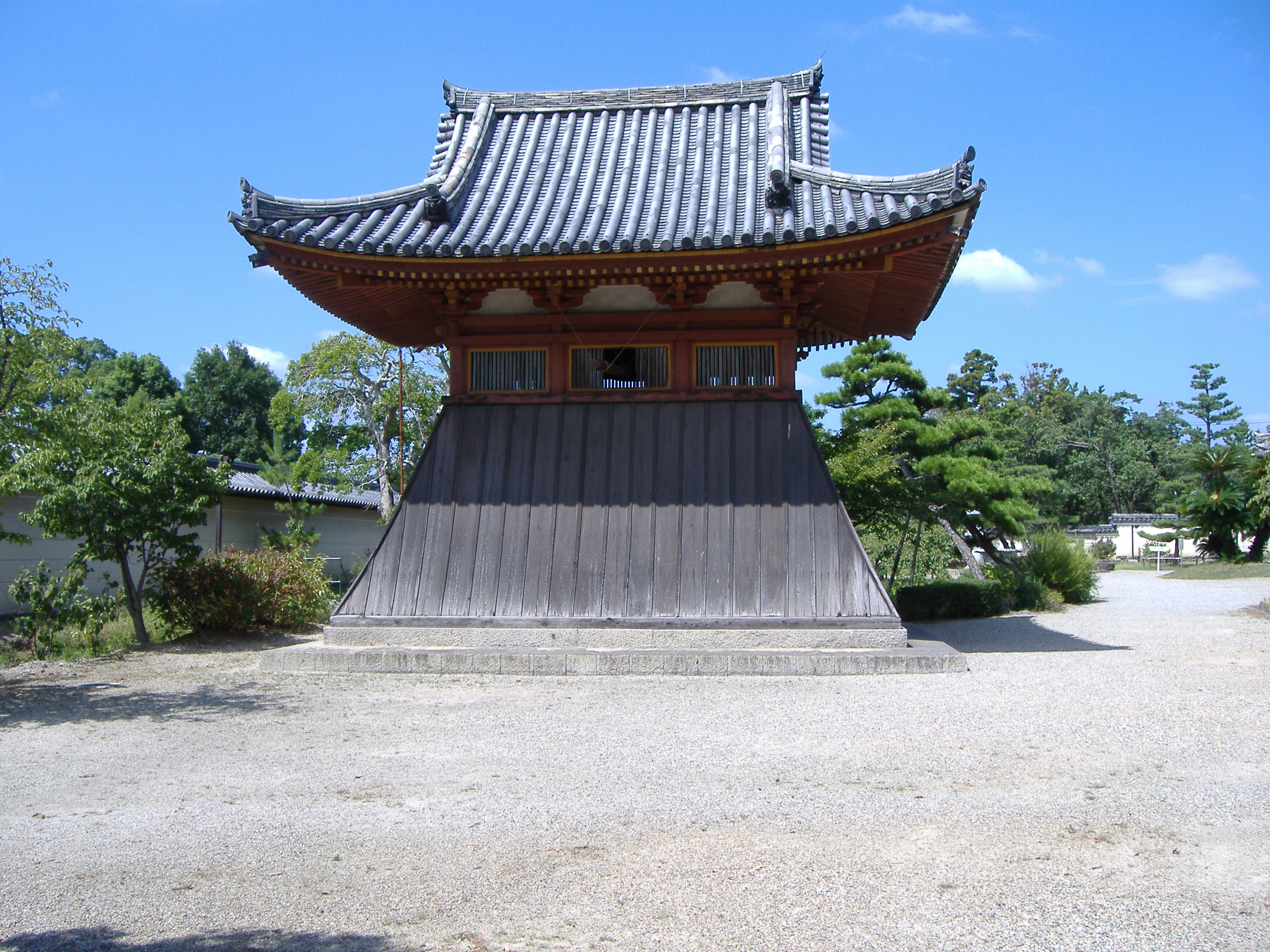
Hokke-ji's history reads like a catalog of destruction. After the capital relocated to Heian-kyo, the temple gradually declined through the Heian period. In 1180, it was damaged during Taira no Shigehira's Siege of Nara -- the same assault that destroyed much of the city's Buddhist heritage. The monk Chogen restored it in 1203. The reformer Eison rebuilt it again toward the end of the Kamakura period, converting the temple to the Shingon Ritsu sect. Then came the Sengoku period: military conflicts burned Hokke-ji in 1499 and again in 1506. The 1596 Keicho-Fushimi earthquake inflicted severe damage. The current Main Hall and South Gate were rebuilt in 1601 by Toyotomi Hideyori and his mother, Lady Yodo; the bell tower followed in 1602. The East Pagoda held on until the massive 1707 Hoei earthquake finally brought it down. Each catastrophe stripped away another layer of the original temple, yet each time someone rebuilt.
The Hidden Garden and the Oldest Pure Land
In the southwestern corner of the original temple grounds stood a sub-temple called the Amida Jodo-in, which according to the Shoku Nihongi housed an eighteen-foot-tall Amida triad as its central image. It was here that the first anniversary memorial services for Empress Komyo were held in 761. Archaeological work at the Amida Jodo-in site has uncovered the remains of a Pure Land garden with a pond -- the oldest known garden of this type in Japan. Pure Land gardens were designed as earthly representations of Amida Buddha's Western Paradise, places where the boundary between this world and the next was meant to dissolve. The discovery of this garden at Hokke-ji pushed the history of Japanese Pure Land garden design back further than previously known. The precincts of Hokke-ji, including the Amida Jodo-in remains, were designated a National Historic Site in 2001, with expanded protections added in 2015. The garden site itself is protected as a Nationally Designated Place of Scenic Beauty.
Independence and the Komyo Sect
During the Edo period, Hokke-ji regained its status as a monzeki nunnery -- a convent headed by women of imperial blood -- when Emperor Go-Mizunoo's adopted daughter Takanori took holy orders there. That imperial connection ran through the temple's veins from the beginning: founded by an empress, guarded by generations of aristocratic nuns. In 1999, Hokke-ji made a decisive break with its medieval identity. The temple left the Shingon Ritsu sect entirely and established itself as the head temple of a new independent denomination: the Komyo sect, named after the empress who founded it nearly thirteen centuries earlier. The cycle came full circle. Today, the temple houses numerous National Treasures and Important Cultural Properties, but the emotional center remains the Juichimen Kannon -- the bare kaya wood figure with ultramarine eyebrows, vermilion lips, and that right foot poised mid-step, as if the goddess might walk off her lotus pedestal and into the garden that Empress Komyo once knew.
From the Air
Located at 34.69°N, 135.80°E in the Hokkeji neighborhood of Nara, immediately east of the Heijo Palace site. The temple is a compact compound within the residential fabric of western Nara. From altitude, it is identifiable by its traditional tile-roofed buildings and garden spaces adjacent to the large open area of the palace ruins. Osaka Itami Airport (RJOO) is approximately 30 km west-northwest. Kansai International Airport (RJBB) is roughly 60 km southwest. Yamato-Saidaiji Station on the Kintetsu Line is the nearest rail station, about 1 km to the west. Best viewed at 2,000-3,000 feet AGL in combination with the neighboring Heijo Palace site.