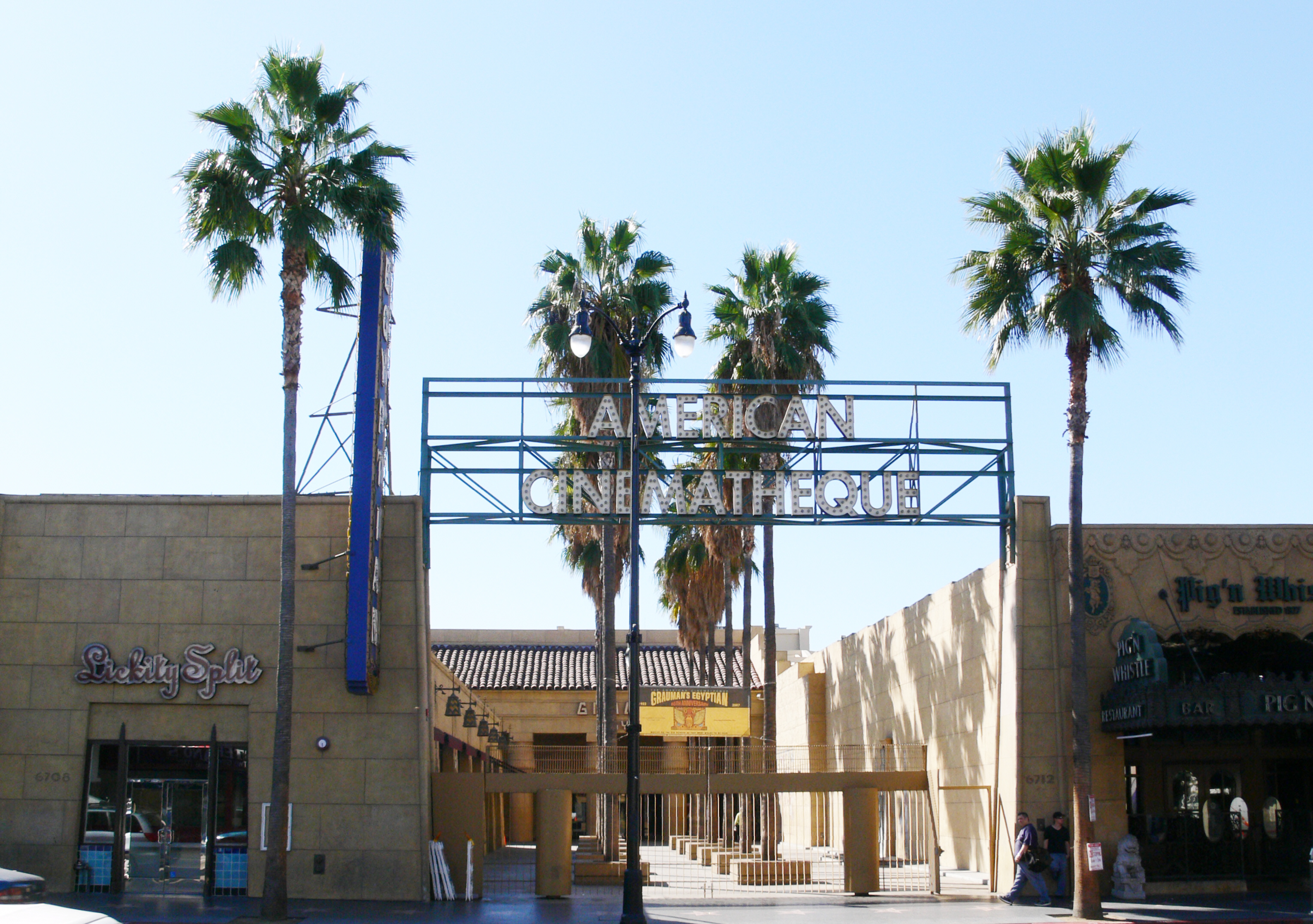
Hollywood Boulevard Commercial and Entertainment District
In the exclusive back room of Musso and Frank Grill, F. Scott Fitzgerald, Ernest Hemingway, William Faulkner, and Dorothy Parker once gathered to drink, write, and wait to see if deals would materialize at the Writers Guild across the street. This twelve-block stretch of Hollywood Boulevard, running from the 6200 to the 7000 blocks, became the nerve center of the American film industry between 1915 and 1939. Every major studio, the most powerful talent agencies, and the grandest movie palaces all clustered here, their architects competing to outdo each other in Classical Revival grandeur and Art Deco theatricality.
When Three Centers Became One
The district emerged from three separate commercial hubs that expanded until they merged into a single pedestrian-oriented neighborhood. Real estate syndicates, flush with studio profits, became patrons to Los Angeles's finest architects: Walker & Eisen, John C. Austin, Parkinson & Parkinson. The results still line the boulevard: the Mediterranean Revival Hillview Apartments from 1919, Los Angeles's first artist high-rise; the Gothic-Art Deco hybrid of the Equitable Building; the theatrical Hollywood Regency of the Max Factor Salon, where the legendary makeup artist transformed movie stars.
Palaces of Fantasy
The theaters made the street legendary. Sid Grauman's Egyptian Theatre opened in 1922 and hosted the world's first movie premiere. His Chinese Theatre followed in 1927, instantly famous for its celebrity handprints. The Pantages opened in 1930, a 2,700-seat Art Deco masterpiece. Howard Hughes bought the Pantages after the 1949 Paramount Decree forced studios to divest their theater chains. The El Capitan began as a playhouse in 1925 before Paramount converted it to a movie palace in 1942; Disney renovated it in 1991 as their flagship venue, where the company still premieres its films today.
Rise and Decline
The district thrived through the 1950s. At the nearby El Capitan Theatre in 1952, Richard Nixon delivered his famous Checkers speech to a television audience of 60 million. Louis Armstrong, Ella Fitzgerald, Art Tatum, and Oscar Peterson drew a crowd of nearly 20,000 at the Hollywood Bowl in 1956. But the 1960s brought decline. Radio City, the anchor of Hollywood and Vine, was demolished in 1964. The Knickerbocker Hotel closed in 1970 and became senior housing. By 1980, the once-glamorous Garden Court Apartments had been abandoned to squatters who nicknamed it "Hotel Hell."
Preservation and Revival
Hollywood Heritage formed in 1980 to save what remained. In 1985, the entire district joined the National Register of Historic Places with 63 contributing properties. The 1994 Northridge earthquake delivered another blow, condemning the Hollywood Brown Derby and damaging the Fox Theater. But revival came with the $430 million Hollywood and Highland Center in 2001, built on the site of the legendary Hollywood Hotel and anchored by the 3,600-seat Kodak Theatre (now Dolby Theatre), the new home of the Academy Awards.
Still the Center of Hollywood
Today the district remains a working entertainment hub. Film premieres regularly shut down the boulevard outside the Chinese and El Capitan theaters. Jimmy Kimmel Live broadcasts daily from the renovated Masonic Temple. The Walk of Fame unveils two new stars each month. Netflix restored the Egyptian Theatre in 2023, removing decades of modifications to reveal the original 1922 design. The City of Los Angeles has proposed comprehensive streetscape renovations that would double pedestrian space and restore the Walk of Fame. A century after its golden age, Hollywood Boulevard still draws the world.
From the Air
Located at 34.102N, 118.333W, the district spans twelve blocks of Hollywood Boulevard. Visible landmarks include the Chinese Theatre's distinctive forecourt, the Hollywood and Highland complex (Ovation Hollywood), and the Dolby Theatre. The Hollywood Sign is visible to the northeast. Nearby airports: KBUR (Bob Hope Airport) 6nm north, KLAX (Los Angeles International) 12nm southwest. The Hollywood/Highland and Hollywood/Vine Metro stations serve the district.