Holmenkollen Ski Museum
Four thousand years of human history, and through almost all of it, someone in Scandinavia was skiing. That continuity is the revelation at Holmenkollen Ski Museum, tucked beneath the swooping concrete of Oslo's famous ski jump. Founded in 1923 by architect Hjalmar Welhaven, who donated his private collection of antique skis to get it started, this is the oldest museum in the world devoted to the sport that Norwegians consider less a pastime than a birthright.
From Stone to Snow
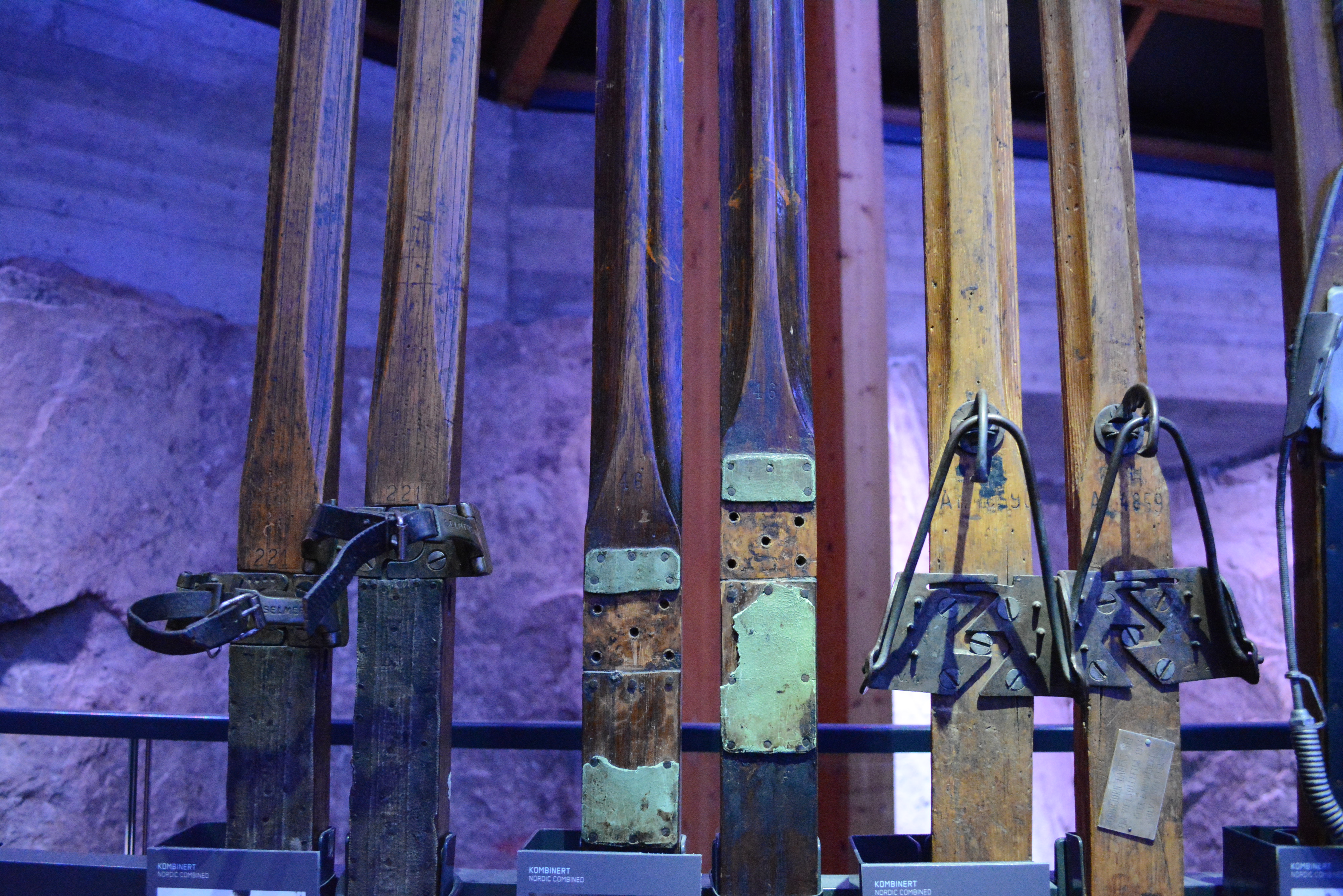
The collection begins not with wood and wax but with rock. Stone Age carvings, roughly four thousand years old, depict human figures on what are unmistakably skis -- long, narrow shapes bound to feet, gliding across terrain that Ice Age glaciers had only recently released. From there the museum walks visitors forward through the Viking Age, when skis were tools of survival rather than sport, essential for hunting and winter travel across Norway's interior. The progression from crude planks to refined equipment is displayed with the care of an art gallery, each pair of skis representing a chapter in the long negotiation between humans and Nordic winters.
Heroes of the Ice
The museum's most prized exhibits connect skiing to something grander than recreation: the polar expeditions of Fridtjof Nansen and Roald Amundsen. Nansen's 1888 crossing of Greenland on skis proved that the frozen interior was traversable, a feat that made him a national hero and demonstrated skiing's potential as serious exploration technology. Amundsen, who reached the South Pole in 1911, relied on Norwegian skiing expertise as a decisive advantage over his British rival Robert Falcon Scott. The equipment on display -- battered, stained, impossibly real -- collapses the distance between a climate-controlled museum in Oslo and the white emptiness of Antarctica.
A Museum Finds Its Mountain
Welhaven's collection originally lived in a building in the Oslo neighborhood of Frognerseteren, far from the ski jump it would eventually call home. When Holmenkollbakken was rebuilt in 1951, the museum migrated to new premises at its base, a move that married the historical artifacts to a living monument of competitive skiing. The jump itself, perched on a ridge above Oslo with views stretching across the Oslofjord, has been rebuilt multiple times since the first ski jumping competition was held here in 1892. Today the museum and the jump form a single destination, run by Skiforeningen, the association responsible for sports and recreational activities throughout Holmenkollen National Park.
The View from Holmenkollen
Visiting the museum means confronting the jump itself, and the vertigo it inspires is part of the experience. The tower rises above the Oslo skyline, a landmark visible from nearly anywhere in the city. On competition days, tens of thousands gather on the hillside below -- the Holmenkollen Ski Festival, held annually since 1892, is one of the world's oldest winter sporting events. But even on a quiet Tuesday, the museum and its setting make the case that skiing is woven into Norwegian identity at a level deeper than sport. It is transport, survival, exploration, and play, all bound together on two narrow strips of shaped wood.
From the Air
Located at 59.96N, 10.67E on the Holmenkollen ridge above Oslo. The ski jump tower is a prominent landmark visible from across the city and the Oslofjord. Nearest major airport is Oslo Gardermoen (ENGM), approximately 40 km northeast. Oslo Fornebu (former airport site) is about 10 km southwest. Best viewed from 2,000-3,000 feet AGL approaching from the south over the fjord.