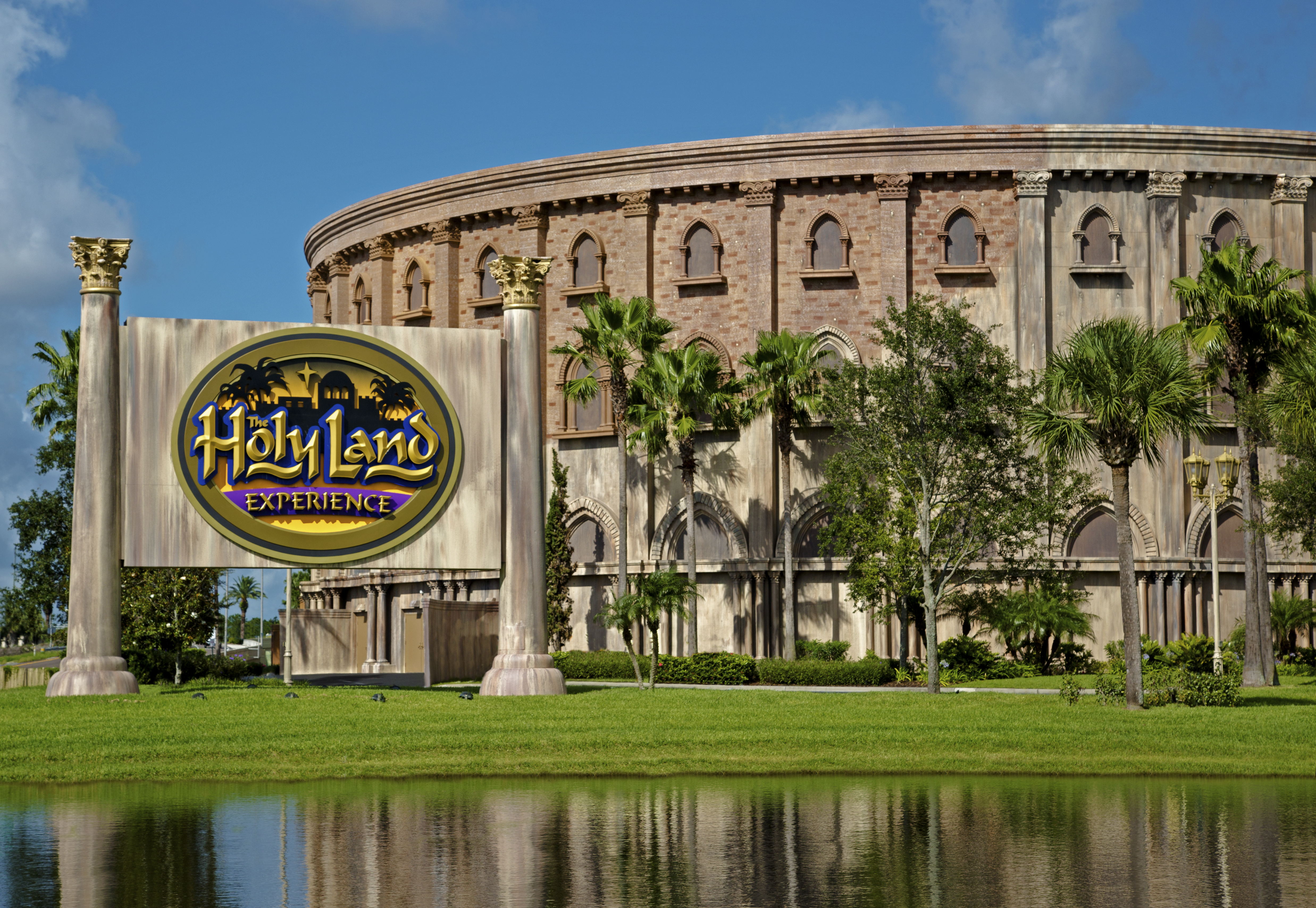
Holy Land Experience
For nearly two decades, a stretch of Conroy Road in Orlando, Florida, offered something no other address in America could: a walk through first-century Jerusalem without leaving Orange County. The Holy Land Experience was not a theme park in the conventional sense -- there were no roller coasters, no mascots, no churro carts. Instead, visitors passed through a recreation of the ancient city's architecture, complete with a scale model of Jerusalem as it appeared in 66 A.D., a Scriptorium housing one of the world's largest collections of biblical manuscripts, and daily theatrical reenactments of the crucifixion and resurrection. It was earnest, ambitious, and utterly singular -- a place where faith and spectacle occupied the same footprint.
A Pastor's Dream in the Theme Park Capital
The park began with Marvin Rosenthal, a Baptist pastor of Russian Jewish descent who founded the missionary organization Zion's Hope. Rosenthal purchased land in Orlando in 1989, and after more than a decade of planning and fundraising, the Holy Land Experience opened its gates in February 2001. Rosenthal served as chief operating officer until 2005. From the start, the park occupied an unusual position in Orlando's constellation of attractions -- situated just miles from Walt Disney World and Universal Studios, yet operating as a registered nonprofit and conducting weekly church services and Bible studies for the general public. The park featured approximately 43 exhibits, including the Wilderness Tabernacle, the Temple of the Great King, and elaborate gardens surrounding a central lake. It was part museum, part church, part theatrical venue -- and its ambition was nothing less than transporting visitors two thousand years backward in time.
Ancient Scrolls and Modern Controversy
In August 2002, the Scriptorium museum opened within the park, housing the Van Kampen Collection of biblically related artifacts -- the fourth largest of its kind in the world. Founded in 1986 by Robert and Judith Van Kampen, the collection included ancient scrolls, manuscripts, and early printed editions of the Bible that had previously been displayed at a research library in Grand Haven, Michigan. The collection's relocation to Orlando gave the park genuine scholarly weight. But the Holy Land Experience also attracted criticism. In 2001, the Jewish Defense League accused the park of proselytizing to Jewish visitors, arguing that its structure as a Christian missionary organization made it a vehicle for conversion. Rosenthal denied the accusation, though similar concerns were voiced by other Jewish leaders. A separate legal battle over property taxes ended in 2005 when a judge ruled in the park's favor, granting tax exemption based on its religious mission and nonprofit status. The ruling cost Orange County roughly $300,000 per year in lost revenue, but required the park to offer one free admission day annually.
The TBN Era
By 2007, the Holy Land Experience was approximately $8 million in debt. That June, its board sold the property to the Trinity Broadcasting Network for an estimated $37 million. TBN, the world's largest religious broadcaster, envisioned transforming the site into a combined theme park, Central Florida broadcasting facility, and movie studio for producing Christian films. The transition was turbulent. Within weeks, board president Tom Powell resigned. Between 50 and 100 employees were cut from the payroll that October. But TBN invested heavily in renovations, adding new landscaping, restaurants, theaters, and a children's area called Smile of a Child Adventure Land. The crown jewel of the TBN era was the 2,000-seat Church of All Nations auditorium, which opened in 2012. The space hosted live Passion reenactments, concerts, church services, and tapings of TBN's flagship television show, Praise the Lord. For a time, it seemed like the park had found a sustainable second act.
Demolition of Jerusalem
It had not. Revenue declined steadily through the late 2010s, and in February 2020, the park announced it would lay off 118 employees -- most of its remaining staff -- and end all theatrical productions, restaurants, and retail operations. The timing was devastating: the closures came just weeks before the COVID-19 pandemic would have shuttered the park anyway. On August 2, 2021, the property was sold to AdventHealth for $32 million. The hospital network announced plans to redevelop the land for a new emergency department, hospital, and office building. Demolition began on April 28, 2023. The colosseum and the Scriptorium -- the last structures standing -- came down on June 12, 2023. In a city famous for building fantasy worlds, the Holy Land Experience proved that even sacred ground follows the same Orlando lifecycle: dream it, build it, and when the numbers stop working, tear it down and build something else.
From the Air
Located at 28.496N, 81.433W in western Orlando, Florida, adjacent to Conroy Road and near the intersection of Interstate 4 and the Florida Turnpike. The former park site is now being redeveloped as an AdventHealth hospital campus. Recommended viewing altitude 2,000-3,000 feet AGL. Nearby airports: Orlando Executive Airport (KORL) approximately 7nm east, Orlando International Airport (KMCO) approximately 12nm southeast. The site sits in the dense corridor of tourist attractions along International Drive, though it was always slightly removed from the main theme park cluster.