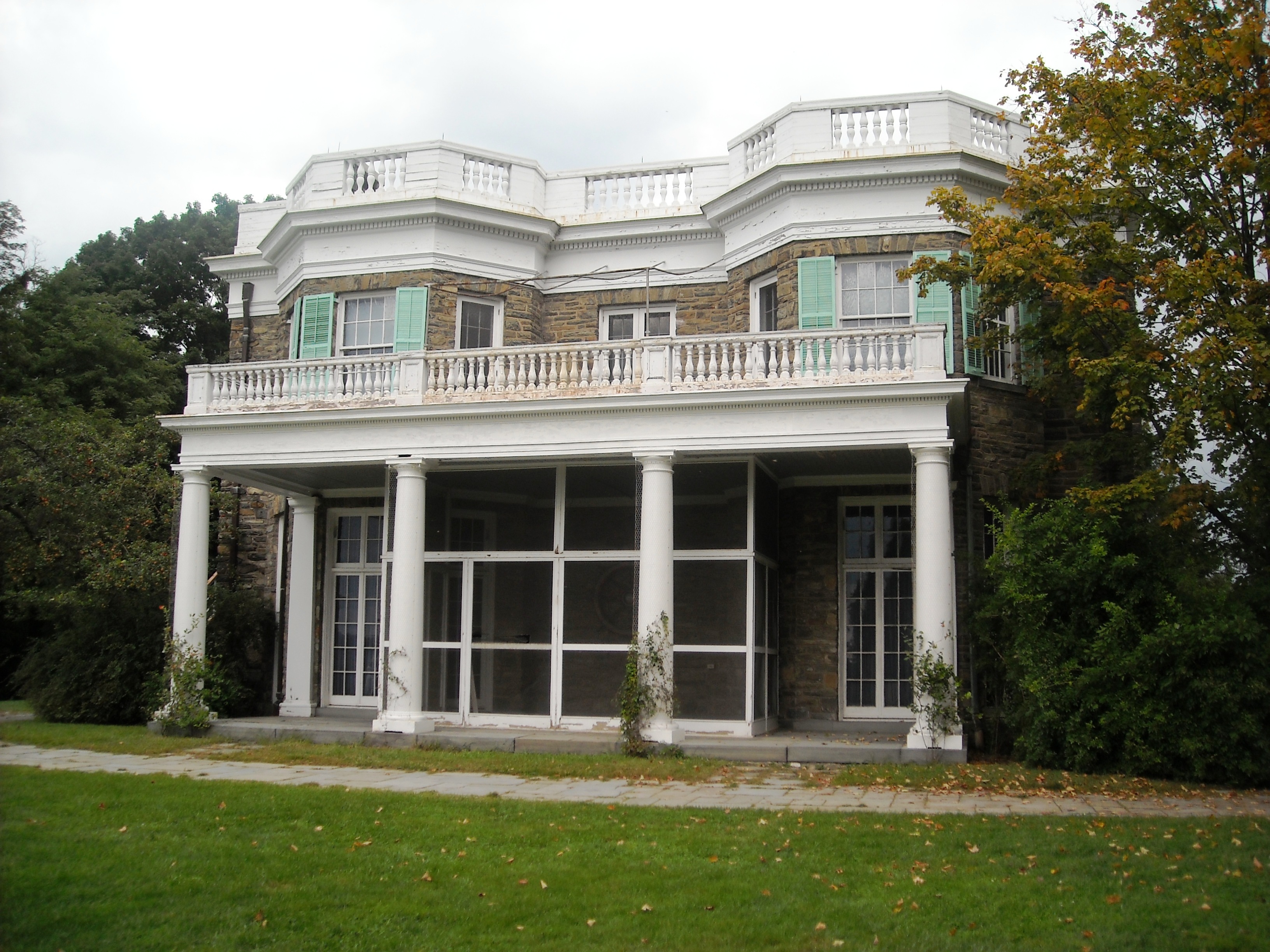
Home of Franklin D. Roosevelt National Historic Site
Four hundred thousand trees. That is how many Franklin D. Roosevelt planted on his family's Hudson Valley estate between 1911 and his death in 1945 -- a private act of optimism from a man who spent his public life steering a nation through depression and war. Springwood, the estate in Hyde Park, New York, was not merely Roosevelt's home. It was his birthplace, his refuge from polio, his election night command post, and ultimately the ground where he asked to be buried. No American president was more deeply rooted in a single piece of land.
Before the Roosevelts
The story of Springwood begins long before the Roosevelt name was attached to it. In 1697, the English Crown awarded the Great Nine Partners Patent, a vast land grant stretching from the Hudson River to the Connecticut border, to nine New York City businessmen who had purchased it from the Wappinger people. The parcel along the river was divided into nine "Water Lots," and Springwood sits on the one granted to William Creed. The central portion of the present-day house likely dates to around 1800, when a Federal-style farmhouse was erected on the site. In 1845, New York merchant Josiah Wheeler bought the property and gave it an Italianate makeover, expanding it to 15 rooms, adding a three-story tower and piazzas that stretched the length of the home. It was a gentleman's country seat, handsome but unremarkable, waiting for the family that would make it historic.
The Roosevelt Stamp
James Roosevelt, Sr. purchased the estate in 1866 for $40,000, a staggering sum when textile workers earned less than a dollar a day. An avid horse breeder, James prized the property's stables and track. His son Franklin was born in the second-floor tower bedroom in 1882. After marrying Eleanor in 1905, Franklin brought his bride home to live under his mother Sara's formidable roof. In 1915, mother and son undertook a dramatic transformation. Working with the firm Hoppin and Koen, they more than doubled the house, adding two fieldstone wings of Roosevelt's own design, a new tower, and a third story with a flat roof. The clapboard gave way to stucco, the porch to a balustraded stone terrace with a columned portico. Inside, the redesign served Roosevelt's obsessive collecting: a personal library of 14,000 volumes, over 2,000 naval prints, 300 bird specimens, 200 ship models, and a staggering 1.2 million stamps.
The Summer White House
From his inauguration on March 4, 1933, to his death on April 12, 1945, Roosevelt made nearly 200 visits to Springwood, transforming it into a second seat of government. The guest list reads like a who's who of mid-century power: Winston Churchill strategized here; King George VI and Queen Elizabeth made the first visit of a reigning British monarch to the United States when they were hosted at Springwood in June 1939, accompanied by Canadian Prime Minister Mackenzie King. Dutch Queen Wilhelmina, Princess Juliana, and Princess Beatrix sought refuge here from war-torn Europe, as did Crown Prince Olaf and Crown Princess Martha of Norway. On the eves of three of his four presidential elections, Roosevelt retreated to Springwood with his inner circle. When the returns confirmed victory, he would step onto the front terrace to deliver his victory speech to supporters gathered on the lawn below.
A Private World Within
Walking through Springwood today reveals the layered textures of a complex family. The entrance hall is hung with naval paintings and boyhood bird specimens. The living room and library overflow with the physical evidence of Roosevelt's magpie mind. The music room, known as the Dresden Room for its porcelain, holds Chinese lacquerware acquired by Sara's father, who made his fortune in the China trade. Autographed photographs of famous guests crowd the piano. After Roosevelt contracted polio in 1921, the family reconfigured the bedrooms: Eleanor and Franklin occupied separate rooms in a new wing, while Sara moved into what had been a sitting room. A manually operated trunk elevator in the corner behind the main staircase became the wheelchair-bound president's quiet means of moving between floors. Sara held court each morning in the Snuggery, a cluttered parlor carved from the old South Parlor during the 1915 renovation.
Return to the Rose Garden
Roosevelt's last visit to Springwood came in the final week of March 1945, barely two weeks before his death in Warm Springs, Georgia. At his own wish, he was buried near the sundial in the Rose Garden on April 15, 1945. Eleanor was laid beside him after her death in 1962. Their Scottish Terrier Fala, perhaps the most famous presidential pet in history, and a German Shepherd named Chief are interred nearby. Roosevelt had already begun giving the estate to the nation. In 1941, he dedicated his presidential papers and a new library building on the property to the public, creating the first presidential library. In 1943, he donated the estate itself, with the family retaining lifetime usage rights. The transfer to the National Park Service was completed on November 21, 1945. Today, the site covers more than a square mile of Hudson Valley landscape, those 400,000 trees now a mature canopy sheltering the home of the man who planted them.
From the Air
Springwood is located on the east bank of the Hudson River in Hyde Park, New York (41.767N, -73.936W). From the air, look for the estate's distinctive tree-covered grounds along Route 9, approximately 80 miles north of New York City. The FDR Presidential Library is adjacent. Nearby airports include KPOU (Dutchess County Airport, 5nm south) and KSWF (Stewart International, 20nm south). The Hudson River provides excellent visual navigation. Best viewed at 1,500-2,500 feet for estate detail.