Homeboy Industries
On a patch of East Los Angeles, a Jesuit priest decided that what his community needed wasn't more policing or more sermons — it needed more jobs. Father Greg Boyle founded Homeboy Industries in 1992 out of Dolores Mission Parish in Boyle Heights, armed with a motto that became a rallying cry: "Nothing stops a bullet like a job." Today it stands as the largest gang intervention, rehabilitation, and re-entry program in the world.
A Bet on People Others Had Given Up On
Boyle Heights in the late 1980s was one of the most gang-affected neighborhoods in Los Angeles. Father Greg Boyle, known simply as Father G, began working with gang members and their families at Dolores Mission — then the poorest Catholic parish in the Archdiocese of Los Angeles. He watched young men die, officiated funerals for hundreds of them, and concluded that poverty and lack of opportunity, not moral failure, drove most into gang life.
His solution was work. He started with a bakery — Jobs for a Future — that hired gang members from rival factions and put them on the same production line. The symbolism was intentional. If sworn enemies could make bread together, maybe they could build something together. That bakery became the seed of Homeboy Bakery, and Homeboy Bakery became the foundation of what would grow into Homeboy Industries.
Thirteen Businesses, One Mission
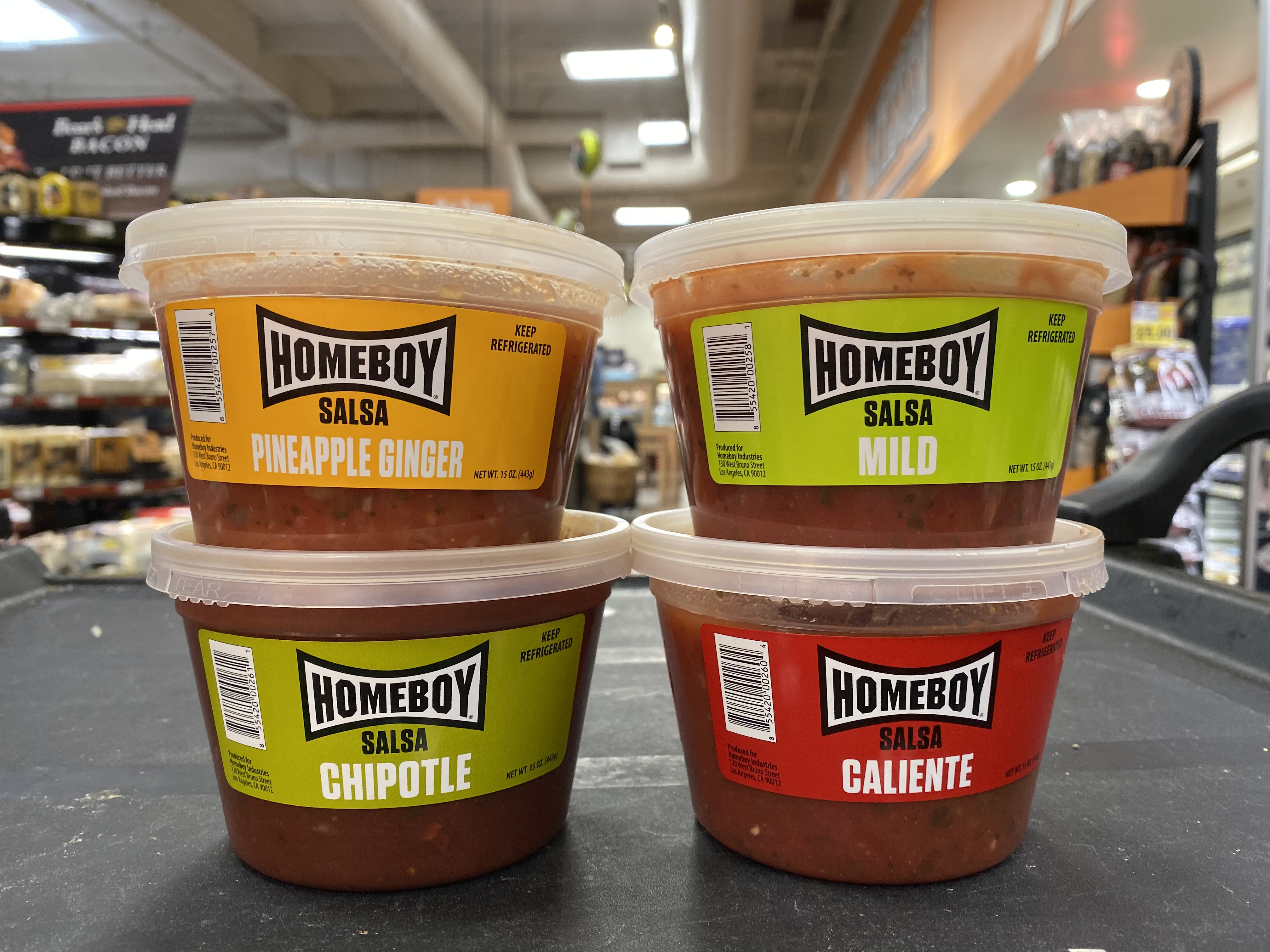
Homeboy Industries now operates thirteen social enterprise businesses that serve both as job training programs and as revenue-generating operations. The lineup includes Homeboy Bakery, Homegirl Café and Catering, Homeboy Silkscreen and Embroidery, Homeboy Farmers Markets, Homeboy Diner (inside Los Angeles City Hall), Homeboy Grocery, and more.
Each business exists primarily as a training vehicle. Employees — called trainees — come from prison releases, probation programs, and self-referrals. They spend 18 months moving through the organization's social enterprise businesses while simultaneously accessing the wraparound services that are Homeboy's real differentiator: mental health counseling, substance abuse recovery, legal services, domestic violence support, and curriculum-based education. The goal is not just a paycheck but a path.
The organization employs between 200 and 235 people at any given time and operates on an annual budget of roughly $14.7 million. About a third of that comes from its social enterprises; the rest comes from donations and grants.
The Tattoo Removal Program
One of Homeboy's most visible and consequential services is its tattoo removal program. Many trainees carry visible gang tattoos on their faces, necks, and hands — markings that can immediately disqualify them from jobs, trigger police attention, and mark them as targets in hostile neighborhoods.
Homeboy's clinic uses laser removal technology and has performed hundreds of thousands of individual procedures. The program is offered free of charge to anyone — including people not enrolled in other Homeboy services. It is, by any measure, one of the most practical forms of second-chance work: erasing the physical evidence of a past life so that future possibility can take its place.
The Global Homeboy Network
What began as one priest's response to one community's crisis has become a model exported worldwide. The Global Homeboy Network connects more than 400 organizations across the United States and around the world that have adapted Homeboy's approach to their own contexts — from Ireland to Australia to Honduras.
Father Boyle's 2010 book, Tattoos on the Heart, brought Homeboy's story to a national audience and helped fuel donations and speaking engagements that sustain the operation. A second book, Barking to the Choir, followed in 2017. Both articulate the same core belief: that people are worth more than the worst things they have ever done, and that compassion — not punishment — is the more effective long-term public safety strategy.
Every year Homeboy Industries serves roughly 10,000 people. Not all of them complete the full program. Not all of them stay out of trouble. But the organization's recidivism data consistently outperforms the California state average, which is itself a powerful argument.
A Landmark in Boyle Heights
Homeboy Industries' headquarters sits at 130 West Bruno Street in Boyle Heights, a neighborhood that has itself become a contested symbol of Los Angeles's rapidly changing demographics. The organization is not immune to the pressures around it, but it remains embedded in the community that created it — a visible, functioning rebuttal to the idea that some people are beyond help.
From the air, the Boyle Heights grid looks like thousands of other dense urban neighborhoods. What distinguishes this one is harder to see: the bakery operating at dawn, the tattoo removal clinic filling up by midmorning, the trainees doing something harder than any of that — learning to believe that their lives can go a different direction than everyone once assumed.
From the Air
Homeboy Industries is located in Boyle Heights, just east of downtown Los Angeles. From the air, the neighborhood sits immediately east of the Los Angeles River, with the downtown skyline visible to the west. The organization's headquarters at 130 West Bruno Street is part of a dense, low-rise urban grid that stretches from the river toward East LA.