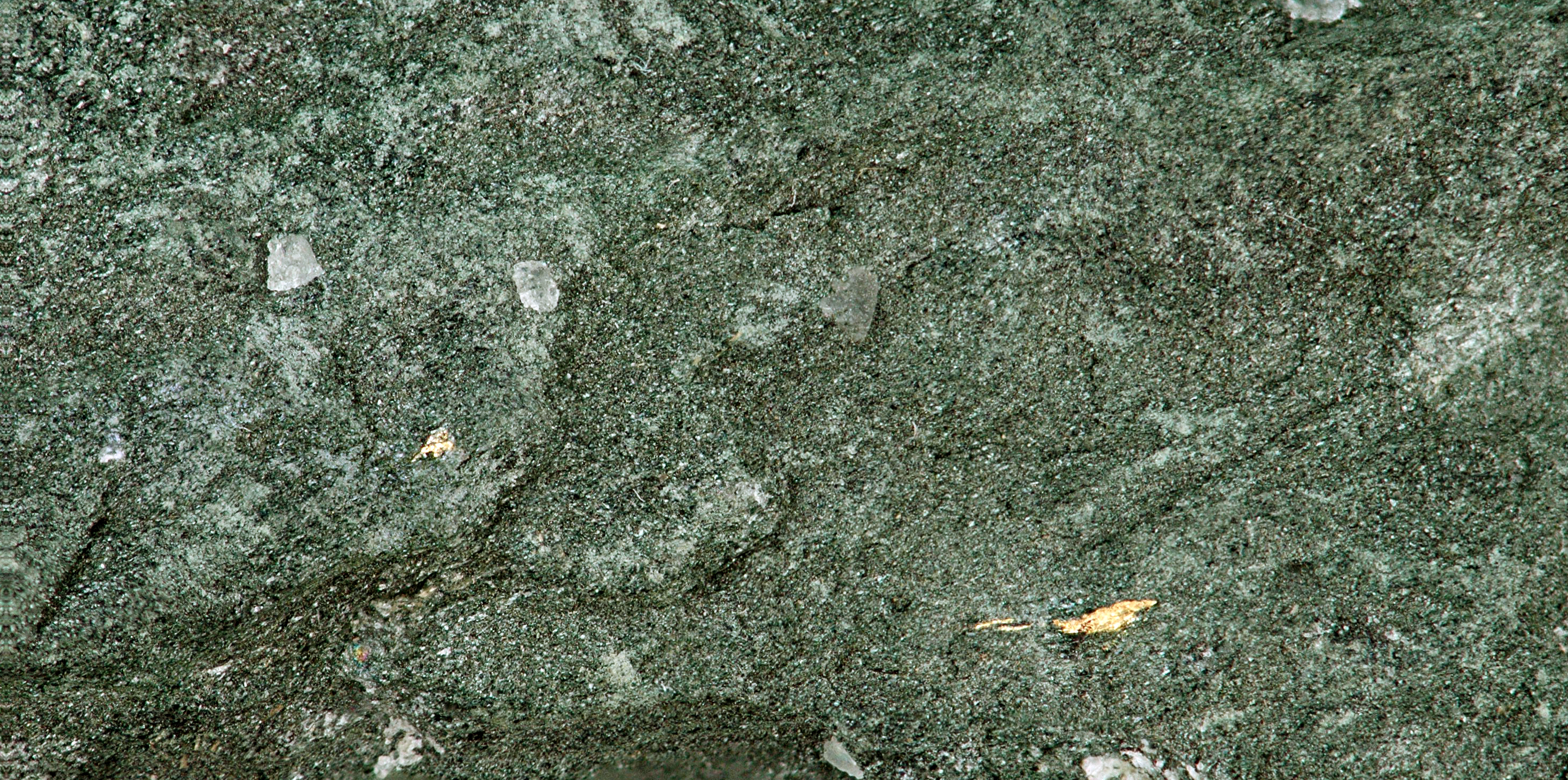
Homestake Mine
"White men would kill every Indian on the plains if they found out about the gold." Missionary Pierre-Jean De Smet spoke these words to the Lakota people, warning them to guard their secret. They did, for a time. But in 1876, Fred and Moses Manuel, Alex Engh, and Hank Harney discovered the Homestake deposit during the Black Hills Gold Rush, and everything De Smet feared came true. The mine that followed would burrow 8,000 feet into the earth, operate continuously for 125 years, and transform from one of history's most ruthless business ventures into a laboratory hunting for particles that pass through the entire planet.
Hearst's Empire
George Hearst arrived in Deadwood in October 1877 with $70,000 and ambitions that stretched far beyond any single claim. He bought the Homestake deposit from its discoverers and proceeded to consolidate the surrounding territory through methods both legal and violent. When a man refused to sell his claim, a Hearst employee killed him. The case went to court, but all witnesses disappeared, and the killer walked free. Hearst purchased Deadwood newspapers to control public opinion. An opposing editor was beaten on a public street. Hearst himself wrote to his partners asking them to care for his family should he be murdered. Within three years, he had acquired ten major claims totaling significant acreage, expanded a ten-stamp mill to two hundred, employed five hundred workers, and monopolized water rights throughout the region. He left the Black Hills alive and extraordinarily wealthy.
A Century of Gold
The Homestake Mining Company went public on the New York Stock Exchange in 1879 and remained listed until 2001, one of the longest continuous listings in NYSE history. The mine grew ever deeper, eventually descending 8,000 feet below the surface. Mules and horses hauled ore until 1901, when compressed air locomotives took over. Charles Washington Merrill, nicknamed Cyanide Charlie, introduced chemical extraction that achieved ninety-four percent gold recovery. The gold traveled to the Denver Mint. By the time operations ceased in 2001, Homestake had produced more gold than any other mine in the Western Hemisphere, making the Lead Mining District the second-largest gold producer in United States history after Nevada's Carlin Trend. Low gold prices, poor ore quality, and rising costs finally ended the run.
From Treasure to Science
The story could have ended there, another exhausted mine left to flood and decay. Instead, physicists recognized that Homestake's depth offered something equally valuable: shielding from cosmic radiation. In the mid-1960s, Raymond Davis Jr. established a laboratory deep in the mine to detect solar neutrinos, ghostly particles that stream from the sun and pass through ordinary matter as if it weren't there. His Homestake Experiment discovered the solar neutrino problem, finding far fewer particles than theory predicted. This puzzle eventually revealed that neutrinos change form during their journey, a discovery that earned Davis the Nobel Prize in Physics in 2002. After the mine closed, negotiations began to convert it to permanent scientific use.
The Deepest Laboratory
Barrick Gold corporation kept the pumps running at $250,000 per month while scientists lobbied for the mine's future. When negotiations stalled, the company switched off the equipment on June 10, 2003, and water began rising through the tunnels. But the scientific potential proved too valuable to abandon. The National Science Foundation selected Homestake in 2007 for the Deep Underground Science and Engineering Laboratory. The Department of Energy took over in 2011, establishing the Sanford Underground Research Facility. Today, nearly a mile below the Black Hills, researchers operate the Large Underground Xenon experiment hunting for dark matter, the Majorana Demonstrator studying neutrino properties, and preparations for the Deep Underground Neutrino Experiment. The same shafts that once hauled gold now lower physicists searching for answers to the universe's deepest mysteries. The Lakota knew this place held secrets worth protecting. They could not have imagined which ones would matter most.
From the Air
Located at 44.356N, 103.765W in Lead, South Dakota, adjacent to Deadwood. The massive open pit is visible from altitude, carved into the Black Hills terrain. The town of Lead (pronounced 'Leed') grew around the mine and remains closely connected to the facility, now operated as Sanford Underground Research Facility. Nearest airports are Deadwood Municipal (96D) and Rapid City Regional (KRAP) approximately 45 miles southeast. The open pit and surrounding terrain make an impressive sight from 6,000-10,000 feet AGL.