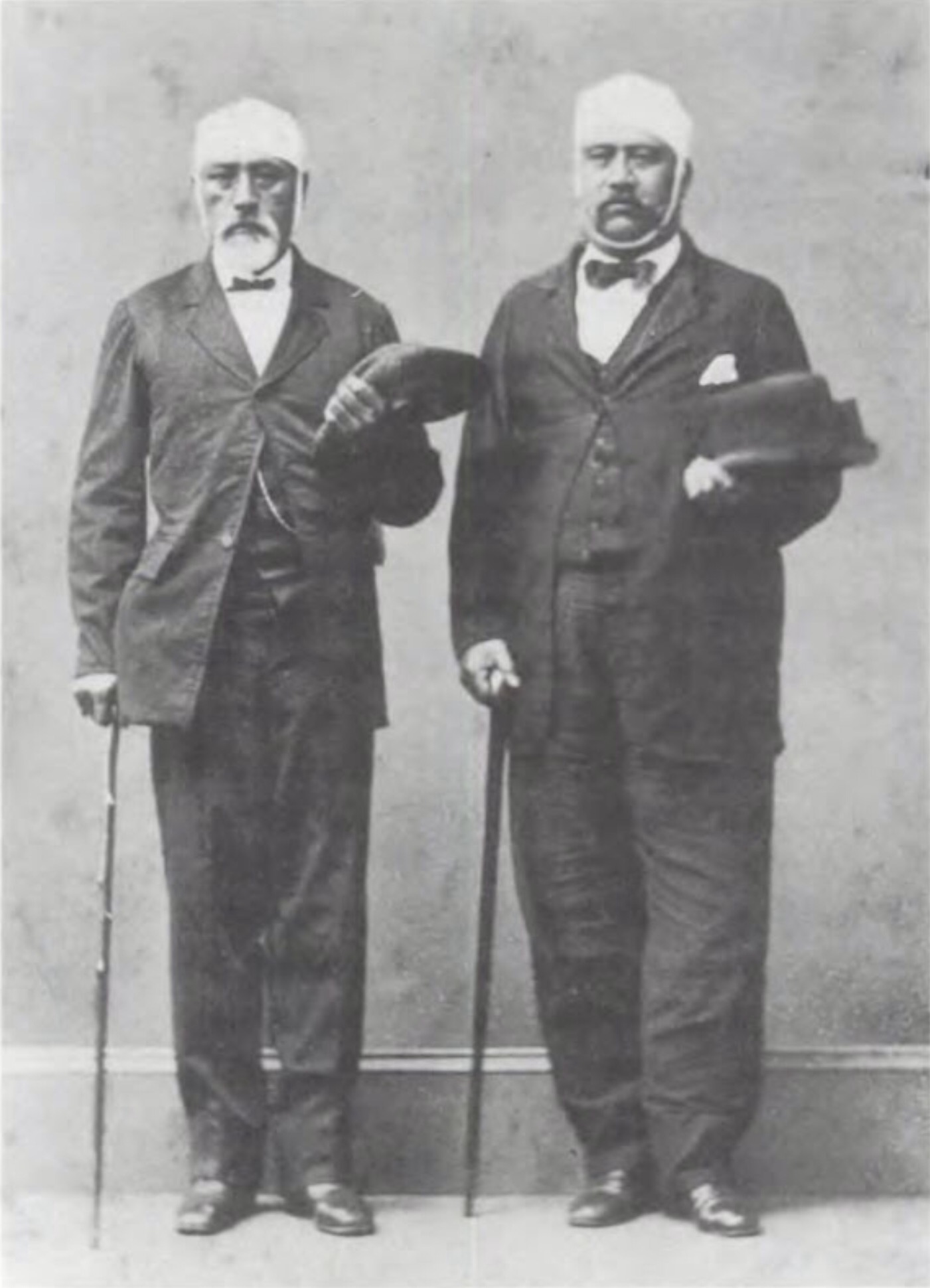
Honolulu Courthouse Riot
The vote was 36 to 6, and it took less than a minute for the crowd to turn. On the afternoon of February 12, 1874, legislators inside the Honolulu Courthouse announced that David Kalakaua would be the next king of Hawaii. Outside, hundreds of Native Hawaiians who had come expecting their beloved Queen Emma to prevail erupted in fury. Rocks flew. Legislators were dragged from carriages. Within hours, American and British warships would land troops on Hawaiian soil to restore order. Twenty of those arrested would plead guilty without shame, proud of their stand for their queen. The riot lasted an afternoon, but the political fracture it exposed would take less than two decades to destroy the Hawaiian Kingdom entirely.
A Throne Without an Heir
King Lunalilo's reign began with his election on January 8, 1873, and ended abruptly with his death on February 3, 1874. He had not named a successor. Under the Constitution of 1864, the legislature was required to hold a new election, and three candidates emerged: David Kalakaua, Queen Emma Rooke, and Princess Bernice Pauahi Bishop. Pauahi had previously declined the throne and was quickly removed from consideration. The real contest was between Kalakaua and Emma, and public sentiment overwhelmingly favored the queen. Native Hawaiians remembered that in the previous election, legislators had followed the people's will and chosen Lunalilo. They expected the same outcome. What they did not fully anticipate was how much the political landscape had shifted in the intervening year, as American business interests had consolidated their influence within the legislature.
Two Visions for a Kingdom
Queen Emma campaigned under the motto "Hawaii for Hawaiians" and promised an all-Native Hawaiian cabinet, a prospect that made American-aligned legislators deeply uneasy. She also pledged to return to a constitution closer to Kamehameha III's, which would have restored powers the monarchy had gradually ceded. Many Native Hawaiians historically viewed Britain more favorably than the United States, in part because Britain and France had formally recognized Hawaiian sovereignty through the 1843 Anglo-Franco Proclamation -- the basis for La Ku'oko'a, Hawaiian Independence Day, observed every November 28. Kalakaua, by contrast, signaled that he would retain the existing officeholders, preserving the authority of American-aligned legislators. Some scholars argue the election was less a contest of ideology than a raw calculation of political power: Emma threatened to replace the men who held it, and Kalakaua promised to let them keep it.
Rocks, Sticks, and People Through the Air
A few minutes past three o'clock on February 12, legislators emerged from the courthouse to announce the result. Scattered cheers rose, then drowned under shouts of anger. Within seconds, rocks, sticks, and bodies were flying toward the departing legislators and their waiting carriage. Major Moehonua was trampled and would have died had British Commissioner Wodehouse not intervened. As the carriage raced off to deliver the news to Kalakaua, the crowd turned on the courthouse itself, pounding doors and hurling anything at hand through the windows. Someone shouted to break in through the back. The rear doors gave way, and rioters surged inside, destroying furniture and scattering papers -- but deliberately leaving the clerk's office and library untouched, a gesture of selective respect even in the midst of rage. Many then marched to Queen Emma's summer palace, saluting her and urging her to contest the result.
Foreign Guns on Hawaiian Soil
By 4:30 that afternoon, Kalakaua wrote to the British and American commissioners requesting naval forces to suppress the unrest. By sundown, 150 troops from the USS Tuscarora and USS Portsmouth, along with 70 British soldiers, had taken control. The American troops dispersed the courthouse crowd quickly. The British arrival, however, was initially greeted with celebration -- many of Emma's supporters assumed their historical ally had come to support the queen's cause. Instead, the British followed the new king's request and broke up the gathering at Emma's summer palace. Over the following month, the Hawaiian Kingdom arrested more than seventy people, but charged only half due to lack of evidence. Twenty pleaded guilty, unashamed of their loyalty.
The Long Unraveling
American businessmen interpreted the riot as evidence that more American influence in Hawaii was needed. Their first objective was Pearl Harbor -- officially justified as protection for the new king, but aligned with broader strategic and commercial ambitions in the Pacific. They negotiated the Reciprocity Treaty of 1876, which granted the United States exclusive access to Pearl Harbor and lifted tariffs on Hawaiian sugar, generating enormous profits for American planters. Still unsatisfied, on June 30, 1887, armed members of the Honolulu Rifles forced Kalakaua to sign the Bayonet Constitution, which gutted the monarchy's powers, expanded legislative authority, and imposed property and income requirements that disqualified the majority of Native Hawaiian voters. The 1874 election is often cited by historians as the first clear demonstration of the political leverage American residents held in the islands -- leverage they would continue to expand until the Hawaiian Kingdom was overthrown entirely in 1893.
From the Air
The Honolulu Courthouse (now Ali'iolani Hale) is located at 21.308N, 157.864W in downtown Honolulu, Oahu, directly across from Iolani Palace. The building is identifiable from low altitude by its clock tower. Queen Emma's Summer Palace is located approximately 2 nm to the northeast in Nuuanu Valley. Nearest airport is Daniel K. Inouye International (PHNL), approximately 5 nm west. Best viewed from 1,500-2,500 ft AGL.