Hoover Dam: When America Tamed the Colorado River
The Colorado River had flooded catastrophically in 1905, creating the Salton Sea by mistake. It was too wild for the farms and cities growing in the desert Southwest. The federal government decided to tame it. Between 1931 and 1935, during the depths of the Depression, 21,000 men built Hoover Dam in Black Canyon, 30 miles southeast of what was then a tiny Las Vegas. The dam was the largest concrete structure in the world, creating Lake Mead, the largest reservoir in the United States. The electricity powered Los Angeles; the water made desert cities possible. Ninety years later, the reservoir is half-empty, the old bathtub ring visible on canyon walls, and the future of the American Southwest depends on water that's no longer reliably there.
The Construction
Building Hoover Dam required first taming the river with diversion tunnels, then pouring 3.25 million cubic yards of concrete that would take 125 years to cure if poured in one block. The solution was interlocking columns that could be cooled with refrigerated water. Summer temperatures in Black Canyon exceeded 120 degrees; workers died of heat stroke, falls, and equipment accidents. The official death toll is 96, though this excludes deaths from pneumonia that was likely silicosis from tunnel dust. The dam was completed two years ahead of schedule, a testament to Depression-era desperation that made dangerous work preferable to no work.
The Power
Hoover Dam's hydroelectric generators produce about 4 billion kilowatt-hours annually, enough to serve 1.3 million people. The power went primarily to Southern California, enabling Los Angeles's growth. The dam was renamed from Boulder Dam to Hoover Dam in 1947, honoring the president who approved it (though the naming had been contested during his presidency). The art deco styling of the powerhouse and intake towers reflected the era's confidence in industrial achievement. The dam became a symbol of American capability - the largest structure of its kind, built in impossible conditions, ahead of schedule.
The Water
Lake Mead, at full capacity, holds 28.9 million acre-feet of water - enough to cover 28.9 million acres one foot deep, enough to supply millions of people for years. At full capacity. The lake hasn't been full since 1983. Climate change and overallocation have dropped levels to less than 40% capacity, exposing the white 'bathtub ring' where water once stood and revealing long-submerged debris, including human remains. The Colorado River Compact of 1922, which allocated the river's water among states, was based on unusually wet years; the river has never consistently delivered what was promised. The future is negotiation, restriction, and hope for precipitation that may not come.
The Future
Hoover Dam faces a future it wasn't designed for. At low lake levels, the intake towers may not reach water; the generators may not spin; the allocations may not flow. Las Vegas, Phoenix, Los Angeles, and countless farms depend on water that's increasingly unavailable. The dam remains impressive - the concrete eternal, the design sound - but the reservoir it created cannot fill itself. The American Southwest grew on the promise of reliable water. That promise, always optimistic, now appears broken. The dam did what it was built to do. The river is doing what rivers do: flowing only as much water as actually exists.
Visiting Hoover Dam
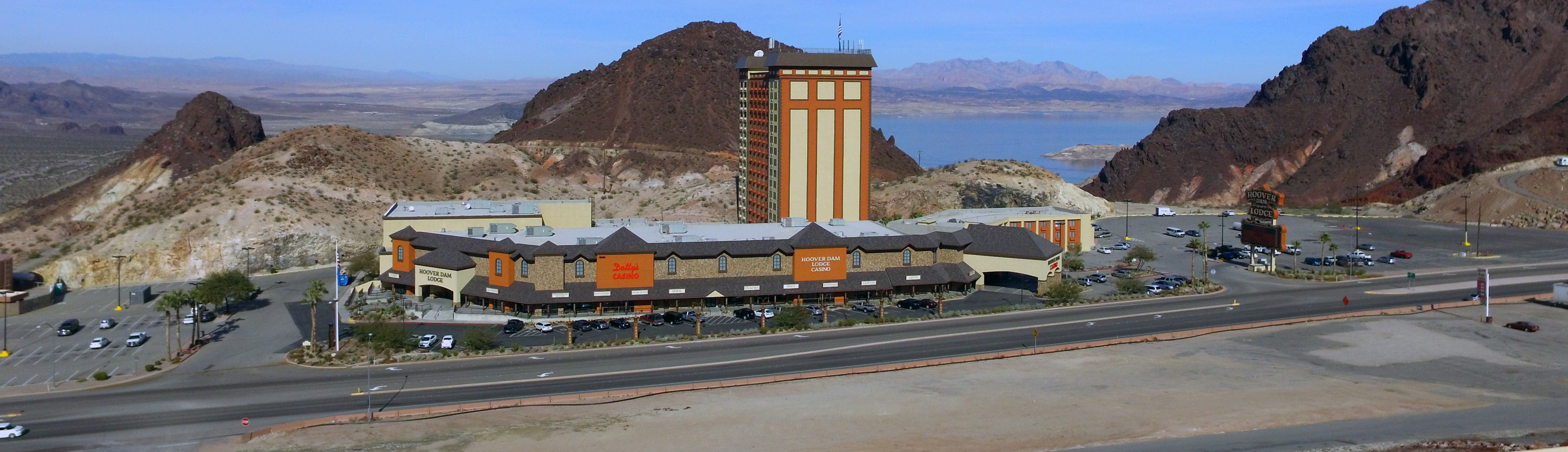
Hoover Dam is located 30 miles southeast of Las Vegas, on the Nevada-Arizona border. Highway 93 crosses the dam, though the Mike O'Callaghan-Pat Tillman Memorial Bridge now carries through traffic. The visitor center offers exhibits and tours; the powerplant tour descends to the generating floor. Dam tours require security screening. Lake Mead National Recreation Area surrounds the reservoir, offering boating, camping, and hiking. The Hoover Dam Lodge on the Nevada side provides dining and lodging. The experience combines engineering marvel with environmental anxiety - a monument to human capability confronting the limits of natural resources.
From the Air
Located at 36.02°N, 114.74°W in Black Canyon on the Colorado River, at the Nevada-Arizona border. From altitude, Hoover Dam appears as a pale arc across the dark canyon, Lake Mead spreading upstream into desert landscape. The bathtub ring - the white line marking former water levels - is visible around the lake's perimeter, evidence of decades of decline. The bypass bridge arcs above the dam. Las Vegas lies 30 miles to the northwest. What appears from altitude as engineering triumph is also warning: a dam designed for a river that no longer exists as it was, holding water that half a region depends on and that isn't reliably coming.