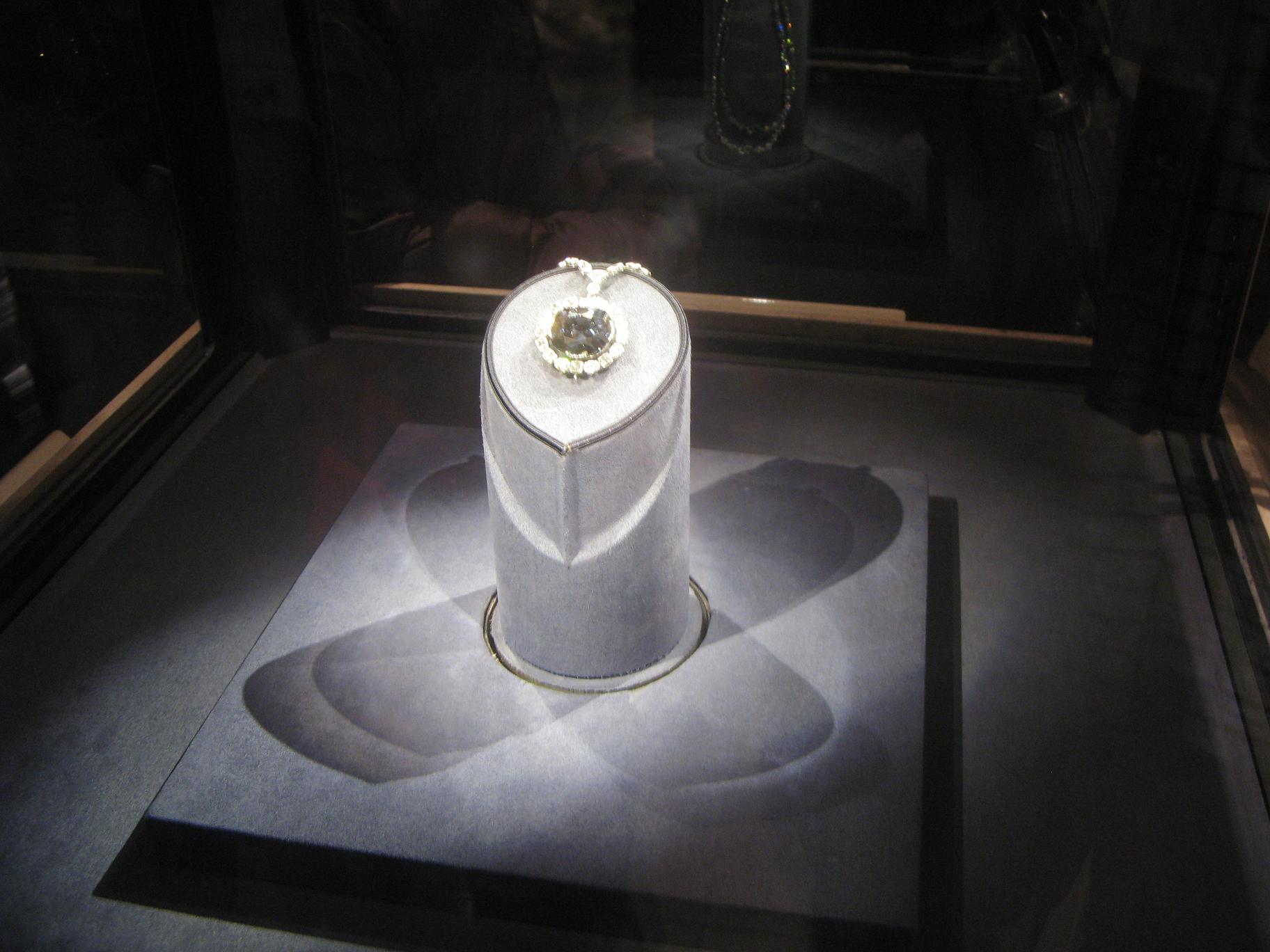
The Hope Diamond: The Cursed Gem That Destroyed Its Owners
The Hope Diamond is one of the most famous jewels in the world - a 45.52-carat blue diamond that glows red under ultraviolet light and supposedly carries a curse that has destroyed everyone who owned it. Marie Antoinette wore it and lost her head. A Turkish sultan gave it to his favorite, then stabbed her. An American heiress who bought it saw her son killed, her daughter commit suicide, and her husband committed to a mental institution. The curse is irresistible - and mostly fiction. The real story of the Hope Diamond is stranger than the legend: a tale of theft, disguise, and one of the most successful marketing campaigns in history.
The Origin
The diamond was probably mined in India's Golconda region in the 17th century. French merchant Jean-Baptiste Tavernier acquired a 112-carat blue diamond around 1666 and sold it to King Louis XIV. The diamond was recut into a 67-carat heart shape known as the French Blue and became part of the French Crown Jewels.
The curse supposedly began with Tavernier, who was said to have been torn apart by wild dogs in Russia. In fact, Tavernier died peacefully at age 84 in Moscow, wealthy and content. The curse was retroactively invented - but it makes a better story than dying peacefully of old age.
The Theft
The French Blue disappeared during the French Revolution, stolen from the Garde-Meuble in September 1792 along with most of the Crown Jewels. Marie Antoinette, who had worn the diamond, was guillotined a year later. The curse mythology connected these events, though thousands of people who never touched the diamond also died during the Terror.
The diamond resurfaced in London in 1812, recut to about 45 carats - enough of a change to obscure its identity. Henry Philip Hope, a wealthy banker, acquired it around 1839. It has been called the Hope Diamond ever since.
The Curse
The curse narrative developed in the late 19th and early 20th centuries, fed by journalists who found it irresistible. The Hope family did suffer misfortunes - business failures, debts, unhappy marriages - but nothing unusual for wealthy families over multiple generations.
The curse reached full flower when American socialite Evalyn Walsh McLean bought the diamond in 1911. Her son was killed in a car accident. Her daughter died of an overdose. Her husband was committed to a mental institution. The curse seemed confirmed. But correlation is not causation - wealthy American families in the early 20th century frequently experienced tragedies.
The Donation
After McLean's death in 1947, the Hope Diamond was purchased by Harry Winston, a famous jeweler who toured it around the country for charity. In 1958, Winston donated it to the Smithsonian Institution in Washington, D.C. He mailed it in a brown paper package via registered first-class mail.
The mailman who delivered the Hope Diamond, James Todd, experienced a series of misfortunes - his leg was crushed, his wife died, his dog strangled itself on its leash, and his house burned down. When questioned, Todd admitted these events had occurred over his entire life, not just after handling the diamond. The curse had found its final victim - or its final coincidence.
The Reality
The Hope Diamond curse is largely a creation of journalists and marketers. Pierre Cartier, who sold the diamond to McLean, actively promoted the curse legend because it made the jewel more desirable. The tragedies attributed to its owners were often exaggerated, misremembered, or invented entirely.
The real story is extraordinary enough: a diamond that survived the collapse of the French monarchy, disappeared for decades, and became the most famous jewel in the world through clever marketing. Today, the Hope Diamond sits in the Smithsonian's National Museum of Natural History, where it is seen by over 6 million visitors annually. The curse seems to have ended - unless you count the disappointment of visitors who expected something larger.
From the Air
The Hope Diamond is displayed at the Smithsonian National Museum of Natural History (38.89N, 77.03W) on the National Mall in Washington, D.C. Reagan National Airport (KDCA) is 5km south. The museum is visible from the air as part of the Smithsonian complex along the Mall. The diamond is in the Harry Winston Gallery on the second floor.