Hormuz Island
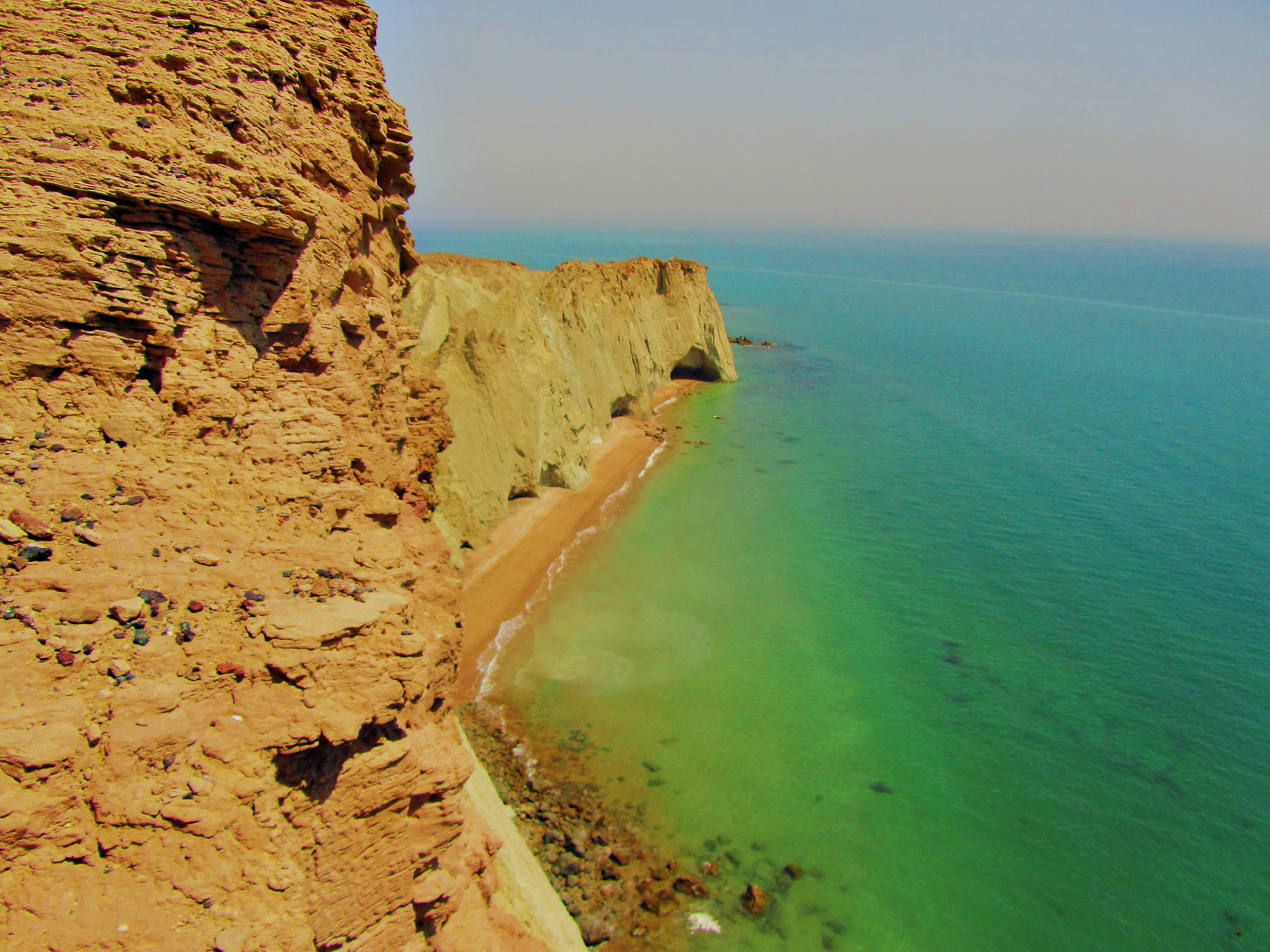
The beaches of Hormuz Island are red. Not reddish, not sandy-with-a-tint, but deeply, vividly red -- the color of iron oxide bleeding from the island's ancient geological core into the sand and surf. Waves break crimson along the shore. Locals call the ochre soil Golak and use it as both an artistic pigment and a seasoning in food. The island itself is something stranger still: a salt diapir, a plug of 600-million-year-old sea salt deposits that has been squeezed upward through the earth's crust over millennia like toothpaste from a tube, emerging above the waterline roughly 50,000 years ago. Everything about Hormuz Island defies the expected.
Forty Thousand Years of Footprints
At a site called Chand-Derakht on the island's eastern shore, archaeologists discovered stone tools dating back over 40,000 years -- a Middle Paleolithic assemblage characterized by Levallois flaking methods, the same sophisticated stone-knapping technique used by Neanderthals and early modern humans across the Old World. These are the earliest traces of human presence on Hormuz. The ancient Greeks knew the island as Organa. During the Islamic period it was called Jarun. The name Hormuz came later, borrowed from the important harbor town on the mainland 60 kilometers away. Around 1300, the rulers of that mainland principality -- vassals of the Mongol Ilkhanate -- relocated their capital to the island to escape raids by Mongolian and Turkish groups pushing in from the interior. Ibn Battuta, the great Moroccan traveler, visited. The island became the center of a maritime kingdom that controlled both shores of the strait.
The Portuguese Fortress
In 1507, the Portuguese commander Afonso de Albuquerque captured Hormuz Island as part of Portugal's aggressive expansion into the Indian Ocean. The Portuguese built the Fort of Our Lady of the Conception, a massive red-stone fortress that still stands at the island's northern tip. Hormuz became a stopover for ships traveling to Goa and Gujarat. In 1552, the Ottoman admiral and cartographer Piri Reis laid siege to the island. Augustinian hermits settled here in 1575 and used it as a base to establish a mission in Isfahan. But the island's Portuguese era ended in 1622 when Shah Abbas I of Persia, allied with the British East India Company, seized Hormuz. Abbas had no interest in maintaining the island. He developed the mainland port of Bandar Abbas instead, and Hormuz declined to a quiet community of fishermen exporting rock salt and iron oxide lumps used as ballast stones in sailing ships.
A Geology Unlike Anywhere Else
Satellite images reveal Hormuz Island's true nature: concentric rings of rock radiating outward from a central point, the signature of a salt diapir. Ancient sea salt, deposited roughly 600 million years ago, has been slowly squeezed upward by the weight of overlying sediments. Because the island receives almost no rain and has little groundwater, the salt has not dissolved. Instead, it has flowed plastically -- like glacial ice -- rising above the surface and eroding into bizarre formations. The island's mineral content creates a palette that no other landscape in the Persian Gulf can match. Red iron oxide dominates, but the beaches and cliffs also glitter with other metallic compounds. Mangrove forests survive in the tidal zones, their roots submerged in salt water. A grassy area grows without fresh water. Local legend says this plant grew from the tears of Adam.
The Rainbow Island Reborn
After centuries as a backwater, Hormuz Island has been rediscovered. The environmental artist Ahmad Nadalian opened a museum here in 2009, housed in a building inspired by local architecture, displaying his rock carvings alongside works by indigenous women and sculptures made from recycled materials and the bones of sea creatures. The island has been designated an Important Bird Area by BirdLife International for its populations of Saunders's terns, great thick-knees, and sooty gulls. Photographer Hoda Afshar spent years documenting the island's landscapes and people for her book Speak the Wind, exploring what she called the idea of being possessed by history. Tourism has brought both attention and strain -- the Department of Environment has stepped in to protect the ochre deposits from overuse. Hormuz remains a place where geology, history, and art converge on a scale small enough to walk across in an afternoon.
From the Air
Hormuz Island lies at 27.068N, 56.460E in the Strait of Hormuz, approximately 18 km off the Iranian coast near Bandar Abbas. The island's vivid red coloring is visible from altitude in clear conditions. The Portuguese fortress stands prominently at the northern tip. The nearest major airport is Bandar Abbas International (OIKB), about 25 km to the northeast. Qeshm Island lies to the north. Approach from the south for the most dramatic contrast between the red island and the blue Persian Gulf waters. The concentric ring geology is visible from high altitude.