Hosokawa Gracia: The Samurai's Wife Who Refused to Be a Hostage
She was baptized in secret by her own maid. She studied Latin and Portuguese behind the walls of a mansion where she was effectively a prisoner. And when soldiers came to drag her away as a political hostage in the summer of 1600, Hosokawa Gracia -- born Akechi Tama, daughter of the man who assassinated the most powerful warlord in Japan -- chose to die rather than submit. Her death, in the Hosokawa mansion in Osaka, so outraged the feudal lords of Japan that the man who ordered her capture saw his coalition crumble. Within weeks, the Battle of Sekigahara decided the future of the nation. Gracia never saw it. She was thirty-seven years old.
A Traitor's Daughter
Akechi Tama was born in 1563, the daughter of Akechi Mitsuhide and Tsumaki Hiroko, into the world of Sengoku-era warrior aristocracy. She married Hosokawa Tadaoki at sixteen, and they had five or six children together. Then, in the sixth month of 1582, her father made a fateful decision: he betrayed and killed his lord, Oda Nobunaga, the first 'Great Unifier' of Japan. Overnight, the teenage Tama became a traitor's daughter. Tadaoki loved her too much to divorce her but could not keep her in public view. He sent her to the remote hamlet of Midono in the mountains of the Tango Peninsula, where she lived in hiding for two years. When Toyotomi Hideyoshi, the new power in Japan, eventually permitted her return to Osaka, it was to the Hosokawa mansion -- where she remained confined behind its walls.
Faith Behind Closed Doors
In confinement, Tama found Christianity through an unlikely chain. Her maid, Kiyohara Kayo -- baptized Maria -- came from a Catholic family and passed along conversations about the faith shared between her husband and the Christian lord Takayama Ukon. In the spring of 1587, Tama managed to secretly visit the Osaka church. Months later, when Toyotomi Hideyoshi issued his edict banning Christianity, she responded not with fear but with urgency, demanding immediate baptism. Unable to leave the house, she was baptized by her maid and took the name Gracia. She threw herself into study, learning Latin and Portuguese, and became deeply absorbed in Thomas a Kempis' The Imitation of Christ. When Tadaoki later told her she must kill herself if he were ever captured or killed, she wrote to the Jesuit priests. They told her suicide was a grave sin. It was a teaching she would hold to at the end.
The Summer of 1600
Toyotomi Hideyoshi's death in 1598 cracked Japan open. Two rival factions formed: Tokugawa Ieyasu in the east and Ishida Mitsunari in the west. When Ieyasu marched east in 1600, taking Tadaoki with him, Ishida seized control of Osaka Castle and hatched a plan to take the families of the absent generals hostage, forcing their loyalty or at least their neutrality. He sent soldiers to the Hosokawa mansion for Gracia. What happened next has been told differently over the centuries. Most Japanese accounts, written decades later, say Gracia herself ordered the family retainer Ogasawara Shosai to kill her. The original Jesuit account, written shortly after her death, tells a different story: that Tadaoki had standing orders for his servants to kill Gracia if her honor was ever threatened, and they carried out that command. Either way, Ogasawara struck, then set the mansion ablaze and committed seppuku.
A Death That Moved Armies
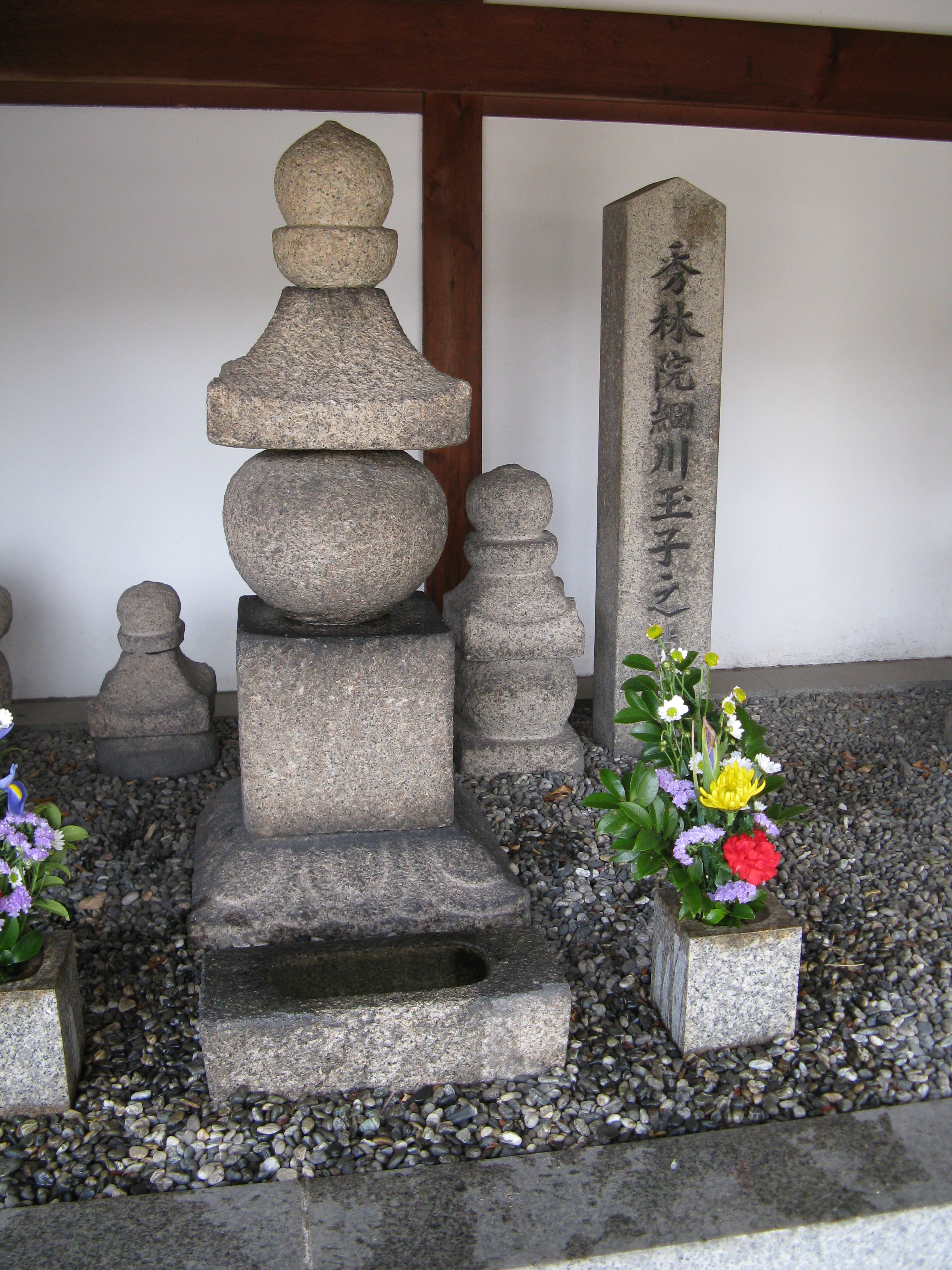
The outrage was immediate and devastating for Ishida. The killing of a noblewoman -- a Christian convert known for her piety and learning -- turned public opinion and the wavering lords against him. His hostage strategy collapsed entirely; no other family would submit to his threats after what had happened at the Hosokawa mansion. Some of the lords who abandoned his cause were themselves secret Christians, further eroded by the manner of Gracia's death. Within weeks, the Battle of Sekigahara on October 21, 1600 delivered a decisive victory to Tokugawa Ieyasu, establishing the Tokugawa shogunate that would govern Japan for over 250 years. The Catholic priest Gnecchi-Soldo Organtino gathered Gracia's remains from the burned mansion and buried them in a cemetery in Sakai. Her remains were later moved to Sozenji temple in Osaka, and she also shares a grave with Tadaoki at Koto-in, a sub-temple of Daitoku-ji in Kyoto.
Echoes Across Centuries
Gracia's story has never stopped being told. She has appeared as a character in over forty stage dramas, films, and television series since 1887. James Clavell modeled the character of Mariko Toda in his 1975 novel Shogun on her life, and Anna Sawai portrayed that character in the acclaimed 2024 television adaptation. The city of Nagaokakyou in Kyoto hosts the annual Garasha Festival every November. Her descendant Morihiro Hosokawa served as Prime Minister of Japan in the 1990s. At Koto-in, beneath the moss-covered stones of Daitoku-ji, Gracia rests beside the husband who both loved and imprisoned her -- a woman who lived between worlds, between faiths, between duty and conscience, and whose single act of defiance in a burning mansion helped decide who would rule Japan.
From the Air
Located at 34.73N, 135.51E in Osaka, Japan. Gracia's story is anchored to the Hosokawa mansion site in central Osaka, south of Osaka Castle. Her grave at Koto-in within Daitoku-ji lies in northern Kyoto at approximately 35.04N, 135.74E. Best viewed at 3,000-5,000 feet AGL over the Osaka-Kobe-Kyoto metropolitan area. Osaka Itami Airport (RJOO) is approximately 8 nautical miles northwest; Kansai International Airport (RJBB) is 25 nautical miles to the south across Osaka Bay.
Sources
- Hosokawa Gracia - Wikipedia
- The Birth of a Martyr: The Metamorphosis of Hosokawa Tama Gracia
- Women Religious Leaders in Japan's Christian Century, 1549-1650
- Hosokawa Gracia - Wikipedia
- Battle of Sekigahara - Wikipedia
- Shogun (novel) - Wikipedia
- Morihiro Hosokawa - Wikipedia
- Nagaokakyo Garasha Festival - Kyoto Tourism