Hotel Chelsea: Where Art Checked In and Never Left
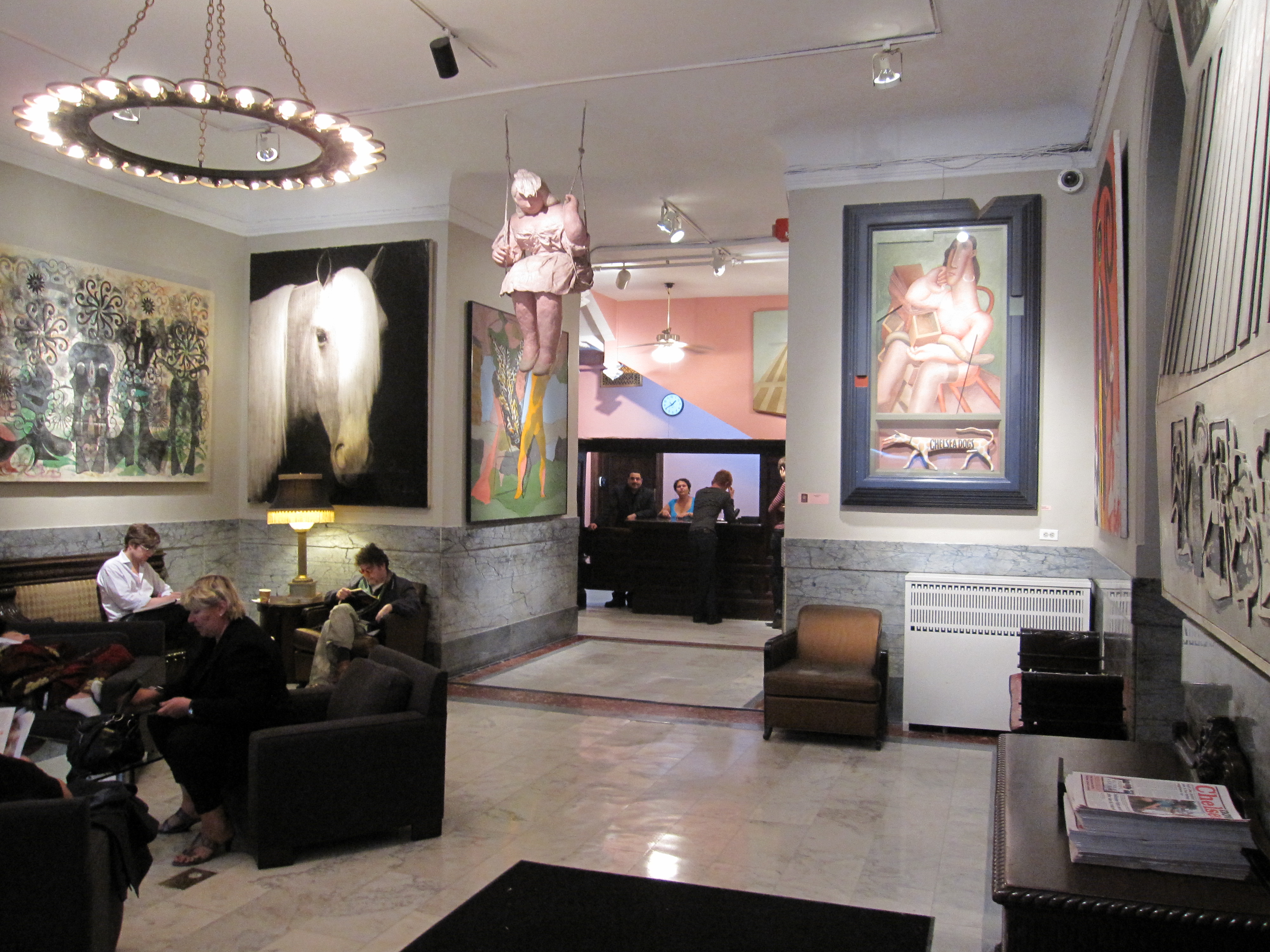
Leonard Cohen wrote 'Chelsea Hotel No. 2' about an encounter there. Arthur C. Clarke wrote 2001: A Space Odyssey in one of its rooms. Patti Smith and Robert Mapplethorpe arrived broke and shared a tiny room while they figured out how to become famous. The Hotel Chelsea at 222 West 23rd Street has never been the nicest hotel in Manhattan. For much of its history, it was not even particularly clean. What it was, for nearly 140 years, was the place where artists, writers, musicians, and eccentrics could live cheaply, work freely, and find each other. The lobby walls were hung with paintings by residents who paid their rent in art. The hallways smelled of turpentine and ambition. It was a building that operated on the principle that creative chaos was worth more than orderly commerce.
A Cooperative for the Ambitious
The Chelsea was not built as a hotel. When architect Philip Hubert designed it between 1883 and 1884 for the Chelsea Association, it was a housing cooperative -- one of the most ambitious in New York City. Hubert and his partner James W. Pirrson had pioneered the 'Home Club' concept, creating apartment buildings designed to entice the middle and upper classes into communal living. The Chelsea Association Building, as it was first known, rose 12 stories in a style described as both Queen Anne Revival and Victorian Gothic, with thick masonry load-bearing walls, wrought iron floor beams, flower-ornamented iron balconies, and a high mansard roof. At the time of its completion, it was the tallest apartment building in the city. The Chelsea Association obtained mortgage loans totaling $500,000 for construction. Two-thirds of the apartments were owned by stockholders, and the building attracted artists from the start -- its duplex apartments featured studios on the upper level and bedrooms below.
The Parade of Legends
The list of people who lived at the Chelsea reads like a who's who of 20th-century culture. Mark Twain stayed there. Dylan Thomas collapsed there -- he died at St. Vincent's Hospital in 1953 after a drinking bout. Arthur Miller retreated to the Chelsea after his divorce from Marilyn Monroe. Bob Dylan wrote songs in its rooms. Edie Sedgwick, one of Andy Warhol's superstars, lived there. Janis Joplin stayed. Virgil Thomson, the composer and music critic, resided at the Chelsea for decades, from the 1940s until his death in 1989. Milos Forman lived there while directing One Flew Over the Cuckoo's Nest. The Chelsea attracted these people not through luxury but through tolerance. The management under Stanley Bard, who ran the hotel from 1964 to 2007 after his father David had bought it out of bankruptcy in 1942, famously accepted artwork in lieu of rent and let residents live as they pleased.
The Bard Era: Chaos as Policy
Stanley Bard inherited the Chelsea from his father and operated it for 43 years, becoming as much a part of the legend as any of his famous tenants. Under his watch, the hotel developed a reputation for glorious disorder. Each floor had winding corridors from decades of apartment subdivisions -- the original 100 units had been carved into more than 300 rooms by the end of the 1920s, and by the 2000s numbered roughly 250. The switchboard operators called residents by their nicknames. The walls of the central staircase, illuminated by a rooftop skylight, were lined with photographs and artwork created by residents. The lobby's beige-pink walls displayed paintings in lieu of rent payments. The ground floor hosted El Quijote, a Spanish restaurant decorated with murals depicting scenes from Don Quixote. Critics noted the hotel's legendary uncleanliness. But Bard understood something that cleaner establishments did not: the Chelsea's value was its community of creators, and that community thrived on freedom and affordable rent.
Renovation and Resurrection
The end of the Bard era was messy. The Krauss and Gross families, who had been co-owners since 1947, took over in 2007 and became embroiled in disputes with long-term tenants. The Chelsea closed for a major renovation in 2011. Ownership changed hands twice during the 2010s before BD Hotels assumed management in 2016. When the hotel reopened in 2022, the 155 remaining units had been redesigned as luxury accommodations. The Lobby Bar, built in a former storage space, featured mosaic-tile floors, a marble bar, and mid-century modern furniture dating to 1955. El Quijote reopened with its original Don Quixote murals intact. At street level, Chelsea Guitars -- a scrappy mom-and-pop instrument shop -- survived the renovation, a last holdout of the old bohemian disorder. The building remains a New York City designated landmark and is listed on the National Register of Historic Places, its iron balconies and mansard roof still visible above the traffic of West 23rd Street.
The Building That Remembers Everything
The Chelsea's architectural bones tell the longer story. Those thick masonry walls and wrought iron beams were built for a cooperative that believed in mixing classes -- small apartments and large ones shared every floor, so a struggling painter could be neighbors with a successful lawyer. The duplex artists' studios with rooftop access were there from the beginning, as if the building always knew what it would become. Following the sinking of the Titanic in 1912, several survivors were given rooms at the hotel. Construction workers who built the Chelsea in 1884 moved into the apartments rather than accept monetary payment. The building attracted creators before it had a reputation for attracting creators. Today, the plaques on its facade mark it as a landmark, but the real monument is the body of work produced inside: novels, poems, songs, photographs, paintings, and one science fiction masterpiece about a voyage to Jupiter, all conceived behind those flower-ornamented iron balconies on a busy block between Seventh and Eighth Avenues.
From the Air
The Hotel Chelsea is at 222 West 23rd Street (40.7444N, 73.9969W) in the Chelsea neighborhood of Manhattan, on the south side of the street between Seventh and Eighth Avenues. The 12-story building with its distinctive mansard roof and iron balconies is visible at low altitude along the 23rd Street corridor. Nearest airports: LaGuardia (KLGA) 14km NE, JFK (KJFK) 24km SE, Newark (KEWR) 14km W. The Chelsea neighborhood is identifiable by its mid-rise residential character between the taller buildings of Midtown to the north and the Village to the south.