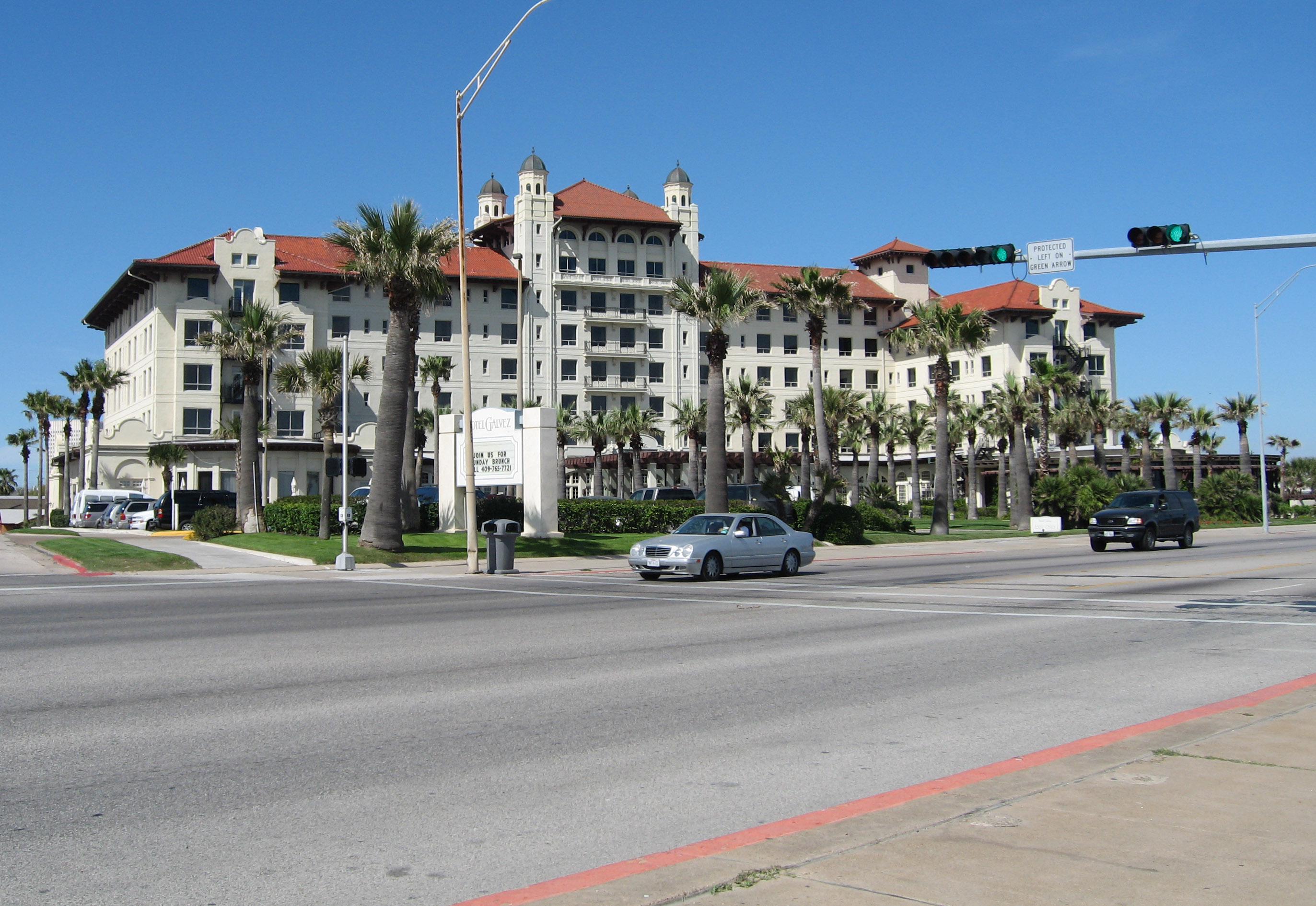
Hotel Galvez
They rejected the word 'beach.' When Galveston's wealthiest citizens gathered in February 1910 to plan a grand hotel overlooking the new seawall, they debated names endlessly. 'Galveston Beach Hotel' was dismissed because it implied seasonal use and exposure to weather - a raw nerve on an island still recovering from a hurricane that had killed 6,000 people a decade earlier. They chose 'Galvez' instead, honoring Bernardo de Galvez, the Spanish colonial governor for whom the city was named. The name carried dignity rather than vulnerability. When the Hotel Galvez opened in June 1911, it was a $1 million statement that Galveston would not surrender to the Gulf of Mexico. Built on the exact spot where the old Beach Hotel and Pagoda Bathhouse once stood, this six-story Spanish Colonial Revival landmark has witnessed hurricanes, world wars, the rise and fall of Galveston's notorious gambling empire, and more than a century of Texas coastal history.
Built on Raised Earth
The Hotel Galvez exists because of an engineering marvel that preceded it. After the 1900 hurricane struck on September 8, sending a 15-foot storm surge over an island whose highest point was barely nine feet above sea level, Galveston embarked on two audacious projects. First, a concrete seawall 17 feet high and flared from a 15-foot base to five feet at the top. Second, the raising of the entire eastern end of the island by as much as 16.5 feet, achieved by jacking up existing structures and filling beneath them with dredged slurry. Both projects were completed by 1910. The hotel's site had been raised and armored against the sea. Isaac Herbert Kempner, John Hutchings Sealy, Bertrand Adoue, and Joseph Lobit each pledged $50,000, and by March 1910, over half a million dollars had been raised. Mauran, Russell & Crowell of St. Louis designed the building in a blend of Mission Revival and Spanish Revival styles, with stucco-covered brick, mission parapets, plastered walls, and a Ludowici tile roof.
Opening Night, Two Dollars a Room
The Galveston Hotel Company hired Franklin 'Jack' Letton as manager, a veteran of the Hotel Knickerbocker in New York, the Ritz-Carlton in London, and the Grand Hotel at Mackinac Island. On June 12, 1911, the Galvez staged its grand opening in partnership with the Galveston Chamber of Commerce. A single room without a bathroom cost $2 per night, or $12 per week. With a bathroom, $2.50. Two five-story wings jutted toward the Gulf, their round archways and windows evoking Spain. The original entrance faced north, away from the water, through a porte cochere. Letton recruited experienced hotel professionals and housed staff in quarters blocks from the hotel. The Galvez quickly became the island's social anchor, a landmark that competed with the Buccaneer Hotel built in 1929 and served as backdrop to Galveston's boom years of illegal gambling, celebrity entertainment, and wide-open nightlife.
War, Gangsters, and Ghosts
William Lewis Moody Jr. acquired the hotel on October 3, 1940, folding it into a family empire that included one of the largest hotel chains and the American National Insurance Company. During World War II, the U.S. Coast Guard occupied the building for two years, and no tourists checked in. After the war, the hotel's fortunes rose with Galveston's gambling era in the late 1940s and early 1950s, then crashed when the Texas Rangers shut down the island's casinos. The local economy went flat, and the Galvez deteriorated. Major refurbishments came in 1965 and 1979. Renowned heart surgeon Denton Cooley purchased the hotel in 1978. It cycled through Marriott and Wyndham management before Galveston native George P. Mitchell bought it in 1995 and restored its 1911 character. Since the 1950s, guests have reported ghost sightings, particularly in Room 501, lending the Galvez a reputation as one of the most haunted hotels in Texas.
The Queen Endures
Hurricane Ike tested the Galvez in 2008, ripping clay tiles from the roof and flooding the lower level where the spa, health club, and business offices were located. The hotel survived, as it had survived the 1915 hurricane that battered Galveston just four years after its opening. In May 2021, Mark and Lorenda Wyant purchased the property through their Dallas-based Seawall Hospitality LLC, renamed it the Grand Galvez Resort & Spa, and transferred management to Marriott's Autograph Collection. The Wyants undertook a complete renovation, restoring the original pink exterior paint and designing bold, colorful interiors inspired by the Greenbrier and the Beverly Hills Hotel. The renovations were completed in 2023. Listed on the National Register of Historic Places since 1979 and a member of Historic Hotels of America, the Galvez stands today as it has for over a century: a pink-walled declaration that Galveston will always rebuild.
From the Air
Located at 29.29°N, 94.79°W on Galveston Island, Texas, directly behind the Galveston Seawall on the Gulf side. The six-story Spanish Revival building with its distinctive pink exterior and Ludowici tile roof is identifiable from low altitude along Seawall Boulevard. The hotel sits on the eastern end of the island where the grade-raising project elevated the land by 16.5 feet after 1900. Nearest airports: Scholes International at Galveston (KGLS) approximately 2 miles west on the island, and William P. Hobby Airport (KHOU) in Houston about 50 miles northwest. Galveston Bay is visible to the north, the Gulf of Mexico to the south.