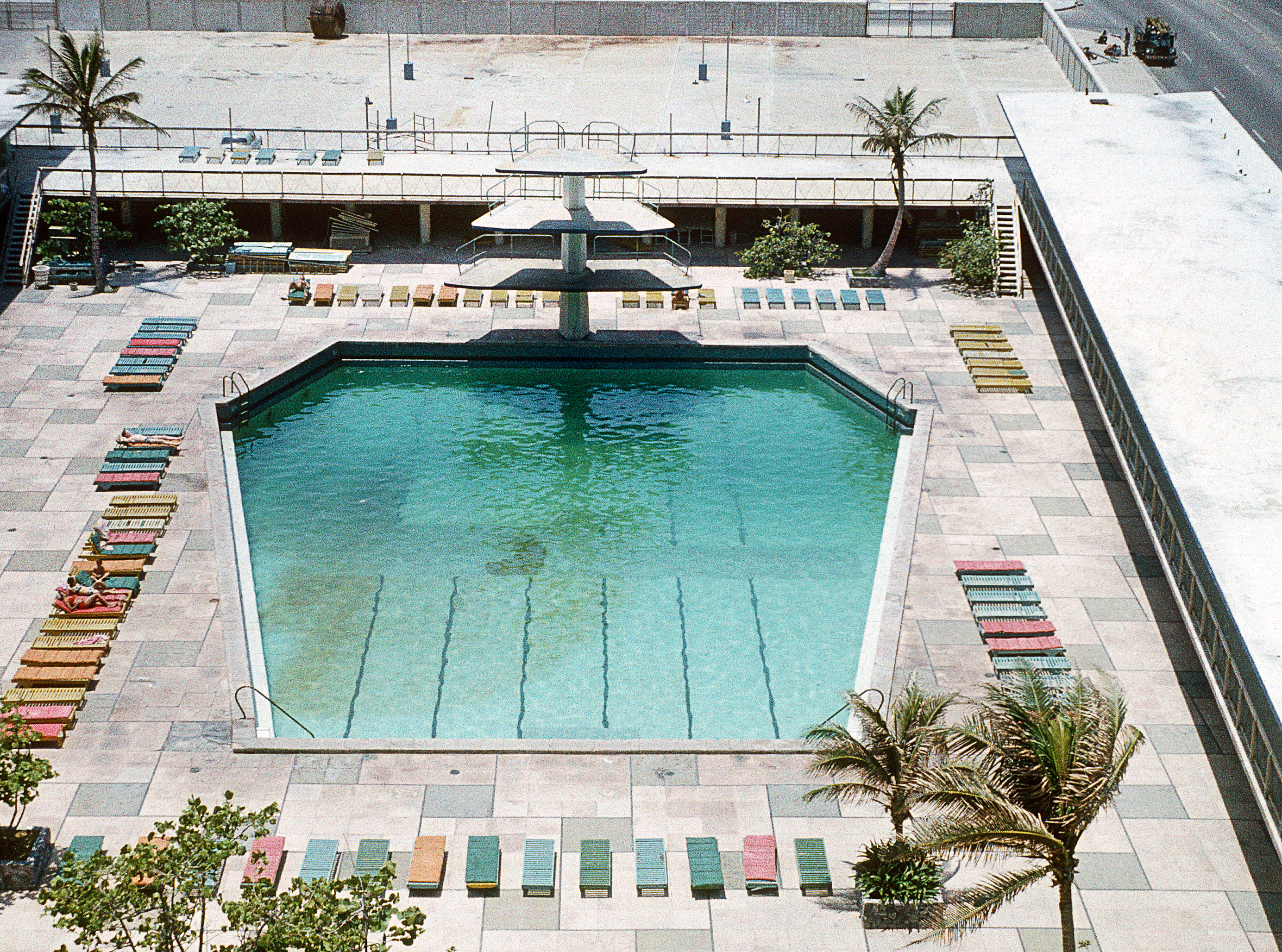
Hotel Habana Riviera
Meyer Lansky's official title at the Havana Riviera was kitchen director. Nobody believed it for a second. From his Presidential Suite on the top floor, the man the FBI considered the most dangerous organized crime figure in America controlled every aspect of a 21-floor, 352-room hotel that he had willed into existence on Havana's Malecon waterfront. The casino alone pulled in over $3 million in its first four months. By New Year's Eve 1958, Lansky was chartering a plane to the Bahamas, his dream of a Caribbean gambling empire shattered by revolution. The hotel still stands on the Vedado seafront, its original 1950s decor largely intact -- a glamorous time capsule of the thirteen months when the mob ran Havana.
A Gangster's Blueprint
The idea came from Las Vegas. After visiting the nine-story Riviera Casino on the Strip, owned by his friend Moe Dalitz, Lansky decided to build something grander in Havana -- a hotel that would rival any on the Strip but operate beyond the reach of US law and the FBI. He chose Cuba precisely because President Fulgencio Batista's government welcomed American gambling money with open arms. The state-run development bank, BANDES, provided most of the $8 million construction cost. Lansky's investment partners read like a roll call of organized crime: Dalitz, Morris Kleinman, Sam Tucker, and Wilbur Clark from the Desert Inn; Ed Levinson from the Fremont; Charles "Babe" Baron watching Sam Giancana's interests; and Hyman Abrams and Morris Rosen from the Flamingo, the casino that Bugsy Siegel had built before his murder. As with all of Lansky's operations, actual ownership was buried beneath layers of managers and frontmen.
Miami Modern on the Malecon
Lansky wanted the hotel built in under six months, a demand so extreme that Wayne McAllister -- the prolific designer of the Desert Inn, Fremont, and Sands hotels -- turned the project down. Igor Boris Polevitzky, a pioneer of Miami Modern architecture, took the job instead, with Irving Feldman serving as general contractor. Cuban architect Manuel Carrera Machado contributed to the blueprints. For the interiors, Lansky hired Albert B. Parvin, who had laid carpets in many of the big Vegas hotels and managed the Flamingo. But Lansky also brought in two of Cuba's finest artists: muralist Rolando Lopez Dirube and sculptor Florencio Gelabert. Gelabert created the white marble mermaid and swordfish that still graces the entrance, and "Ritmo Cubano," a bronze lobby sculpture of twirling dancers that captured the marine outdoor atmosphere the three designers sought. Construction began in December 1956 on the site of a former sports arena, even as revolutionary upheaval churned across the island. It was the first hotel in Havana with air-conditioned rooms.
Opening Night and the Stars Who Followed
When the Havana Riviera opened on December 10, 1957, it was the largest purpose-built casino-hotel in the world outside Las Vegas. Ginger Rogers headlined the opening act at the Copa Cabaret with a music revue directed by choreographer Jack Cole. Lansky was characteristically blunt about her performance. Within days, the hotel became a symbol of glamorous Havana, drawing Abbott and Costello, Steve Allen (who taped an episode of his Sunday night TV show from the hotel featuring Mamie Van Doren swimming in the pool), William Holden, Nat King Cole, and Ava Gardner. The casino was operated by Frank Erickson, serving as Frank Costello's representative in Cuba, alongside the Cellini brothers, Ed Levenson, and Dusty Peters. Since no Cubans had been trained for large-scale gambling operations, pit bosses, dealers, and stickmen were imported from the US on two-year "technician" visas -- veterans of illicit American gambling who eventually became tutors for Cuban staff.
Revolution Sweeps In
The Havana Riviera enjoyed barely thirteen months of operation before Fidel Castro's revolution upended everything. On New Year's Eve 1958, with his health failing and the rebels closing in, Lansky chartered a plane to the Bahamas. With him went the dream of sitting at the center of Cuba's gambling empire. Three weeks later, on January 22, 1959, Castro himself held a press conference in the hotel's Copa Cabaret, addressing the world about the revolution from the very room where American mobsters had hosted floor shows. By October 1960, Castro had nationalized every hotel-casino on the island and outlawed gambling entirely. The hotel that Lansky built to escape American law had been seized by a government that answered to no one.
The Riviera Endures
The Hotel Habana Riviera still stands on the Malecon, its 1950s architecture and decor remarkably preserved through decades of state operation. The Palacio de la Salsa Club, where salsa bands perform regularly, keeps live music echoing through the same halls where Ginger Rogers once danced. For years the hotel was run by Gran Caribe, a Cuban state-owned chain. In 2017, Spanish hotel group Iberostar assumed management, renaming it the Hotel Habana Riviera by Iberostar and announcing plans to invest 35 million euros in renovations. Meanwhile, Lansky's heirs, still living in the Tampa, Florida area, have sought restitution for the government's confiscation -- a legal claim that connects the hotel's mob past to its uncertain present. The building remains what it has always been: a monument to grand ambition interrupted, a place where the ghosts of American gangsters and Cuban revolutionaries share the same corridors.
From the Air
The Hotel Habana Riviera (23.14N, 82.40W) sits on the Malecon waterfront in Havana's Vedado district. The 21-story tower is visible from the air along Havana's northern coast. Jose Marti International Airport (MUHA/HAV) lies approximately 18km to the south. Best viewed from 2,000-3,000 feet approaching from the sea, where the hotel's distinctive midcentury tower contrasts with the colonial city to the east. The Malecon seawall stretches visibly along the coast. Tropical weather year-round; best visibility in the dry season (November-April).