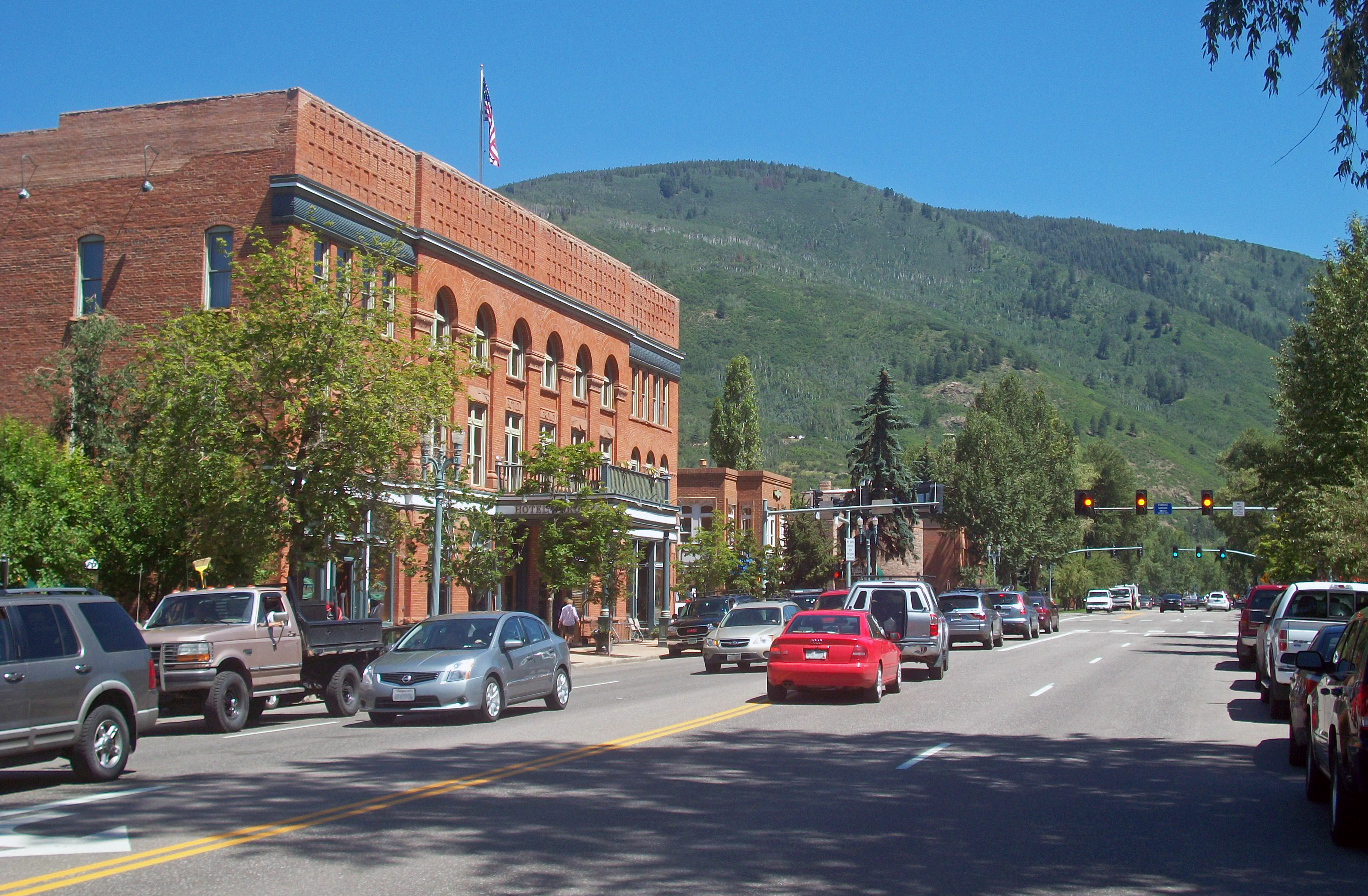
Hotel Jerome
The bartender who bought the hotel never planned to stay. Mansor Elisha was a Syrian American drummer travelling with a band when he stopped in Aspen, took a job pouring drinks at the Hotel Jerome, and ended up acquiring the entire property from its bankrupt founder. For decades, his family kept the lights on in a ghost town. That improbable chain of events preserved what Jerome B. Wheeler, co-owner of Macy's, had built in the 1880s: one of the first buildings west of the Mississippi with full electric lighting, a brick monument to silver-boom ambition on East Main Street in Aspen, Colorado. Listed on the National Register of Historic Places in 1986, the Jerome has survived silver crashes, world wars, and the transformation of a mining town into a global ski destination.
Wheeler's Grand Ambition
Jerome B. Wheeler visited Aspen in 1883 while vacationing in Colorado and saw potential where others saw a remote mining camp. He invested heavily in the community, completing a smelter so ore no longer had to be hauled back to Leadville. After winning a legal battle over the rights to the Smuggler Mine, the richest lode in the area, he left Macy's and commissioned the hotel and the Wheeler Opera House, both bearing his name. Wheeler intended the Jerome to rival Claridge's in London and the George-V in Paris. He loaned 0,000 to a local innkeeper for construction, but costs more than doubled. A month before opening, the builders left town, sticking Wheeler with roughly 50,000 in debt. As one commentator observed over a century later, Wheeler had discovered the first rule of building in Aspen: it always costs way more than you planned. When it finally opened on the night before Thanksgiving, the hotel featured 90 rooms, running water, indoor plumbing, steam heat, an elevator, and full electric lighting.
The Quiet Years
The silver crash came fast. In 1892, Wheeler sold the hotel to a Denver man named Archie Fisk. The next year, Congress repealed the Sherman Silver Purchase Act in response to the Panic of 1893, ending the Colorado Silver Boom and Aspen's prosperity with it. Fisk could not pay taxes on the property, which passed to Pitkin County and eventually back to Wheeler. The Jerome survived as the center of the city's dwindling social life, partly because it had the only public bathroom downtown. In 1911, ownership passed to Mansor Elisha, the former bartender. In 1918, the Jerome's parlors served as morgues during the flu epidemic. Elisha died in 1935, leaving his son Laurence in charge. Through it all, the hotel never closed. When soldiers from the Tenth Mountain Division skied cross-country from Camp Hale and arrived at the Jerome still on skis, Laurence Elisha let them spend the night and offered free drinks. He gave them a room and a steak dinner for a dollar a night throughout their training.
The J-Bar's Famous Regulars
The Jerome's J-Bar became legendary for the people who refused to leave it. During Prohibition, a celebrated spiked drink called the Aspen Crud was invented there. After the war, as Aspen reinvented itself as a ski resort, celebrities like Gary Cooper and John Wayne stayed at the Jerome and mingled freely with locals at the bar. Hunter S. Thompson made the J-Bar his de facto office during the 1970s, coming in from his home in nearby Woody Creek to pick up his mail and then settle in for hours of drinking, eating, and watching television, which had the best reception in the area before cable arrived. If people wanted to meet Hunter, they came to the Jerome. The hotel ballroom later hosted his memorial service. Glenn Frey of the Eagles went there so often with his bandmates that the J-Bar inspired a song. Bill Murray stayed at the Jerome in 1980 while filming Where the Buffalo Roam, and the nightly parties that started in the J-Bar continued in his suite upstairs.
Surviving Success
Architect Herbert Bayer renovated the Jerome in the mid-twentieth century, painting the brick exterior light grey with blue window accents in a shade called Bayer blue. Longtime residents hated it. The pool and poolhouse were added. Later renovations restored the J-Bar's original appearance using photographs over a century old. The hotel changed hands multiple times in the 2000s, passing through Chicago-based owners, a RockResorts management contract, a Morgan Stanley mortgage that ended up with Lehman Brothers, and a foreclosure after the 2008 financial crisis. Through it all, the Jerome endured. In January 2012, the entire hotel was rented for a weekend for a bat mitzvah. Today it is operated by Auberge Resorts. Frommer's calls it one of the best places to stay in Aspen. Fodor's calls it one of the state's truly grand hotels. The three-story brick structure still anchors its corner of Main and Mill, the only hotel that stayed open through every chapter of Aspen's improbable history.
From the Air
Located at 39.19N, 106.82W on East Main Street in Aspen, Colorado. The hotel sits in downtown Aspen near the base of Aspen Mountain. Best viewed at lower altitudes in clear conditions. Look for the compact downtown grid nestled in the Roaring Fork Valley with Aspen Mountain rising to the south. Nearest airport: Aspen-Pitkin County Airport (KASE), approximately 3nm northwest. The Roaring Fork River flows through town. The Sawatch Range and Elk Mountains provide dramatic terrain in all directions.