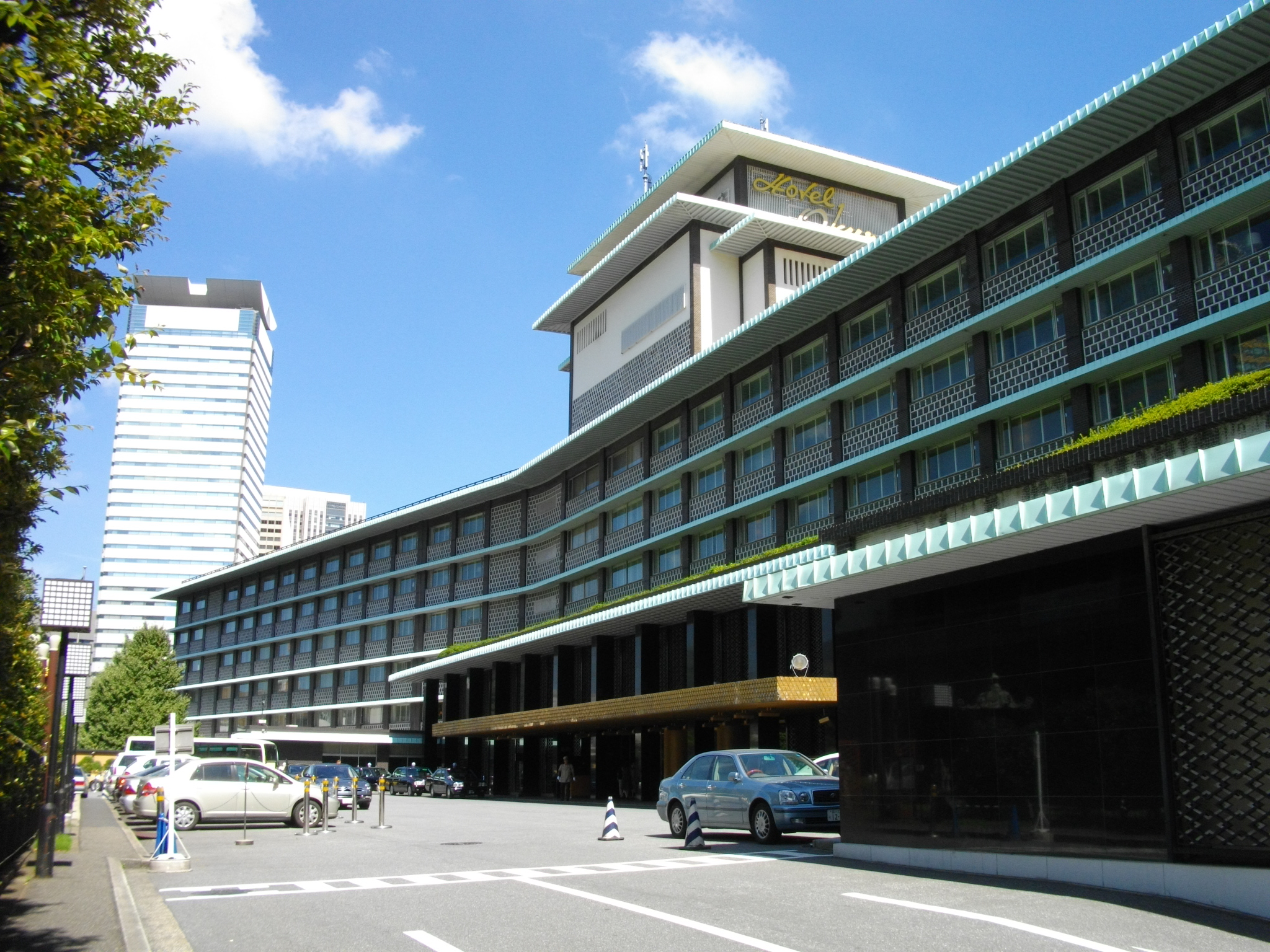
The Okura Tokyo: Where James Bond Slept and VHS Was Born
In 1976, executives from JVC gathered in a hotel ballroom in Tokyo's Minato ward and pressed play on a machine that would change home entertainment forever -- the world's first VHS videocassette recorder. The hotel they chose for the occasion was the Okura, a place so synonymous with understated power that Ian Fleming had James Bond check in during You Only Live Twice, and Cary Grant tried to book a room there in Walk, Don't Run. For more than half a century, the Hotel Okura has occupied a singular space in Tokyo's identity: not the flashiest hotel, not the tallest, but the one where the geometry of its lobby lanterns and the hush of its Orchid Bar made foreign diplomats, novelists, and industrialists feel they had arrived somewhere that only Tokyo could produce.
Taniguchi's Geometry of Light
Architect Yoshiro Taniguchi designed the 408-room Main Wing that opened on May 20, 1962, just in time for Tokyo's transformation ahead of the 1964 Olympics. The lobby became the building's soul -- hexagonal paper lanterns suspended from the ceiling in geometric clusters, lattice-work screens filtering light into soft patterns, and clusters of tables and chairs arranged to echo the form of plum blossoms. The effect was boldly Western in its modernism yet unmistakably Japanese in its restraint. Silk wall coverings, specially commissioned tiles, and wooden lattice work were crafted by artisans whose techniques predated the building by centuries. The Okura joined Pan Am's Intercontinental Hotels division on June 1, 1964, remaining affiliated until 1972, though it was never branded as an Intercontinental. Alongside the Imperial Hotel and the Hotel New Otani, the Okura became one of Tokyo's 'Big Three' -- a nickname echoing the three branch houses of the Tokugawa clan from the Edo period.
A Stage for Fiction and History
The Okura became a character in its own right. Ian Fleming set Bond's Tokyo lodging there in You Only Live Twice, published just two years after the hotel opened. Haruki Murakami wove it into 1Q84. Eric Van Lustbader used it in The Ninja, and Barry Eisler placed scenes there in Zero Sum. Beyond fiction, the hotel hosted major international summits and provided catering for diplomatic gatherings held across the city. The Orchid Bar, dimly lit and deliberately unhurried, became a favorite meeting place for diplomats from the many embassies clustered nearby in Minato ward. The South Wing, which opened on November 26, 1973, could be sealed off from the rest of the building to serve as a secure logistics annex, with its penthouse Imperial Suite reserved for high-security VIP guests. The hotel's grounds also host the Okura Museum of Art, housing Japanese and East Asian art collected by industrialist Okura Kihachiro.
Save the Okura
When demolition plans for the original Main Wing were announced in 2015, the architectural world erupted. Tyler Brule, the Monocle editor and design authority, called the building 'a masterpiece' and 'one of the most loved modernist hotels in the world.' A 'Save the Okura' campaign gained international attention. Critics noted the painful irony: the building's 1960s modernist aesthetic was being destroyed at the precise moment shows like Mad Men had made that style fashionable again. The Orchid Bar poured its last drinks. The geometric lanterns went dark. The Main Wing closed in August 2015 and the wrecking crews moved in. But the outcry accomplished something rare -- it forced the developers to honor the original design in the replacement.
Father and Son, Old and New
The rebuilding fell to Yoshio Taniguchi, the son of the original architect, who faced the extraordinary task of recreating his father's vision inside a modern structure. Following a 110-billion-yen (roughly one billion US dollars) construction project, two new towers opened on September 12, 2019, ahead of the 2020 Tokyo Olympics. The Okura Prestige Tower rises 41 stories with 368 modern international rooms and 18 floors of office space. The adjacent Okura Heritage Tower stands 17 stories with 140 rooms decorated in traditional Japanese style. Interior elements from the original lobby were painstakingly transferred or recreated within the new building -- the hexagonal lanterns, the lattice screens, the plum-blossom seating arrangements. About half the site was opened to the public as green space and plaza. The hotel was rebranded as The Okura Tokyo, a name that acknowledged both continuity and change. The geometry of light that Yoshiro Taniguchi created in 1962 still filters through the lobby, now maintained by the next generation.
From the Air
Located at 35.667N, 139.744E in Tokyo's Minato ward, near the cluster of embassies south of the Imperial Palace. The twin towers of The Okura Tokyo are visible from altitude in the dense Toranomon-Akasaka district. Tokyo Haneda International Airport (RJTT) lies approximately 8 nautical miles to the south. Narita International Airport (RJAA) is approximately 35 nautical miles to the east-northeast. Best viewed at 3,000-5,000 feet AGL from the south, with Tokyo Tower and the embassy district providing visual reference points.