Hotham Valley Railway
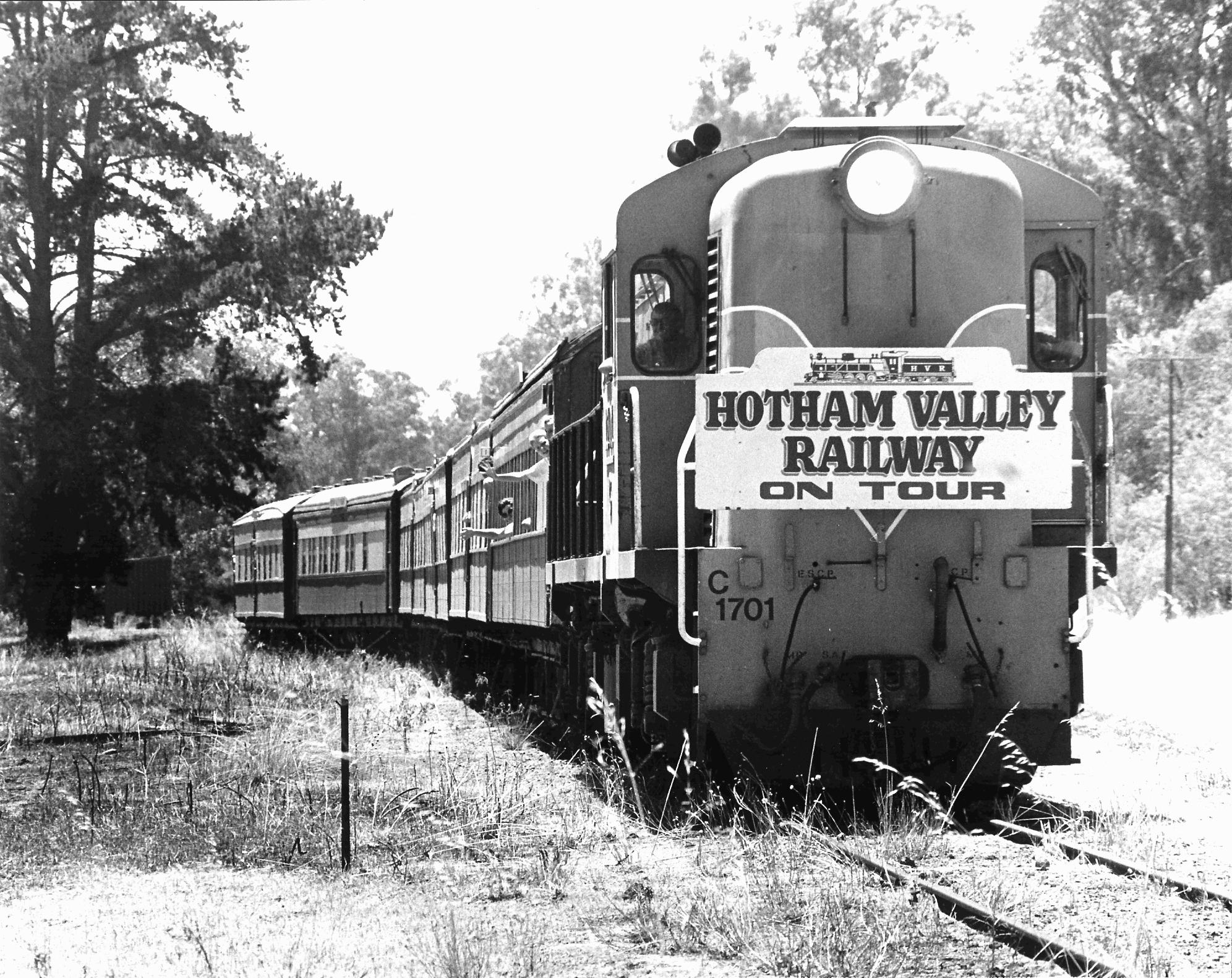
Four residents of Pinjarra met in 1974 with an idea that was either admirably ambitious or hopelessly quixotic: save the steam locomotives and the railway line that connected their town to Dwellingup before both disappeared forever. The Pinjarra to Narrogin railway was losing its reason to exist as the timber and agricultural traffic that had sustained it dwindled, and without intervention the tracks would be pulled up and the engines scrapped. Half a century later, the organization those four founded operates 32 kilometers of heritage railway, runs both steam and diesel services, and holds the distinction of being the only heritage railway in Western Australia regularly operating original-gauge government steam locomotives on their original line. The Hotham Valley Tourist Railway celebrated its 50th anniversary in September 2024, still staffed almost entirely by volunteers.
Saving the Line
The Pinjarra to Narrogin railway was built to serve the timber mills and farming communities of the Darling Range hinterland, climbing from the coastal plain at Pinjarra into the jarrah forests around Dwellingup and beyond. As road transport eclipsed rail in the mid-twentieth century, branch lines like this one faced closure. The four founders of what initially called itself the Pinjarra Steam and Hills Railway Preservation Society saw preservation not as nostalgia but as a practical response to the imminent loss of irreplaceable infrastructure. Steam locomotives, once scrapped, cannot be rebuilt from memory. Track corridors, once surrendered, are almost never recovered. The group secured access to the line and began the painstaking work of maintaining both the rolling stock and the permanent way, tasks that consume volunteers year-round and require skills ranging from boilermaking to civil engineering.
Iron Horses from Three Continents
The Hotham Valley Railway's locomotive roster reads like a history of Western Australian railroading. Among the steam engines are WAGR G-class 4-6-0 locomotives dating to 1897, built by the Glasgow firm Dubs and Company. One of them, G71 Menzies, worked first as a construction locomotive in the Eastern Goldfields before spending decades hauling timber for Millars Karri and Jarrah Forests Limited. It remains unassembled, the subject of an ongoing restoration appeal. The railway's passenger carriages are equally eclectic. In 1987, Hotham Valley acquired 25 Corten steel sleeping cars from South African Railways, converting them into first-class, second-class, buffet, and dining carriages. Painted in the green and cream livery with mustard roofs that recalled the original WAGR color scheme, the cars were named after Western Australian rivers, sharing names with the Pr-class steam locomotives that had carried the same titles before their withdrawal in 1971.
Dwellingup and the Forest
Dwellingup, a small timber town nestled in the jarrah forest about 30 kilometers east of Pinjarra, serves as the primary center of Hotham Valley's operations. The town itself has a dramatic history: a catastrophic bushfire in 1961 destroyed most of it, and the rebuilt community has long understood the value of preserving what survives. The railway's route from Pinjarra to Dwellingup climbs through some of the most scenic bushland in the Peel region, crossing bridges, rounding curves cut into hillsides, and passing through corridors of tall timber. For passengers, the journey offers a sensory experience no highway can replicate: the rhythmic clatter of wheels on rail joints, the whistle echoing off eucalyptus trunks, the faint smell of coal smoke drifting through open windows. The railway does not merely transport people between two points. It transports them into a slower era, one governed by the pace of steam and the contours of the land.
Volunteers Keeping Steam Alive
Running a heritage railway is less romantic than riding one. Behind every scheduled service are hundreds of hours of unpaid labor: maintaining boilers to exacting safety standards, replacing sleepers and ballast along 32 kilometers of track, managing ticketing and operations, training new volunteers in skills that the commercial railway industry no longer teaches. The Hotham Valley Railway is staffed almost exclusively by volunteers, and their commitment has sustained the organization through half a century of financial pressures, bushfire threats, and the steady attrition of aging infrastructure. As of 2018, Hotham Valley was the only heritage railway in Western Australia regularly running original-gauge WAGR steam locomotives, a distinction that reflects both the quality of its engineering and the tenacity of its people. The railway is not a museum with static displays. It is a working operation where century-old machines are kept in motion by the labor and devotion of people who believe some things are worth preserving in action rather than behind glass.
From the Air
Located at 32.63S, 115.87E in the Peel region of Western Australia. The railway runs 32 km between Pinjarra on the coastal plain and Dwellingup in the jarrah forests of the Darling Range. The route is visible from the air as a narrow cleared corridor winding through dense forest east of Pinjarra. Nearest airport is Murray Field (YMUF) near Pinjarra. Perth's Jandakot Airport (YPJT) is approximately 75 km north. Best viewed at 3,000-5,000 ft to trace the railway's path through the forest between the two towns. The Darling Scarp escarpment is clearly visible as the terrain rises sharply east of the coastal plain.