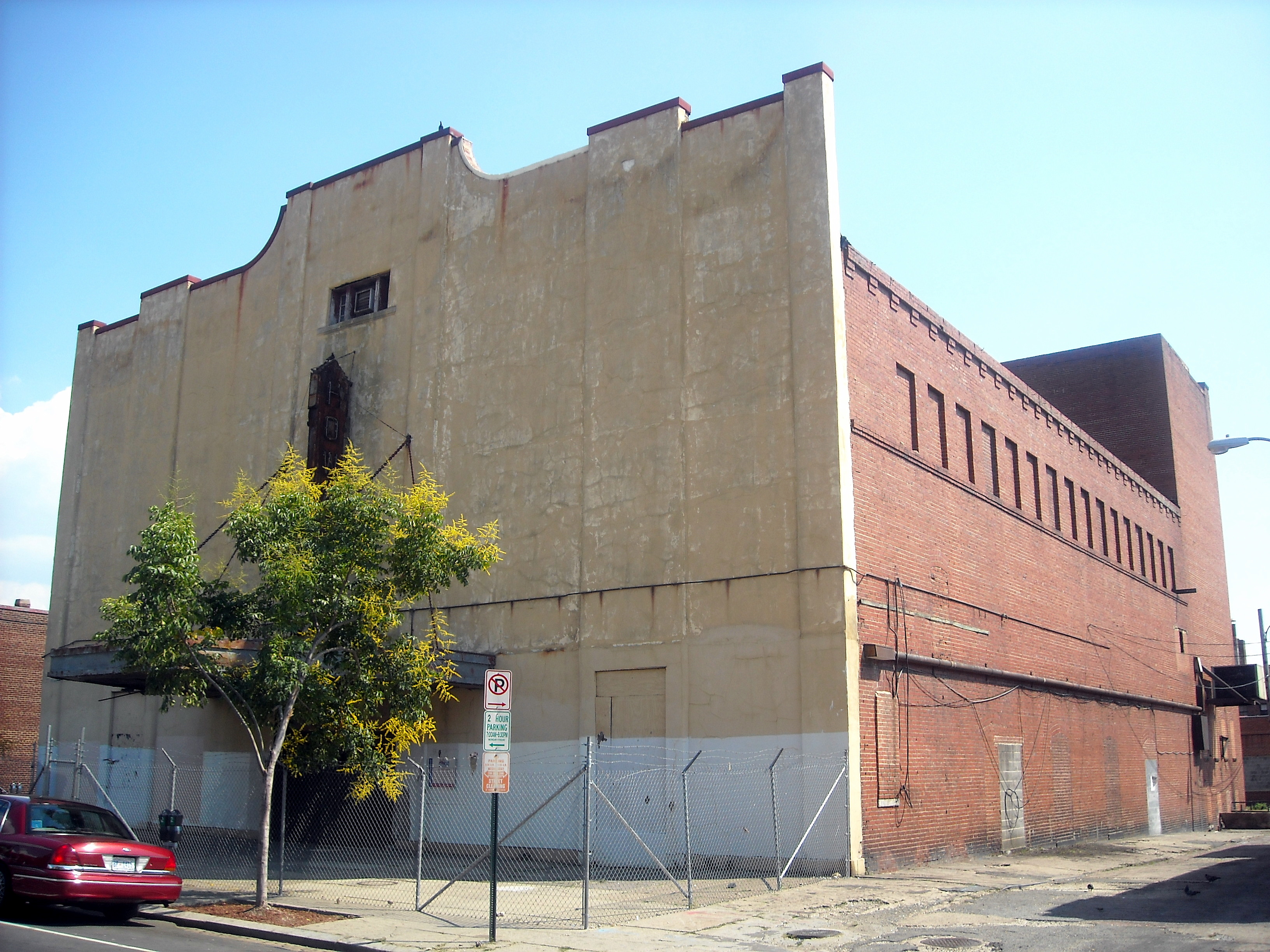
Howard Theatre
They called it the "Theater of the People," and for more than a century, the Howard Theatre at 620 T Street NW has earned that name. When it opened its doors in 1910, it became one of the first large-scale theaters in the United States built to serve African American audiences. Its Beaux-Arts facade, blending Italian Renaissance and neoclassical details, announced something bold on the streets of Washington's Shaw neighborhood: a venue where Black culture would not merely be tolerated but celebrated, elevated, and given center stage.
Where Legends Found Their Voice
The Howard was never just a building. It was a launchpad. In 1931, Duke Ellington returned to the city of his birth to play "the Howard," cementing the theater's reputation as a destination for the greatest talent in Black America. Under manager Shep Allen, the venue became a proving ground along the so-called "Chitlin' Circuit" of theaters that welcomed Black performers during the era of segregation. The Lafayette Players performed dramatic works here. The Howard University Players staged productions within walking distance of their campus. The theater supported not just music but the full spectrum of Black artistic life -- drama, comedy, dance, and oratory. For decades, the stage at T Street was where performers arrived unknown and left as stars.
Smoke and Silence on T Street
On April 4, 1968, Martin Luther King Jr. was assassinated in Memphis. The grief and rage that followed swept through Washington in waves of fire and broken glass. The 1968 riots devastated the Shaw neighborhood, and the Howard Theatre stood in the wreckage. The physical damage was compounded by a more gradual shift: desegregation opened mainstream venues to Black audiences and artists, drawing crowds away from the historically Black theaters that had nurtured them. The Howard struggled to fill its seats. By 1970, the lights went dark. Redd Foxx and Melba Moore headlined a brief reopening, but the theater could not sustain itself. For years the building sat shuttered, its ornate facade a silent monument to what had been.
A $29 Million Encore
In 2006, Ellis Development was selected to bring the Howard back to life. The District of Columbia committed $20 million in public funding for the restoration, a signal of the theater's importance to the city's cultural identity. Groundbreaking came in September 2010, and crews spent nearly two years restoring the interior while preserving the historic character that earned the building its place on the National Register of Historic Places in 1974. On April 9, 2012, the Howard Theatre reopened with a lineup that spanned generations and genres: Wanda Sykes brought comedy, Blue Oyster Cult brought rock, and Chaka Khan brought soul -- all within the first month.
Still the People's Theater
Today the Howard Theatre hosts an eclectic roster that reflects the diversity of the neighborhood growing around it. Kendrick Lamar, The Roots, Esperanza Spalding, Gregory Porter, and Sheila E have all played the restored stage. The venue handles weddings, private events, and comedy nights alongside its concert schedule. Shaw itself has transformed from the riot-scarred corridors of the late twentieth century into one of Washington's most dynamic neighborhoods. Through every incarnation -- gilded showplace, cultural fortress, abandoned ruin, reborn landmark -- the Howard has mirrored the story of Black Washington itself. The theater endures because the community it was built to serve insisted that it must.
From the Air
Located at 38.9152N, 77.0237W in the Shaw neighborhood of Northwest Washington, D.C. The theater sits along T Street NW, roughly a mile north of the National Mall. Nearest airports: KDCA (Ronald Reagan Washington National, 4 nm south), KIAD (Washington Dulles International, 24 nm west). Best viewed below 3,000 feet AGL for neighborhood context. The surrounding grid of row houses and the nearby Howard University campus are useful visual landmarks.