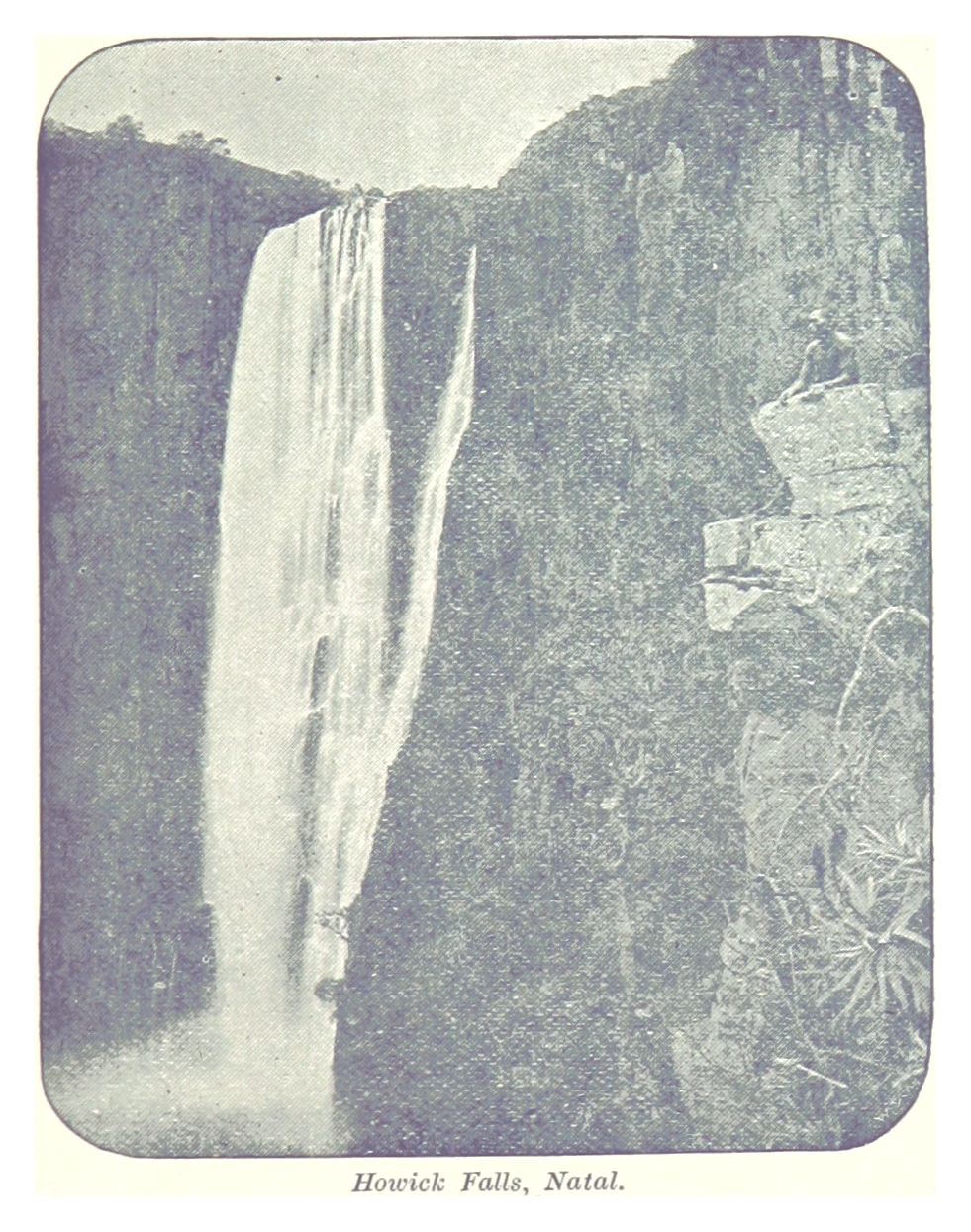
Howick Falls
The Zulu name for Howick Falls is KwaNogqaza -- "Place of the Tall One." The tall one in question is not the waterfall itself but the Inkanyamba, a giant serpent-like creature said to inhabit the churning pool at the base of the 95-meter drop. According to local tradition, only sangomas -- traditional healers -- can safely approach the water's edge, and then only to offer prayers. Whether or not you believe in the serpent, the pool has claimed at least 40 lives since records began in 1851, lending the place a gravity that mere height statistics cannot convey.
Thirty Thousand Years of Witnesses
KwaZulu-Natal has known human occupation for over 30,000 years, and KwaNogqaza was a significant site long before European settlers arrived and renamed it for the nearby town of Howick. The Umgeni River carves through the KwaZulu-Natal Midlands here, and the sudden drop -- where the river steps off a dolerite sill into a deep gorge -- would have been a landmark for every group that passed through. The rich oral tradition surrounding the falls speaks to a place that has always demanded attention and respect. Settlers, arriving in the mid-nineteenth century, were drawn to the same spot for different reasons: the river above the falls appeared to offer an easy crossing point. It did not. The current above the lip is deceptively strong, and more than one early colonist was swept over before the community learned to cross elsewhere.
The Serpent in the Pool
The Inkanyamba occupies a particular place in Zulu cosmology. It is not a fairy tale or a bedtime story but a spiritual presence -- a creature associated with storms, seasonal change, and the deep places where water gathers power. The pool beneath Howick Falls, perpetually churning with mist and spray, is exactly the kind of place where such a being would reside. Sangomas visit the falls to make offerings and communicate with ancestral spirits, and the Inkanyamba is treated with the deference owed to something genuinely dangerous. The legend is not quaint folklore for tourist brochures. It is a living belief, maintained by communities who regard the falls as sacred. The roar of water through the gorge and the mist that rises from the pool give the story its texture -- visit on a grey morning when the spray obscures the base, and you will understand why the Inkanyamba feels plausible.
A Ledger of the Lost
Forty recorded deaths at a single waterfall is a notable figure. The first was documented in 1851, and the causes since then have ranged from accidental drownings to suicides to at least one murder. The falls have also attracted thrill-seekers with more courage than sense. In 1999, BASE jumper Jeb Corliss leapt from the cliff edge and nearly died when his parachute opened asymmetrically, swinging him directly into the downpouring water. He survived, barely, adding his name to a long list of people who underestimated the forces at work here. The combination of deaths, legend, and the falls' sheer visual drama has given Howick Falls what one might call a complicated reputation -- a place simultaneously beautiful and ominous, where the water invites contemplation and the pool below discourages lingering.
Midlands Landmark
Despite its dark history -- or perhaps, as the tourism literature carefully notes, because of it -- KwaNogqaza has become one of the principal attractions of the KwaZulu-Natal Midlands. The town of Howick sits on the Midlands Meander, a popular driving route through rolling green hills dotted with craft studios, cheese farms, and small-batch breweries. The falls offer a counterpoint to this pastoral gentleness: a reminder that the landscape here is not merely charming but geologically active, shaped by the same tectonic forces that built the Drakensberg escarpment to the west. A viewing platform provides a safe vantage point above the gorge. The Umgeni River continues beyond the falls toward Durban and the Indian Ocean, carrying with it the mineral sediment of the Midlands and, if the sangomas are right, the watchful presence of something ancient in the deep water.
From the Air
Located at 29.49S, 30.29E in the town of Howick, KwaZulu-Natal Midlands, South Africa. The falls appear as a white plume on the Umgeni River where it drops into a forested gorge. Best viewed at 2,000-4,000 feet AGL. The Midlands terrain is gently rolling hills at approximately 1,000-1,100 m ASL, so the gorge stands out clearly. Nearest major airport: Pietermaritzburg (FAPM), approximately 25 km to the southeast. Durban's King Shaka International (FALE) is about 100 km to the east. Visibility is generally good, though afternoon mist and cloud can develop in the gorge.