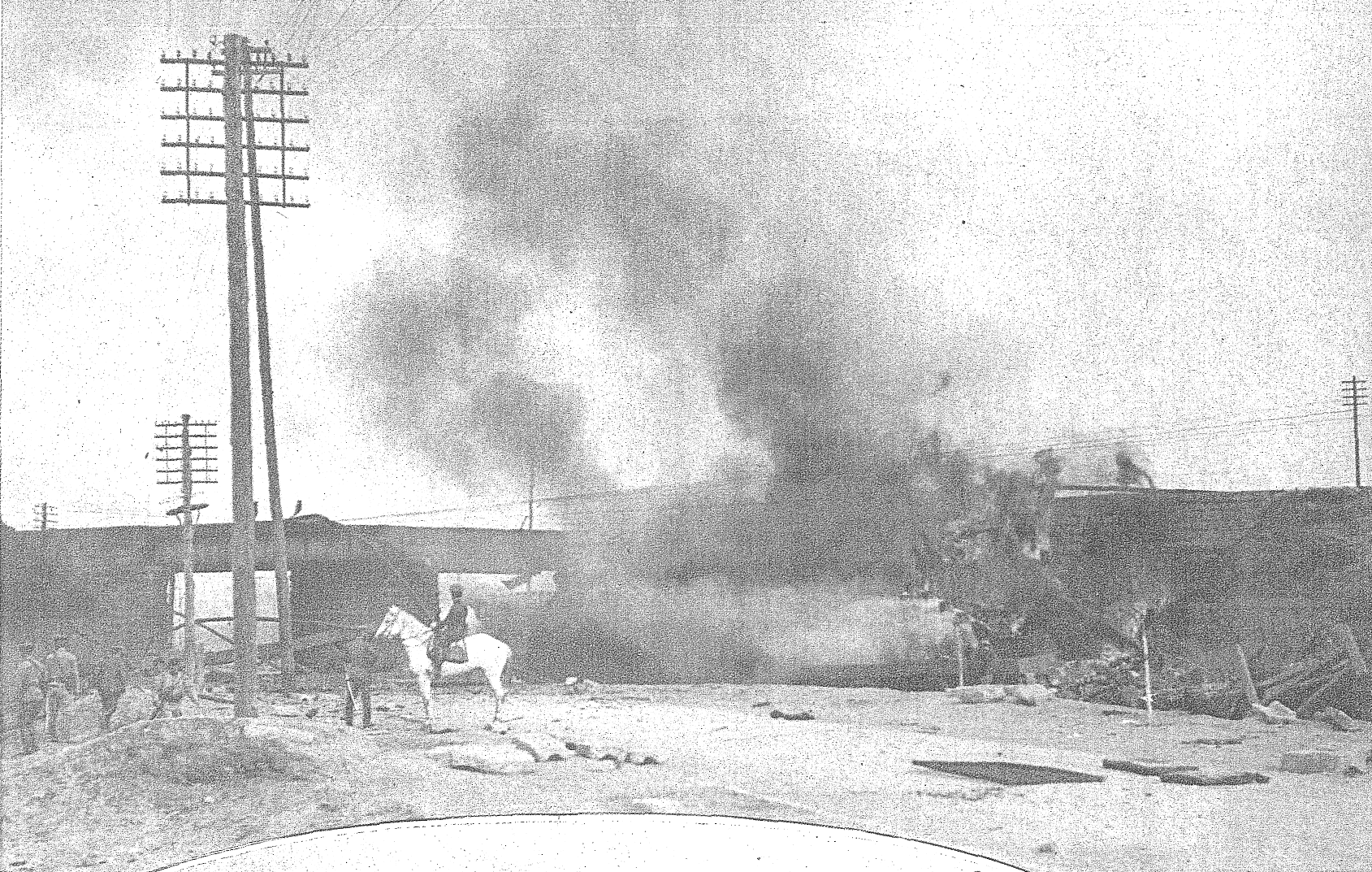
Huanggutun Incident
At 5:23 in the morning on 4 June 1928, Zhang Zuolin's personal train passed beneath a bridge where the South Manchuria Railway crossed the Jingfeng Railway, a few kilometers east of Huanggutun Railway Station on the outskirts of Shenyang. A bomb detonated. The governor of Heilongjiang Province and several other officials aboard died instantly. Zhang, the most powerful warlord in China and the de facto head of state, was pulled from the wreckage mortally wounded. He died hours later at his home in Shenyang. The assassination had been planned by a colonel in the Kwantung Army who believed killing Zhang would give Japan a freer hand in Manchuria. He was catastrophically wrong.
The Warlord Who Changed Partners
Zhang Zuolin had risen from a bandit leader to the ruler of all Manchuria, an alliance of nine provinces that he governed with a combination of military force and shrewd diplomacy. His relationship with Japan had been mutually beneficial for years: Zhang suppressed banditry and protected the South Manchurian Railway; Japan provided military support, helping him win the Zhili-Fengtian Wars and crush an internal rebellion led by General Guo Songling. But Zhang's ambitions extended beyond what Japan had in mind. Once he had consolidated power, he began opening Manchuria's trade and investment opportunities to the United States and Britain, breaking the exclusive access he had previously granted to Japan. This shift came at the worst possible moment for Tokyo, which was reeling from the 1923 Great Kanto earthquake and successive economic depressions.
A Colonel's Private War
Colonel Daisaku Komoto did not have orders from Tokyo. He acted on a belief, shared by hardliners in the Kwantung Army, that assassinating Zhang would create chaos in Manchuria that Japan could exploit to install a more pliable leader. The operational details were straightforward: Captain Kaneo Tomiya oversaw the execution, and Sapper First Lieutenant Sadatoshi Fujii planted the bomb on the bridge. The entire stretch of railway was patrolled by Zhang's own troops, but the bridge where the South Manchuria Railway crossed overhead fell outside his security perimeter. It was the one gap in Zhang's defenses, and the Kwantung Army knew exactly where it was.
The Son They Did Not Expect
The assassination's aftermath was a disaster for Japanese ambitions. The Kwantung Army had been grooming General Yang Yuting to succeed Zhang, but troops were not mobilized and no military intervention followed the explosion. The international community condemned the killing, and authorities in Tokyo were furious at the unauthorized operation. Then Zhang's son, Zhang Xueliang, emerged as the new leader of the Fengtian clique -- a development nobody in the Kwantung Army had anticipated. The younger Zhang avoided direct confrontation with Japan but quietly aligned Manchuria with Chiang Kai-shek's Nationalist government, the very outcome Japan had been trying to prevent. The assassination had considerably weakened Japan's political position in the region it most coveted.
A Certain Important Incident
Back in Tokyo, Japanese Prime Minister Tanaka Giichi discovered the truth with difficulty and declared his intention to punish the plotters. His own cabinet and the military establishment pushed back, arguing that exposing the conspiracy would damage Japan's foreign policy. Even the opposition parties, who knew or suspected the truth, chose not to press the issue too aggressively. Tanaka agreed to cover up the matter, and the assassination was officially referred to as "A Certain Important Incident in Manchuria." Emperor Hirohito, informed of the cover-up, accepted it. Tanaka was nevertheless scolded by the Emperor and forced to resign. The Kwantung Army, undeterred, would wait three more years before manufacturing the Mukden Incident of 1931, which provided the pretext for the full-scale invasion of Manchuria and the creation of the puppet state of Manchukuo under Puyi, the last Qing emperor.
From the Air
Located at 41.81°N, 123.40°E, near the former Huanggutun Railway Station on the outskirts of Shenyang. The site where the South Manchuria Railway crossed the Jingfeng Railway is in the western suburbs of the city. Railway lines remain visible in the area. Shenyang Taoxian International Airport (ZYTX) is approximately 15 km to the south. The railway junction area is identifiable from moderate altitude.