Huanghuacheng
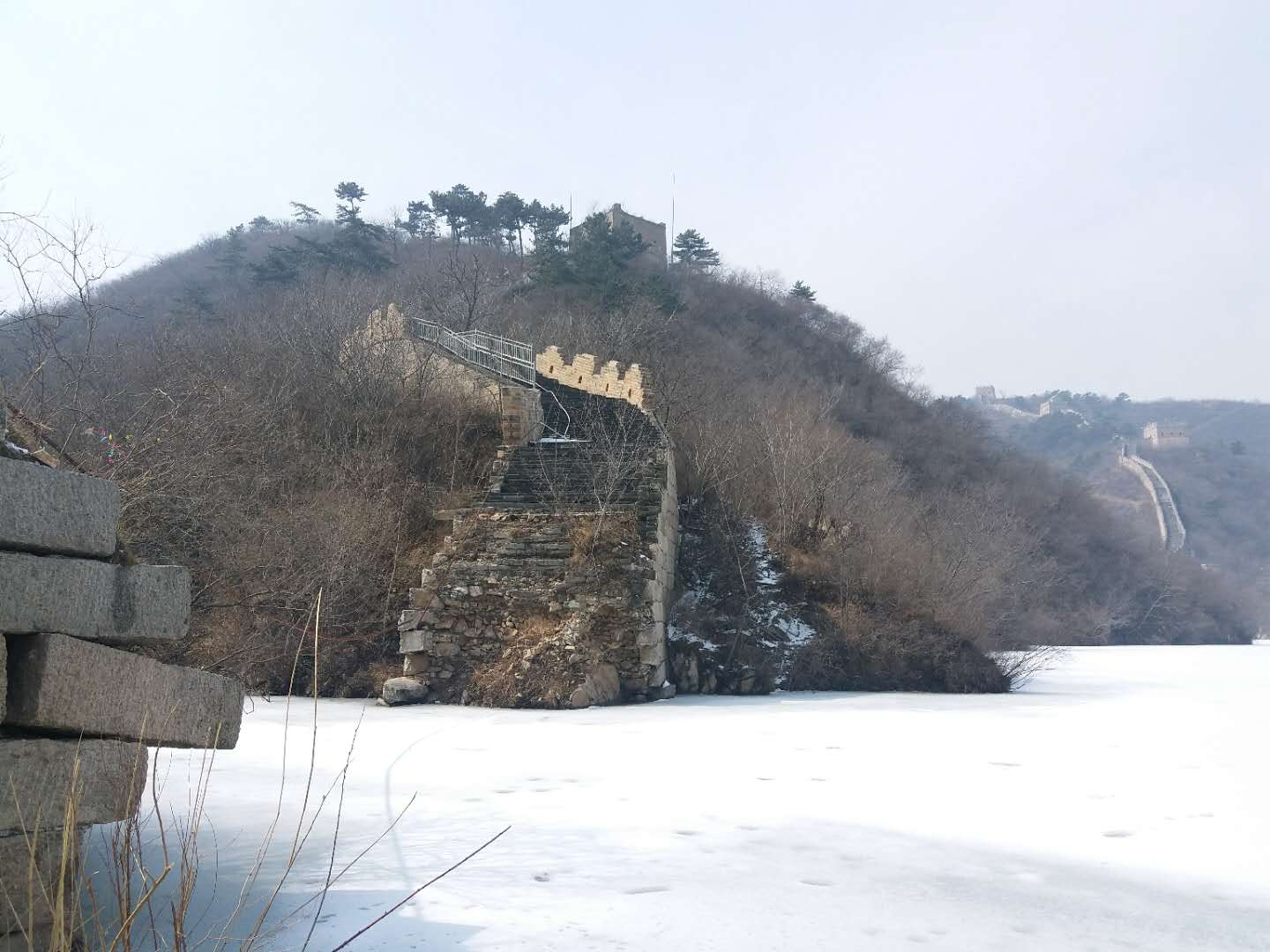
The Great Wall does not end at the water's edge. At Huanghuacheng, it walks straight into a reservoir and vanishes beneath the surface, its ancient stones disappearing into turquoise water as if the wall simply decided to keep going underwater. This is not erosion or ruin. A man-made reservoir was built here, and the water rose to swallow a section of wall that had stood for centuries, creating one of the most surreal sights along the entire 21,000-kilometer fortification.
The Wall That Swims
The Lakeside Great Wall, as it is officially called, takes its name from the reservoir lakes that sit in startling proximity to the ancient fortification. In some places, the wall emerges from the water on one side of the lake and re-emerges on the other, its submerged midsection visible as a dark shadow beneath the surface when the water is clear. The effect is both beautiful and slightly unsettling, as if time itself has partially drowned the wall. Unlike the heavily restored sections at Badaling and Mutianyu, which draw millions of visitors annually, Huanghuacheng usually receives only a handful of tourists on any given day. The village of Huanghuacheng sits in the town of Jiuduhe, within the Huairou District of northern Beijing, about 70 kilometers from the city center.
Climbing Into Solitude
For those who come, the reward is twofold. The submerged wall provides the visual spectacle, but the steep hike to the high guard towers delivers something rarer: solitude on the Great Wall. The climb is genuinely demanding, the kind of trail that separates the casually curious from the genuinely committed. At the top, watchtowers that have not been restored or prettified for tourism stand as the Ming dynasty builders left them, their stone and brick weathered by five centuries of wind and rain. From these towers, the view encompasses both the reservoir below and the ridgeline of wall stretching away into the mountains, an unbroken line of stone tracing the contours of the terrain with the logic of military engineers who understood that controlling the high ground meant controlling everything.
Beauty Through Accident
There is something compelling about Huanghuacheng's accidental beauty. The reservoir was not built to create a scenic attraction. The Great Wall was not designed to be partially submerged. Yet the collision of these two human projects, separated by centuries, produced a landscape that neither could have created alone. The turquoise water against gray stone, the reflection of watchtowers on the lake's surface, the sense of a monument both enduring and yielding to the forces around it, all of these are happy accidents of engineering and hydrology. In a country where the most famous sections of the Great Wall have been restored to gleaming perfection and crowded with tour groups, Huanghuacheng offers something closer to what the wall actually is across most of its length: imperfect, weathered, and quietly magnificent.
From the Air
Located at 40.42N, 116.35E in the Huairou District, approximately 70 km north-northeast of central Beijing. The reservoir and partially submerged Great Wall are visible from moderate altitude as a distinctive pattern of water intersecting the wall's ridgeline path. Nearest major airport is Beijing Capital International Airport (ZBAA/PEK), about 50 km to the south-southeast. The terrain is mountainous with the wall following the ridgeline.