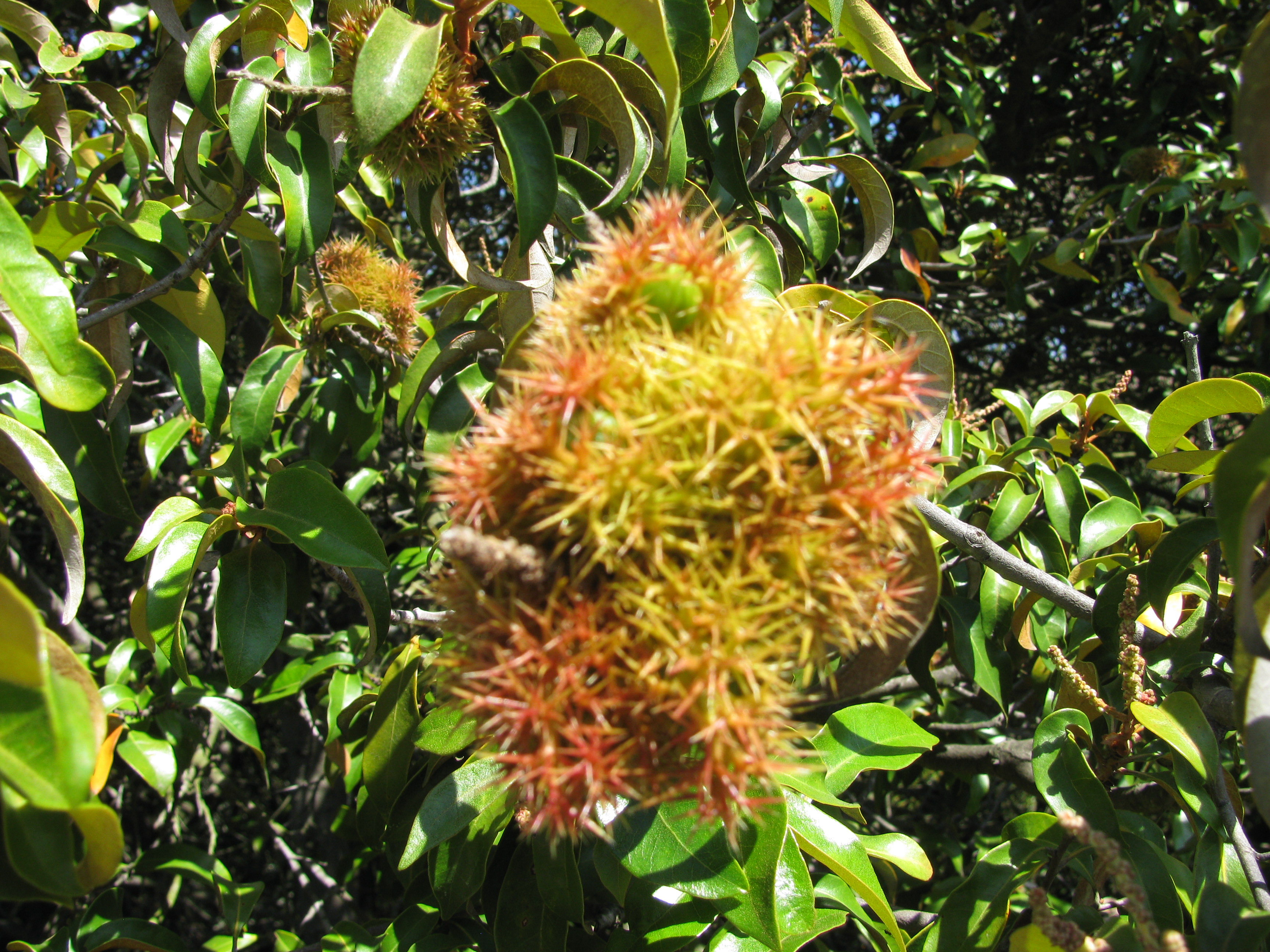
Huckleberry Botanic Regional Preserve
No dogs allowed. The sign at the trailhead is blunt about it, and the reason is not liability or noise complaints. The plants here are too rare and too fragile for even a well-behaved retriever. Huckleberry Botanic Regional Preserve, tucked into a fold of the Oakland Hills where Alameda and Contra Costa Counties meet, protects 241 acres of vegetation that exists almost nowhere else in the Bay Area. The preserve is a living fossil record - a remnant of the ancient flora that once covered these hills before the climate shifted and the modern California landscape took hold. Walking its 1.7-mile self-guided loop trail feels less like a hike and more like stepping backward through millennia.
Survivors of a Vanished Climate
The plants that make Huckleberry Preserve remarkable are relics. Western leatherwood, pallid manzanita, and the preserve's namesake huckleberry - Vaccinium ovatum, the evergreen huckleberry - cling to these north-facing slopes because conditions here echo a wetter, cooler California that disappeared thousands of years ago. The soil is thin and acidic, derived from weathered Franciscan chert, and it supports a plant community classified as California mixed evergreen forest, a habitat type that has contracted dramatically since the last ice age. What remains is precious. The golden chinquapin, Chrysolepis chrysophylla, spreads its shimmering gold-backed leaves on branches that seem to glow when the afternoon light catches them. Pale swallowtail butterflies - Papilio eurymedon - drift between the manzanita blossoms in spring, and the understory hums with insects adapted to this particular assemblage of plants.
A Quiet Corner of the East Bay Parks
The East Bay Regional Park District manages more than 73 regional parks spanning over 125,000 acres across Alameda and Contra Costa Counties. Huckleberry is among the smallest and least visited, and that is by design. There are no campgrounds, no picnic reservations, no barbecue pits. The parking lot is free, the trailhead is modest, and the 1.7-mile loop is the only route through the preserve. Interpretive signs along the path identify the rare species and explain the geology, but the experience is fundamentally about quiet observation. The park opens at five in the morning and closes at ten at night, year-round, and on a weekday morning you might walk the entire loop without encountering another person. In a region of five million people, that solitude is itself a kind of rarity.
The Hills That Shape Everything
The Oakland Hills are a study in microclimates. South-facing slopes bake dry in summer and host chaparral. North-facing slopes, sheltered from the sun's full intensity, trap coastal fog that drifts through the Golden Gate and up the bay. Huckleberry Preserve occupies one of these north-facing pockets, and the fog matters enormously. It delivers moisture during the long dry months when no rain falls, keeping the soil damp enough to sustain plants that would wither on the sunlit side of the same ridge. The topography creates a botanical island - plants that require cool, moist conditions surrounded on all sides by a drier landscape they cannot cross. This isolation has preserved the ancient plant community, but it also makes it vulnerable. Any shift in fog patterns, any prolonged drought, any wildfire that burns too hot could erase what millennia of favorable conditions have maintained.
Between Fire and Fog
The 1991 Oakland Hills firestorm, which killed 25 people and destroyed over 3,000 homes, burned within sight of the preserve. Fire is both the great threat and, paradoxically, a natural part of the landscape these plants evolved in. The manzanitas, in particular, have adapted to periodic burning - some species require fire to germinate their seeds. But the firestorm of 1991 was not the kind of fire the landscape evolved with. It was intensified by decades of fire suppression, invasive eucalyptus, and residential development that pushed deep into the wildland-urban interface. The preserve's managers walk a careful line: allowing enough natural process to maintain ecological health while preventing the catastrophic burns that modern conditions make increasingly likely. Climate change complicates the calculation further, nudging fog patterns and fire seasons in directions that the ancient plants of Huckleberry cannot easily follow.
From the Air
Huckleberry Botanic Regional Preserve sits at 37.845N, 122.19W in the Oakland Hills, east of the ridgeline separating the Bay Area's flatlands from the inland valleys. From the air, look for the heavily forested ridgeline of the Berkeley/Oakland Hills running roughly north-south; the preserve occupies a north-facing fold below Skyline Boulevard. It is not visible as a distinct landmark from altitude, but the surrounding ridge and the adjacent Sibley Volcanic Regional Preserve provide orientation. Nearest airports: Oakland International (KOAK) approximately 10 nm southwest, and Buchanan Field (KCCR) approximately 12 nm north-northeast. Bay Area marine layer frequently obscures the hills from the west, especially in summer mornings.