Huliheʻe Palace
Princess Ruth Keelikolani owned one of the finest houses on the Kona coast, but she refused to sleep in it. She preferred a traditional grass hut on the palace grounds, close to the earth and the old ways even as Western architecture rose around her. That stubbornness captures something essential about Hulihee Palace -- a building that has always been caught between two worlds, built from volcanic rock in the Hawaiian Kingdom era yet plastered over to look European, a royal vacation home turned public museum, standing on Alii Drive in Kailua-Kona as the last physical link to an entire dynasty.
Lava Rock and Lineage
Governor John Adams Kuakini built Hulihee Palace from local lava rock during the Hawaiian Kingdom period, establishing it across the beach from his residence at Kamakahonu. When Kuakini died in 1844, the palace passed to his hanai (adopted) son William Pitt Leleiohoku I, son of Prime Minister William Pitt Kalanimoku. But the measles epidemic of 1848 -- one of the devastating waves of introduced disease that swept through the islands -- killed Leleiohoku, and the palace went to his son John William Pitt Kinau. When Kinau also died young, the building came to rest with his mother, Princess Ruth Keelikolani. Ruth made Hulihee her primary residence and opened its doors to every reigning monarch from Kamehameha III through Liliuokalani, turning the palace into a kind of royal retreat for the Hawaiian court.
House of the Seventh Ruler
After Ruth's death, the palace passed to her cousin Princess Bernice Pauahi Bishop and was eventually sold to King Kalakaua and Queen Kapiolani. Kalakaua, who saw himself as the seventh monarch in the line begun by Kamehameha the Great, renamed the palace Hikulani Hale -- "House of the Seventh Ruler." In 1885, he had the exterior plastered to give the rough lava-rock walls a more polished European appearance, a decision that mirrored the broader cultural tensions of the era. The monarchy was trying to maintain sovereignty while adapting to Western expectations, and even the palace walls reflected that impossible balancing act. After Kalakaua's death, Kapiolani left Hulihee to her two nephews, Prince Jonah Kuhio Kalanianaole Piikoi and Prince David Kawananakoa.
Daughters of Preservation
By the 1920s, the Hawaiian monarchy had been overthrown, the islands were a U.S. territory, and Hulihee Palace needed rescuing. In 1927, the Daughters of Hawaii -- a preservation group dedicated to the cultural legacy of the islands -- partnered with the Territory of Hawaii and palace custodian Stella Maude Jones to restore the building and convert it into a museum. The effort saved not just the structure but the artifacts inside: furniture, royal possessions, and the material culture of a kingdom that no longer existed politically but lived on in these rooms. The palace was added to the National Register of Historic Places in 1973.
Shaken but Standing
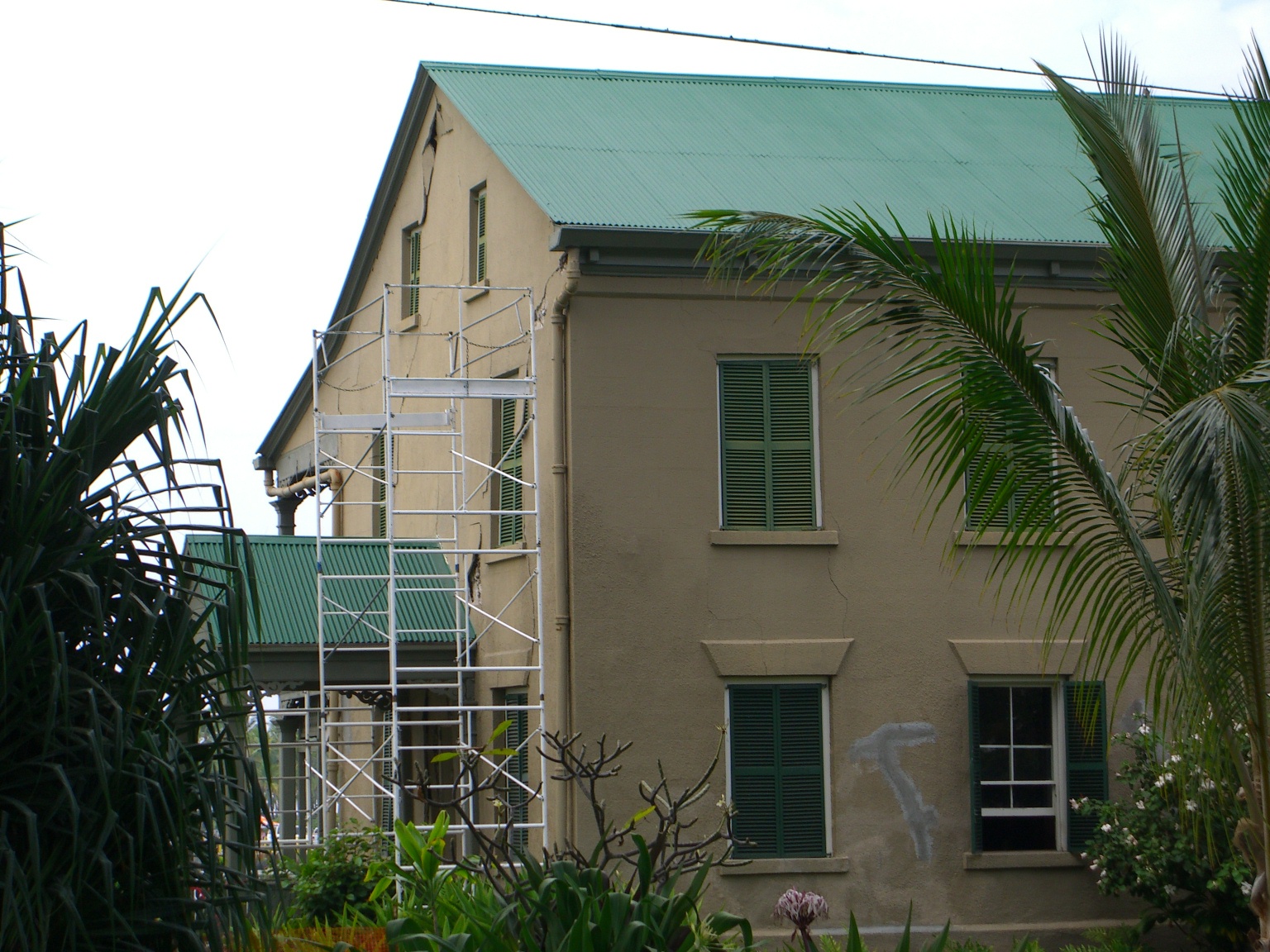
Hulihee Palace has weathered more than political upheaval. The 2006 Kiholo Bay earthquake, centered on the Kohala coast, cracked the palace's walls and ceiling, a reminder that the volcanic island beneath continues to shift and settle. The damage was repaired, and the museum remains open today on Alii Drive, directly across the street from Mokuaikaua Church, the oldest Christian church in the Hawaiian Islands. Together, the palace and the church frame a single block that contains an extraordinary compression of Hawaiian history: the seat of royal leisure, the arrival of a new religion, and the slow transformation of a Polynesian kingdom into something the world had never quite seen before. Princess Ruth's grass hut is long gone, but the palace she slept beside still stands.
From the Air
Hulihee Palace is located at 19.639N, 155.994W on Alii Drive in Kailua-Kona, directly on the waterfront of the Big Island's west coast. The two-story structure sits across from Mokuaikaua Church, forming a recognizable historic block near the Kailua pier. Best viewed from 1,500-3,000 feet AGL. Nearest airport: Kona International (PHKO) approximately 7 nm north. The Kailua-Kona waterfront and bay are prominent visual references.