Humboldt Forum
The facade is fake. That is the first honest thing to say about the Humboldt Forum. The baroque Berlin Palace that once stood on this island in the Spree was bombed in the war, condemned by the East German government, and dynamited in 1950. What rises here today, opened in stages from December 2020, is a 700-million-dollar reconstruction of the old facade wrapped around a brand-new museum on Berlin's Museum Island. Inside the rebuilt walls sit two of the city's ethnographic collections — and the artifacts they contain are, increasingly, the most contested objects in European museum debate.
A Palace Twice Lost
The Hohenzollerns built the Berlin Palace over centuries. Frederick I of Prussia extended it in the early 1700s, and the Ancient Prussian Art Chamber — the seed of all Berlin's museums — moved inside. The building survived 1918 and the Weimar years, took heavy damage in 1945, and might have been restored. The East German leadership had other ideas. They blew up the ruin in 1950 to make space for the Palace of the Republic, their own glass-and-bronze parliament building. After reunification that East German palace was itself demolished, contaminated with asbestos. The decision to rebuild the Hohenzollern facade rather than design something new was contested for decades and remains so. President Joachim Gauck laid the foundation stone in 2013.
What the Collections Carry
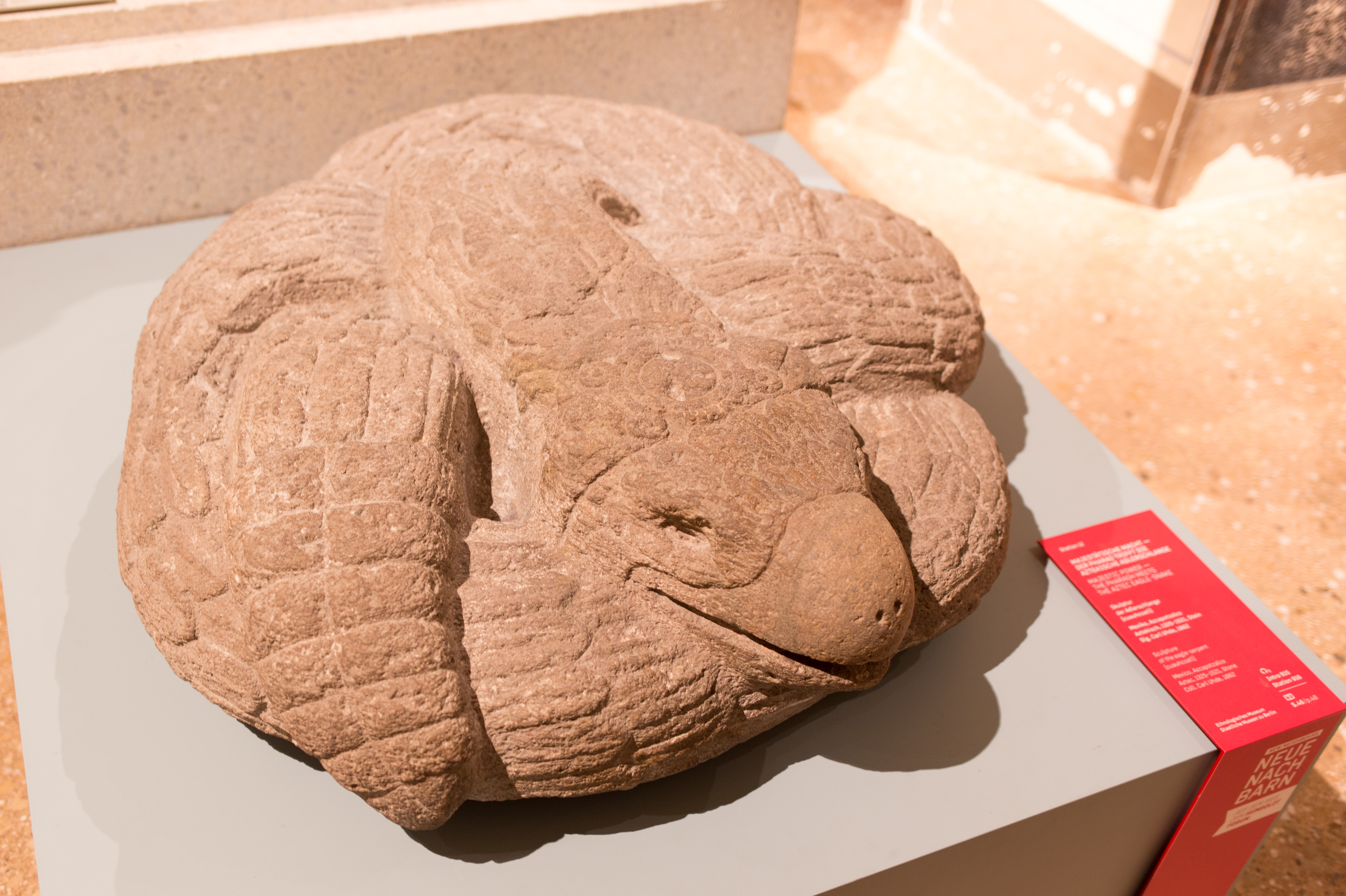
The Humboldt Forum holds the Ethnological Museum of Berlin and the Museum of Asian Art, with wings dedicated to America, Africa, Asia, and Oceania. Among the holdings: the Benin Bronzes, hundreds of cast brass and ivory plaques and sculptures looted by British troops from the Kingdom of Benin in 1897 and sold across Europe. Berlin acquired roughly 530 of them. There are also boats, masks, sacred objects, and human remains brought to Germany during the colonial era — the period when Germany ran colonies in modern Cameroon, Tanzania, Namibia, Togo, and parts of the Pacific. These objects did not arrive in Berlin through fair exchange. The provenance question is not academic.
The Restitution Reckoning
The art historian Bénédicte Savoy resigned from the museum's expert panel in 2017, accusing the institution of treating its colonial holdings like "nuclear waste." Her co-authored 2018 report for the French government on African heritage helped force restitution onto the European cultural agenda. In 2022 Germany formally transferred ownership of more than 1,100 Benin Bronzes back to Nigeria, with most physical items returning over subsequent years. The Humboldt Forum now displays many bronzes as Nigerian property on loan. The museum has begun publishing acquisition histories for individual objects and convening dialogues with descendant communities. Critics say the pace remains slow. Defenders argue the institution is doing the hardest cultural work in Europe — in public, with its ownership of stolen things printed on the wall labels.
From the Roof
Take the lift to the roof terrace, 30 metres up. To the north, Berlin Cathedral and the green dome of the Bode Museum. To the east, the brick facade of the Rotes Rathaus and the spike of the Fernsehturm rising 368 metres above Alexanderplatz. To the south, the Spree slips past the State Council Building. To the west, Unter den Linden runs in a straight line to the Brandenburg Gate. From up here the reconstructed facade looks like what it is — a stage set on Museum Island, deliberately echoing what was lost, deliberately housing what is contested. In 2023 the building counted around 1.7 million entries. Many came for the views. Many others came because they wanted to see what happens when an institution tries to carry its history honestly.
Why It Matters
The Humboldt Forum is named for Alexander and Wilhelm von Humboldt — the brothers whose curiosity reshaped science and education. The aspiration is generous: a forum where world cultures meet on equal terms. The reality is harder. This museum exists because Germany decided not to walk away from objects it might never have acquired honestly, and to use them instead as a permanent prompt for asking who owns the past, and to whom it returns. There is no clean answer. The museum's gift, if it has one, is that it refuses to pretend there is.
From the Air
The Humboldt Forum stands at 52.52°N, 13.40°E on the southern tip of Spree Island in Berlin's Mitte district, facing Berlin Cathedral across the Lustgarten. From the air it appears as a roughly square baroque-style block at the head of Museum Island, with the Spree River wrapping around it. Berlin Brandenburg (EDDB) lies about 25 km southeast. Berlin's controlled airspace is dense — the historic city centre is heavily restricted, and any approach requires coordination with Berlin Tower. The TV Tower at Alexanderplatz, 368 m tall, is the most prominent visual landmark.