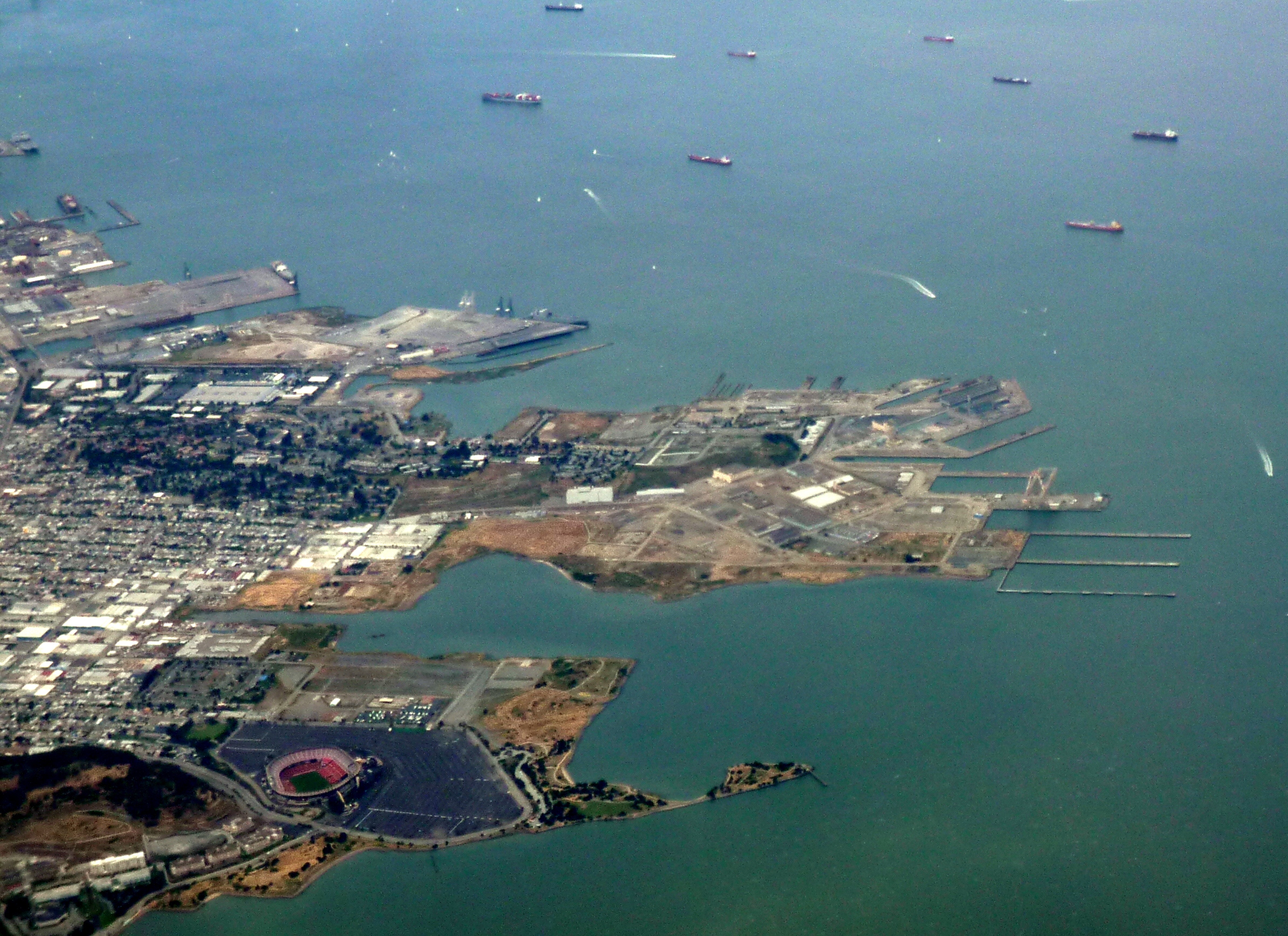
Hunters Point Naval Shipyard
The Hunters Point Naval Shipyard covers 638 acres of waterfront at the southeastern corner of San Francisco, making it one of the largest tracts of undeveloped land in the city. For decades it built and repaired warships for the United States Navy. After its decommissioning, it became one of the most contaminated sites in the Bay Area -- a toxic legacy of shipbuilding, nuclear decontamination work, and decades of industrial activity. The cleanup and redevelopment of the shipyard has been fraught with controversy, including revelations of fraudulent soil testing that shook public confidence in the entire remediation effort.
The Shipyard at War
Hunters Point Naval Shipyard was a major facility during World War II, building and repairing the warships that fought across the Pacific. The shipyard employed thousands of workers, many of them African Americans who had migrated to San Francisco for defense industry jobs, creating the community that became Bayview-Hunters Point. After the war, the shipyard was used for radiological decontamination of ships exposed to nuclear weapons testing at Bikini Atoll -- work that left radioactive contamination in the soil and groundwater.
Contamination and Betrayal
The cleanup of Hunters Point Naval Shipyard has been one of the most troubled environmental remediation projects in California history. The site contains contamination from heavy metals, petroleum products, and radioactive materials. In 2018, revelations emerged that Tetra Tech, the contractor responsible for testing soil samples, had falsified data -- swapping clean samples for contaminated ones, undermining years of supposed cleanup progress. The scandal raised fundamental questions about whether the site was safe for the residential development that had already been approved and partially built.
Promise and Peril
Despite the contamination scandals, plans for redeveloping the shipyard continue. The site's size, waterfront location, and proximity to the Third Street light rail line make it one of the most valuable development opportunities in San Francisco. Plans call for thousands of housing units, commercial space, parks, and a rebuilt shoreline. For the Bayview-Hunters Point community -- a predominantly Black neighborhood that has borne the environmental burden of the shipyard's contamination for decades -- the redevelopment represents both an opportunity for investment and a risk of displacement. The shipyard's future will test whether San Francisco can deliver environmental justice and economic development simultaneously.
From the Air
Located at 37.7256°N, 122.369°W at the southeastern tip of San Francisco, on the western shore of San Francisco Bay. The large shipyard facility and dry docks are visible from the air as industrial structures extending into the bay. Best viewed at 2,000-4,000 feet AGL. Nearest airport: KSFO (7 nm south).