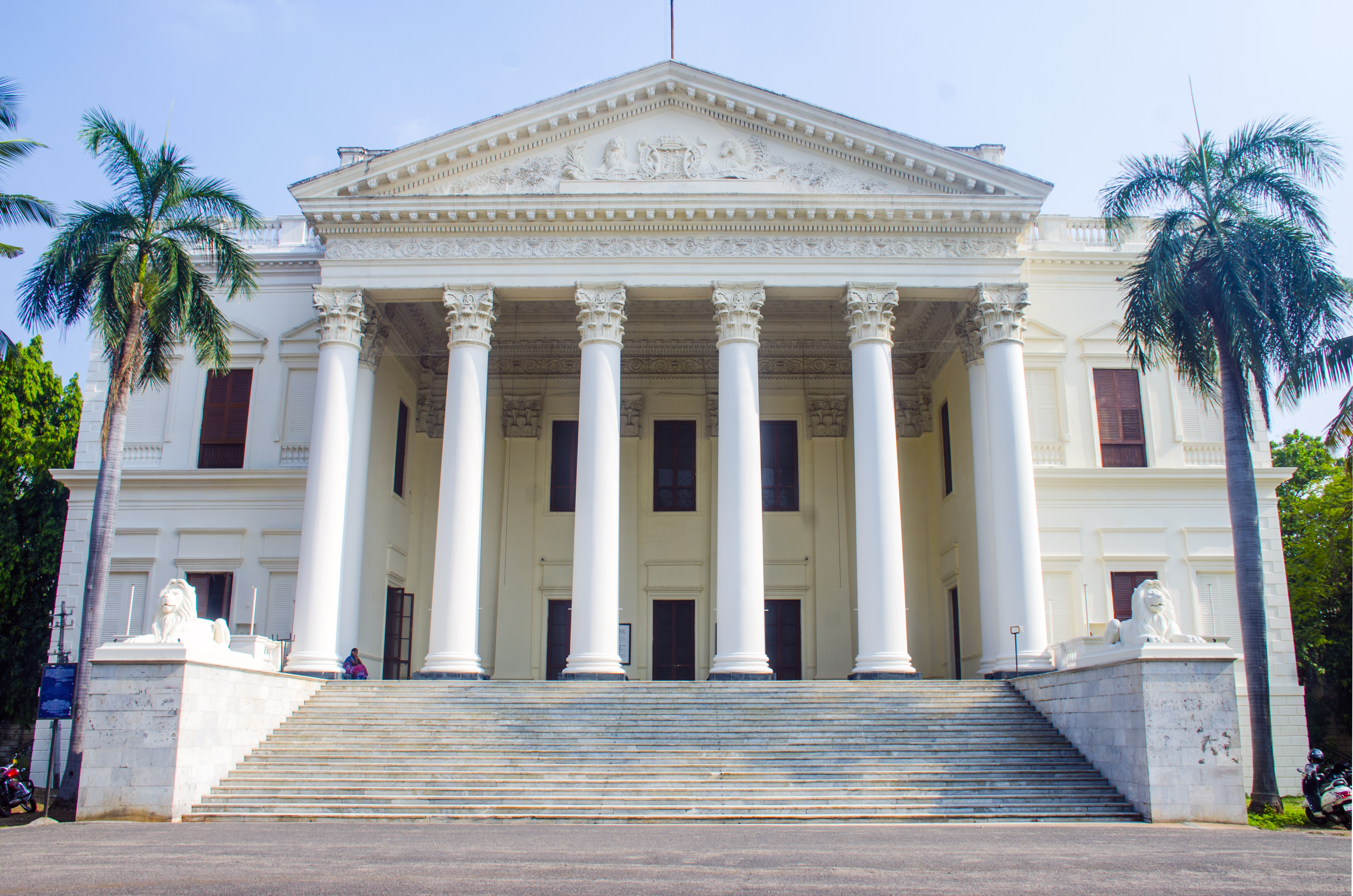
Hyderabad State
In 1947, as the British Empire withdrew from India and new borders carved the subcontinent into two nations, one kingdom refused to join either. Hyderabad State -- larger than England and Scotland combined, home to nearly seventeen million people, and ruled by a man widely considered the richest person on earth -- declared itself independent. The Nizam, Mir Osman Ali Khan, sat atop a fortune so vast that he used the Jacob Diamond, a 185-carat stone, as a paperweight. For fourteen tense months, this inland kingdom held out against the new Indian republic, a standoff that would end not with negotiation but with tanks rolling across the Deccan plateau.
The Viceroy Who Made Himself King
Hyderabad State traces its origins to 1724, when Mir Qamar-ud-Din Khan, a Mughal viceroy governing the Deccan, broke away from the crumbling empire and established his own dynasty. He took the title Asaf Jah, and the line of rulers that followed him became known as the Nizams of Hyderabad. For over two centuries, seven Nizams held power over a territory that stretched across what is now Telangana, the Marathwada region of Maharashtra, and the Kalyana-Karnataka region of Karnataka. The state's capital, also called Hyderabad, grew into one of India's great cities, a place where Persian, Telugu, Marathi, and Kannada cultures layered atop one another. The Nizams governed a population that was overwhelmingly Hindu, while the ruling elite remained Muslim -- a tension that would shape the state's destiny.
A Fortune Beyond Counting
The seventh and final Nizam, Mir Osman Ali Khan, ruled from 1911 to 1948 and became a figure of almost mythological wealth. TIME magazine put him on its cover in 1937, calling him the richest man in the world. His personal fortune included gold, jewels, and currency stuffed into trunks and storerooms across the palace complex. The state itself generated enormous revenue -- over four crore rupees annually during British rule in 1901 -- from its fertile agricultural lands and mineral resources. Yet the Nizam was famously frugal, wearing the same threadbare fez for decades and refusing to replace a suit until it fell apart. This contradiction between staggering wealth and personal austerity made him one of the most written-about rulers of the twentieth century. The native inhabitants of Hyderabad State, regardless of ethnic origin, were called "Mulki" -- countryman -- a term that persists in local identity today.
The Standoff of 1947
When India gained independence on August 15, 1947, the princely states were given a choice: join India, join Pakistan, or negotiate independence. Most acceded quickly. Hyderabad did not. The Nizam signed a standstill agreement with India, maintaining the status quo while he explored his options, which included seeking independence or even joining the United Nations. His location made independence impractical -- Hyderabad sat squarely in the middle of the Indian Union, landlocked on all sides by Indian territory. Meanwhile, a paramilitary group called the Razakars, led by Qasim Razvi, terrorized Hindu communities, and a communist insurgency flared in the Telangana countryside. India grew impatient. In September 1948, the Indian Army launched Operation Polo, a military action that overwhelmed Hyderabad's forces in just five days. The Nizam surrendered and signed the instrument of accession.
What the Nizams Left Behind
The legacy of over two centuries of Nizam rule remains visible across the Deccan. The Charminar, the Golconda Fort, and the Falaknuma Palace stand as monuments to a dynasty that patronized architecture, literature, and the arts. The Nizams funded the Osmania University, built dams and irrigation systems, and developed Hyderabad into a cosmopolitan center. The state's administrative structures, its cuisine blending Mughlai and South Indian traditions, and its distinctive Deccani Urdu dialect all carry the imprint of the Nizam era. After annexation, Hyderabad State was reorganized along linguistic lines -- Telugu-speaking areas became part of Andhra Pradesh (and later Telangana), Marathi areas joined Maharashtra, and Kannada areas merged with Karnataka. The kingdom vanished from the map, but its cultural DNA persists in three modern Indian states.
From the Air
Centered at approximately 17.36N, 78.47E over modern Hyderabad. The former Hyderabad State covered a vast area of the Deccan plateau. From altitude, the city of Hyderabad and its twin city Secunderabad are visible along the Musi River. Key landmarks include Hussain Sagar lake, Golconda Fort to the west, and the historic old city around the Charminar. Nearest major airport: Rajiv Gandhi International Airport (VOHS). The terrain is largely flat Deccan plateau with rocky granite outcrops.