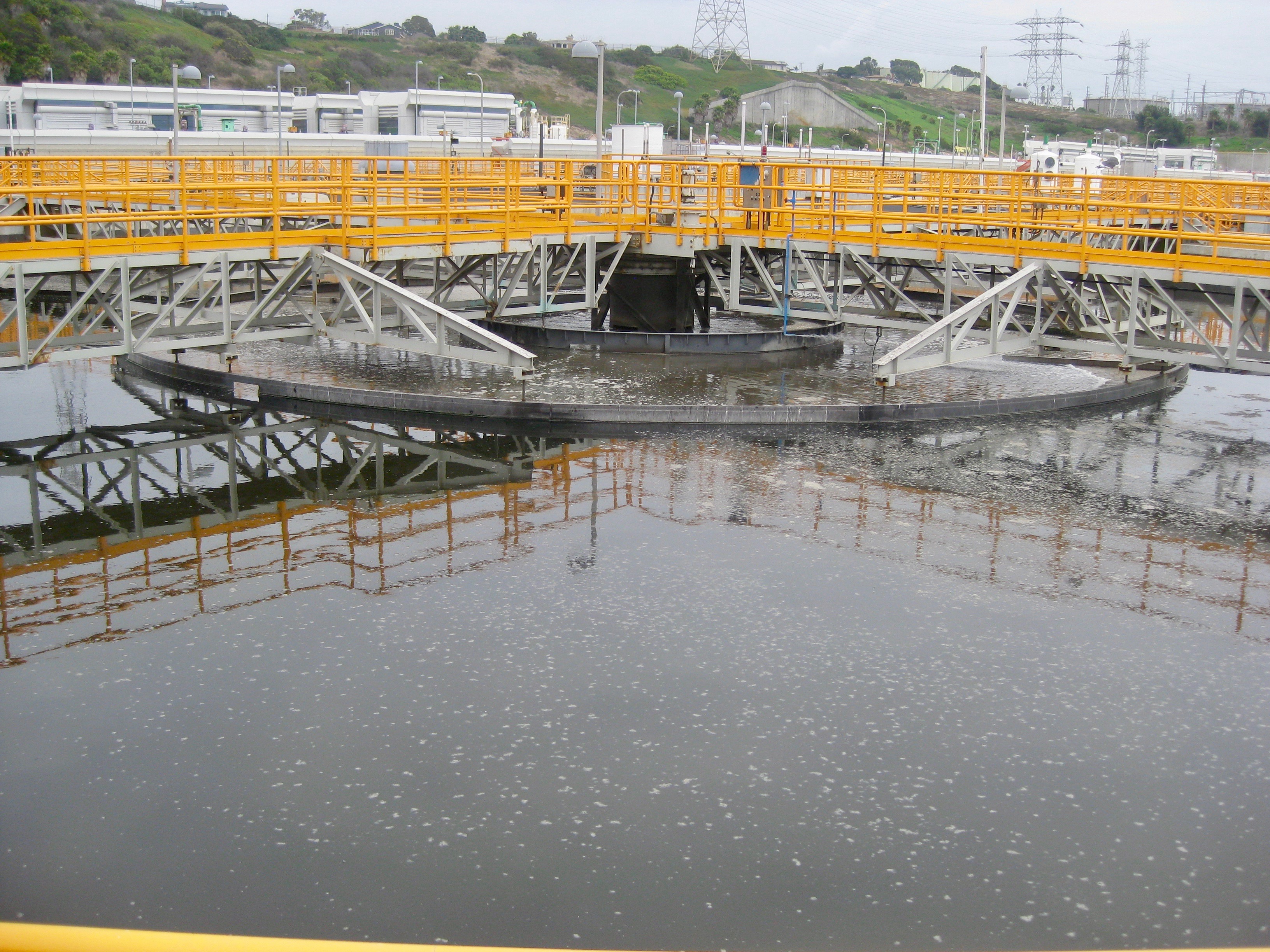
Hyperion Water Reclamation Plant
Until 1925, the city of Los Angeles disposed of its sewage the way most cities did: it pumped it, untreated, into the nearest large body of water. For Los Angeles, that was Santa Monica Bay. The people who swam there in the early twentieth century shared the water with the raw output of a rapidly growing city. When the Hyperion Treatment Plant opened, it was progress: the sewage would now be processed before it reached the ocean. What Hyperion became over the following century — an institution serving over four million people, surrounded by films, environmental activism, and a $12.6 billion modernization — was something more complicated than progress. It was the story of a city learning, slowly and imperfectly, to reckon with its own waste.
The Bay Before Treatment
The problem with dumping raw sewage into Santa Monica Bay was not immediately apparent to a city growing as fast as Los Angeles was in the early 1900s. The bay is large, the tides move water in and out, and dilution can make almost anything seem manageable for a while. But the quantities grew beyond what dilution could address. The beaches closest to the sewage outfall — Dockweiler, El Segundo, Manhattan — became polluted in ways that were impossible to ignore. The Hyperion plant, opened in 1925, was built on 144 acres of reclaimed land along the Ballona Wetlands, next to what is now Dockweiler State Beach, to begin treating the waste before it reached the water.
The Largest West of the Mississippi
Hyperion grew with the city it served. Expansions in the 1930s, 1950s, and again in the environmental era of the 1970s and 1980s made it the largest sewage treatment plant west of the Mississippi River, capable of processing the waste of over four million people daily. The plant receives sewage through a network of tunnels and pipes that drain most of Los Angeles; it processes the solids, treats the liquid effluent, and — since the plant's modernization — recycles much of what it once discharged. The facility runs around the clock, every day, without the option of shutting down.
Heal the Bay
By the 1980s, Hyperion was still not doing its job well enough. Santa Monica Bay remained heavily polluted, its kelp forests dying, its beaches periodically closed after rain events washed contaminants into the water. A marine biologist named Dorothy Green organized a citizens' group in 1985 called Heal the Bay, which used water quality data and political pressure to force the city to dramatically upgrade the plant's treatment capabilities. The campaign worked. Hundreds of millions of dollars in improvements followed. Heal the Bay's annual beach report card, which began as an accountability tool for Hyperion's failures, became a model for coastal water quality monitoring nationwide. The bay is measurably cleaner for the effort.
The Plant in Film
Hyperion's industrial landscape — its vast tanks, its pipes, its location on the Dockweiler beachfront — attracted filmmakers throughout the twentieth century. The Terminator used the plant for its future-war sequences. Battle for the Planet of the Apes filmed there. The facility's combination of scale, industrial menace, and coastal adjacency made it a useful stand-in for dystopian settings. There is a particular irony in a sewage treatment plant serving as the visual backdrop for humanity's darkest futures — and also something honest about it. The infrastructure that handles civilization's least glamorous outputs is, at sufficient scale, genuinely awe-inspiring in its way.
The $12.6 Billion Renovation
The City of Los Angeles launched a $12.6 billion renovation of the Hyperion plant in the 2010s and 2020s, the largest public works project in the city's history. The renovation is converting Hyperion from a treatment plant into a water reclamation facility — processing wastewater to a quality suitable for reinjection into the groundwater system, reducing the city's dependence on imported water from the Colorado River and Northern California. The plant that spent sixty years dumping raw sewage into the bay, then spent decades trying to stop polluting it, is now being redesigned to help solve the city's water scarcity problem. The bay, its kelp forests returning, awaits.
From the Air
Located at approximately 33.93°N, 118.43°W on the Dockweiler State Beach waterfront in El Segundo, immediately north of Los Angeles International Airport (KLAX). The plant's large circular digesters and treatment tanks are clearly visible from altitude, adjacent to the beach and the LAX approach path. Los Angeles International Airport (KLAX) is approximately 1 mile south. The facility is unmistakable from the air: the largest sewage treatment plant west of the Mississippi, right next to the ocean.