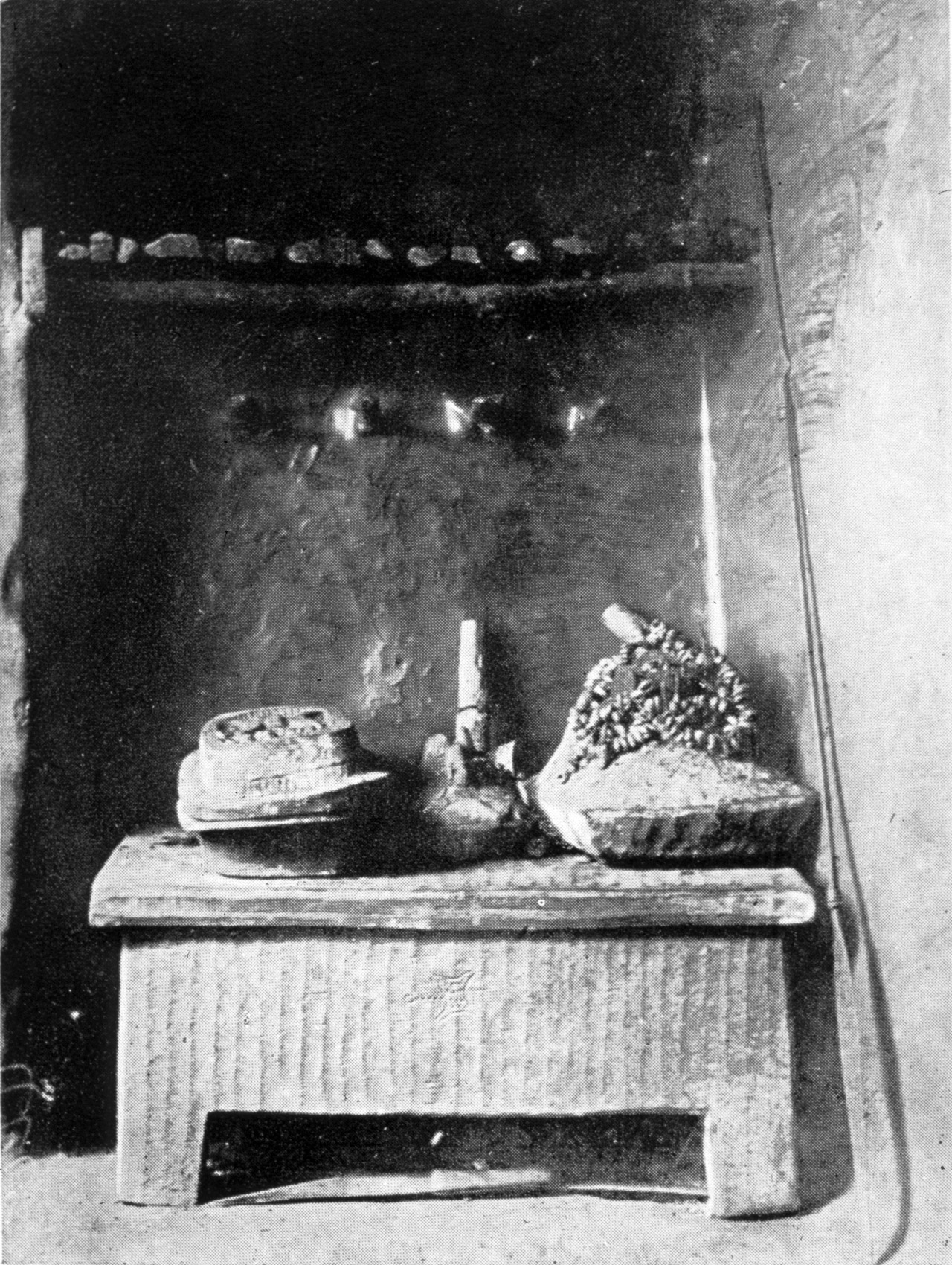
Ibini Ukpabi
Hundreds of people walked into the shrine of Ibini Ukpabi. Most did not walk out. Their families, watching the river below the shrine turn red, believed the oracle had consumed the guilty, swallowing them into the spirit world as punishment for their crimes. What they could not see was the tunnel on the other side of the hill, where blindfolded captives were marched to boats on the river and shipped downstream to Calabar, then across the Atlantic. For generations, this was how justice worked in the lands east of the Niger: the oracle spoke, and the condemned vanished.
The Voice of the Aro
Ibini Ukpabi was an oracle of the Aro Confederacy, the powerful alliance of Igbo clans centered on Arochukwu in what is now southeastern Nigeria. It served as a supreme court for communities across the Niger Delta, settling disputes of murder, witchcraft, poisoning, and family inheritance. Pilgrims traveled long distances to bring their cases before the shrine, trusting its pronouncements as the voice of Chukwu, the supreme deity. The oracle's authority extended far beyond the Aro homeland, functioning as something like an apex court for the region's diverse communities. Shrine stewards and lower members of the cult migrated south and settled among distant clans, extending the oracle's reach and reinforcing the confederacy's influence over a vast territory.
The Architecture of Disappearance
The physical layout of the shrine was engineered for maximum psychological effect. Visitors descended through a six-foot gully to reach the temple, passing a sacred altar and the cult monument of Kamalu. At the center stood the throne of judgment, known as the dark presence or 'the Holy of Holies.' Those found innocent were sent back to their relatives. Those pronounced guilty were directed toward a hill of rags, where they were ordered to strip and leave their clothing before entering dark tunnels that led away from the shrine. The tunnel of disappearance carried the condemned out of sight. Meanwhile, the Aro priests colored the river red, sending a signal downstream to waiting relatives that the oracle had rendered its verdict. The red water was proof of death. In reality, the condemned emerged from the tunnels at the Iyi-Eke outlet, were blindfolded, and walked to a landing called Onu Asu Bekee, the European beach, where boats waited to carry them to Calabar and onward to enslavement.
Commerce Disguised as Divinity
Originally, the oracle's verdicts ended in execution. But over time, the priests of Ibini Ukpabi discovered that selling the guilty into slavery was more profitable than destroying them. As the transatlantic slave trade intensified, the incentive to find people guilty grew stronger. It was alleged that priests began falsifying verdicts, manufacturing guilt to procure captives for sale. The system was self-sustaining: communities sent their disputes to the oracle because they trusted its authority; the oracle's authority was reinforced by the fear of disappearance; and each disappearance generated revenue that funded the Aro Confederacy's military and economic expansion. The people who entered the shrine were real human beings with families, disputes, and hopes for vindication. Many instead became commodities, their fates decided by an institution that had turned spiritual trust into a supply chain.
The Long Juju Falls
The British knew the oracle as the Long Juju, and they regarded it as the source of Aro power over the interior. As the British Empire expanded along the River Niger in the late nineteenth century, they recognized that the shrine unified communities that might otherwise resist colonization individually. The Long Juju stronghold was destroyed during the Anglo-Aro War of 1901-1902, when a British expeditionary force targeted the shrine directly. The war was triggered in part by the killing of several British officials, but its strategic aim was to break the Aro network that the oracle had sustained. With the shrine in ruins, British forces were able to extend colonial control over what became Eastern Nigeria.
What the Ruins Remember
Today the remains of the Ibini Ukpabi shrine, the slave routes, and the tunnels through which captives disappeared are preserved as tourist sites in Abia State. Known collectively as the Long Juju Slave Route of Arochukwu, these ruins are among the most significant historical sites in Nigeria, drawing visitors who come to understand how the mechanics of the slave trade operated far from the coastal forts more commonly associated with it. The site is a memorial not to the oracle's power but to the people it consumed. Walking the route from the shrine to the river forces a reckoning with a system that turned faith into a weapon and justice into commerce, and with the human beings who paid the price.
From the Air
Ibini Ukpabi is located at 5.40°N, 7.90°E near Arochukwu in southeastern Nigeria's Abia State. The shrine site sits in dense tropical vegetation along the river system that once served as the slave route to the coast. The nearest significant airport is Port Harcourt International Airport (DNPO), approximately 130 km to the south. Sam Mbakwe International Cargo Airport (DNIM) in Owerri is roughly 100 km west. Tropical haze and cloud cover are common; the dry season from November through February offers the clearest visibility.