Ibra
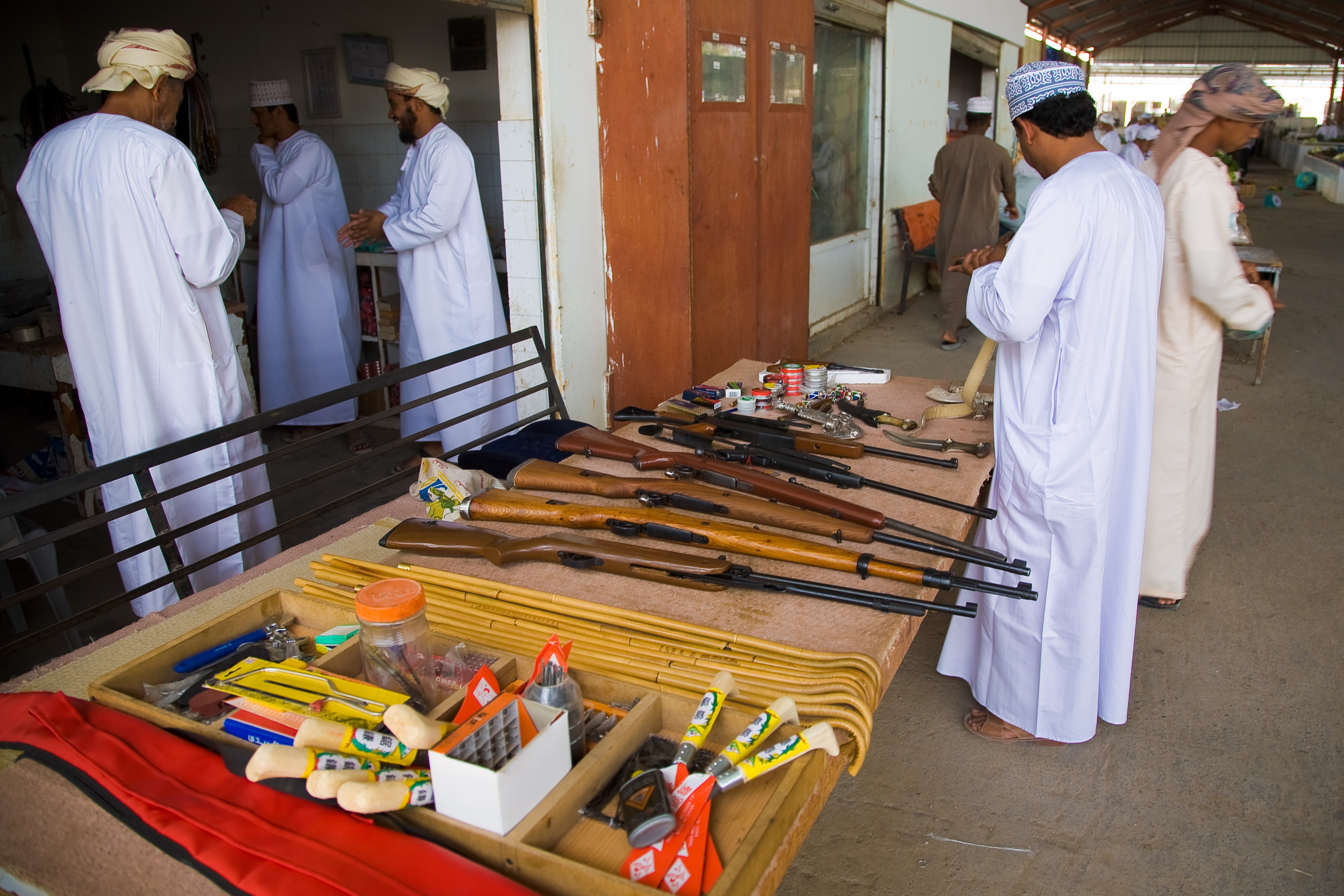
Ibra's souq has a rule that exists nowhere else in Oman: one day belongs entirely to women. On that day, women vendors and buyers fill the market stalls that on other days are occupied by men, trading silver jewelry, spices, dates, and halwa -- the sticky Omani dessert made from sugar, spices, and almonds. It is the only market in the country with this tradition, and it speaks to something distinctive about Ibra: this is a city where ancient customs have not been abandoned but adapted, where pre-Islamic heritage and modern infrastructure coexist in a landscape ringed by mountains on every side.
A City Older Than the Prophet
Ibra predates the calling of the Prophet Muhammad. The city's many castles and old mosques testify to a settlement that was already established when Islam arrived in Oman. Historians cannot agree on the origin of the name. Some derive it from an Arabic verb meaning 'a purification of guilt,' though the connection between the etymology and the city's history remains unclear. What is clear is that Ibra's location at the base of the Ash Sharqiyah region made it a critical meeting point: a gateway where mountain traders, desert Bedouins, and coastal merchants converged. The city is home to several of Oman's largest tribes, including the Al Ismaili, Al Harthy, Al Maskari, Al Mughairi, and Al Riyami, whose presence here stretches back centuries.
Silver, Halwa, and the Souq
The Ibra souq ranks among the most important marketplaces in Oman, rivaling the famous Muttrah souq in Muscat. Vendors sell meat, fish, fruits, vegetables, spices, dates, gold, and silverware. Ibra's silver jewelry is considered the finest in the country. The halwa sold here -- sticky, dense, flavored with sesame seeds or almonds -- is a specialty that travelers carry home as gifts. The Bait al Kabir, built in 1650 during the Ya'riba Dynasty, once served as the center of government in Ibra. Its design complements the souq, fortress and marketplace functioning as two halves of a single civic structure. The market is not a relic preserved for tourists. It operates on its own rhythm, serving the same communities it has served for generations.
Camels Decorated for the Ardha
Ibra preserves the tradition of Al-Ardha, a ceremonial camel run performed during occasions, holidays, and weddings. Riders demonstrate their skill by standing on the backs of running camels or linking hands with teammates. The camels themselves are decorated with elaborate equipment: saddlebags, silver tufts, hand-woven embellishments in red. The event includes traditional songs -- Al-Himbal, Al-Taghrood, Al-Wana -- and the recitation of poetry. Equestrian races also take place, with the Zad Al-Rakeb field hosting annual competitions. These are not reenactments. They are living expressions of a Bedouin heritage that the people of Ibra actively maintain, alongside crafts like dagger-making, leather tanning, palm-frond weaving, and the production of traditional Omani clothing.
Ringed by Mountains, Open to Change
Mountains surround Ibra on every side. The climate is hot desert: temperatures can reach 50 degrees Celsius in July and drop to 10 degrees in December. Rainfall is scarce and arrives mainly in winter. Since 1970, under Sultan Qaboos's modernization, Ibra has gained a three-lane highway to Muscat, broadband internet, a hospital, and three institutions of higher education including A'Sharqiyah University, which opened in 2010. The population of roughly 55,000 people inhabits a city that has managed an unusual balance: absorbing modernity without discarding the traditions that define it. The women's market day continues. The Al-Ardha riders still race. The silver craftsmen still hammer. In a desert city that was ancient before Islam arrived, continuity is not resistance to change. It is something deeper: an insistence that the old and the new are not opposites but layers.
From the Air
Located at 22.68N, 58.55E in the Ash Sharqiyah Region of Oman. The city is surrounded by mountains with a hot desert climate. Nearest major airport is Muscat International (OOMS), approximately 170 km northwest via highway. The terrain is mountainous on all sides. The Sharqiya Sands extend to the south.