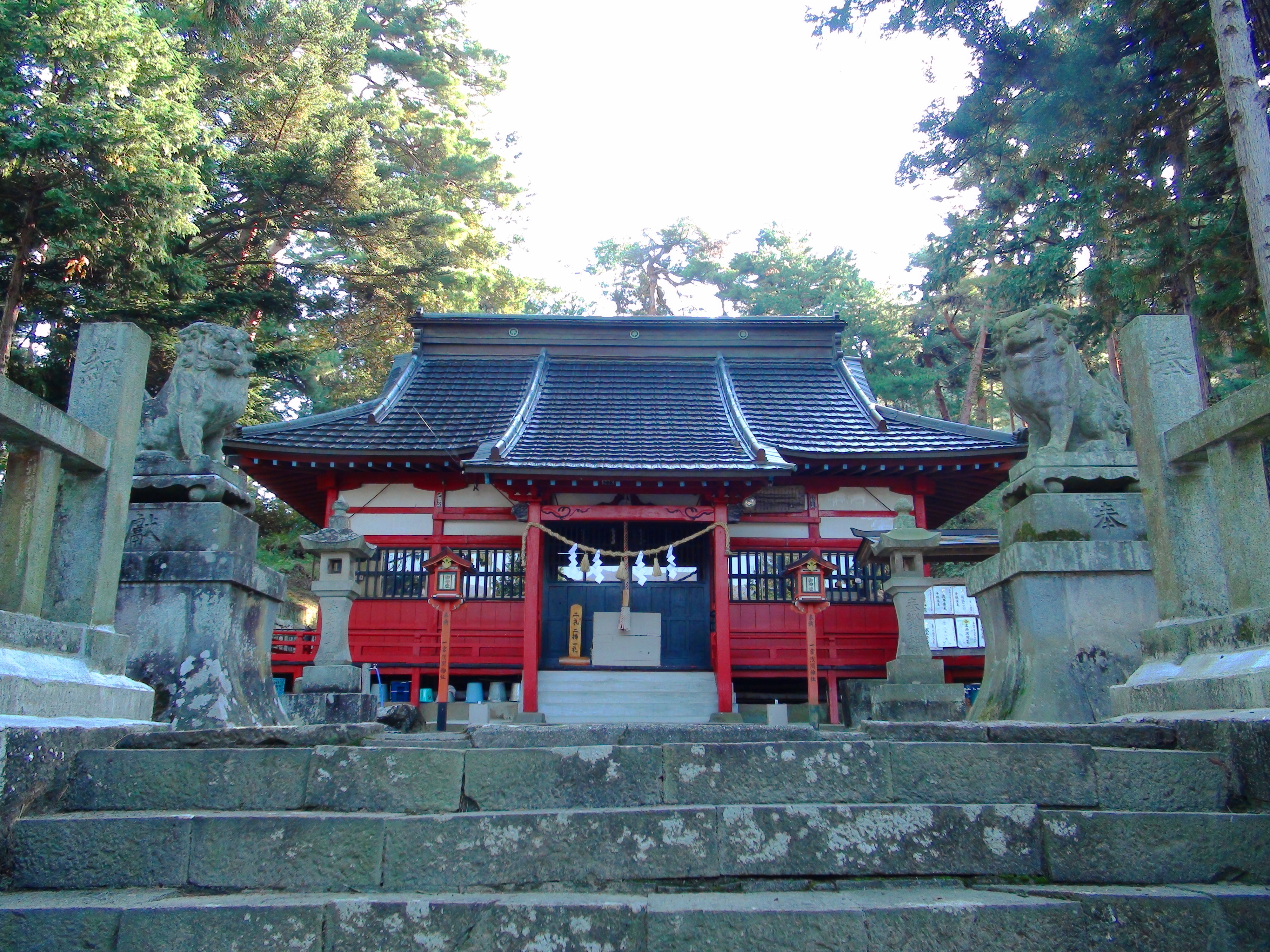
Ichinomiya Sengen Shrine
A bronze mirror from the year 238 AD sits in a museum case, its rim engraved with a Chinese regnal date from the Eastern Wu kingdom of the Three Kingdoms period. It was pulled from a burial mound near a quiet Shinto shrine in the small town of Ichikawamisato, Yamanashi Prefecture, and it rewrote assumptions about how early the Japanese archipelago was connected to the Asian mainland. The Ichinomiya Sengen Shrine is modest in scale compared to the grand Sengen shrines near Mount Fuji's summit, but its history reaches deeper than almost any shrine in the region -- perhaps all the way back to the volcanic eruptions that first gave people reason to pray here.
Born from an Eruption
According to shrine tradition, Ichinomiya Sengen Jinja was established during the reign of the semi-legendary Emperor Keiko, traditionally dated between 71 and 130 AD, in response to a massive eruption of Mount Fuji. The shrine was built to placate the mountain's fury, and its primary deity is Konohanasakuya-hime, the goddess of Mount Fuji and the blossom of cherry trees. The secondary deities are Ninigi, grandson of the sun goddess Amaterasu and great-grandfather of the mythical first emperor Jimmu, and his son by Konohanasakuya-hime. These are the deities of volcanism, fertility, and imperial lineage woven together in a single shrine -- a theological statement that Mount Fuji's destructive power and the land's generative force are aspects of the same divine reality.
The Ichinomiya Rivalry
In the old provincial ranking system, the ichinomiya was the highest-ranked shrine of a province, the first place a newly appointed governor was expected to worship upon taking office. Two shrines claim this title for the former Kai Province: this one in Ichikawamisato, and the Ichinomiya Asama Shrine in the city of Fuefuki. The argument in favor of the Ichikawamisato shrine rests on geography and naming: it sits in an area historically called Ichinomiya, near the site of the ancient provincial capital and the Kai Kokubun-ji provincial temple from the Nara and Heian periods. The shrine also appears in the Engishiki records compiled around 926 AD. The Fuefuki shrine's claim strengthened only after the Takeda clan developed that area as a provincial center during the Muromachi period. Both shrines received patronage from the Takeda, and later from Tokugawa Ieyasu, who granted the Ichikawamisato shrine territory and tax relief.
An Exiled Prince Among the Gods
In 1643, Imperial Prince Priest Ryojun, the eighth son of Emperor Go-Yozei, was sent into exile at this shrine. The reasons for his banishment are obscured by the conventions of imperial court records, but his presence here speaks to the shrine's standing. Even in exile, a prince of the blood was sent to a place of recognized spiritual authority. The current Honden -- the inner sanctuary that houses the enshrined deities -- dates from 1703, making it a structure of the Genroku era, the cultural peak of Edo-period Japan. After the Meiji Restoration reorganized Shinto under state control, the shrine was classified as a village shrine in the modern ranking system, a demotion from its ancient ichinomiya claims that reflects the political reshuffling of the era rather than any change in local reverence.
The Mirror That Reached Across an Ocean
The shrine's most remarkable artifact was not found within its precincts but in a nearby kofun burial mound called Toriiharakitsunezuka. The bronze mirror recovered there is a shinju-kyo, or divine beast mirror, from Eastern Wu, one of the Three Kingdoms of China. Its rim bears a regnal date corresponding to 238 AD, making it the earliest positively dated mirror discovered anywhere in Japan. A second bronze mirror, excavated from the same site in 1898, bears a comb-tooth pattern dividing its surface into inner and outer sections. Together, these mirrors constitute evidence that trade -- or at least the movement of prestige goods -- connected proto-Japanese Kofun-period communities to mainland Asian kingdoms nearly 1,800 years ago. The first mirror was designated a National Important Cultural Property in 1979. The second holds the status of Yamanashi Prefecture Designated Tangible Cultural Property.
From the Air
Located at 35.554°N, 138.490°E in the town of Ichikawamisato, in the Fuji River valley of Yamanashi Prefecture. The shrine sits in a flat agricultural area west of the Fuji River, with Mount Fuji dominating the skyline to the east-southeast. The Fuji River corridor is a prominent visual landmark running north-south through the prefecture. The nearby Kai Kokubun-ji ruins and kofun burial mounds are not individually visible from altitude but cluster in this historically significant zone. Nearest airports: Mt. Fuji Shizuoka Airport (RJNS, ~45 nm south-southwest) and Matsumoto Airport (RJAF, ~85 nm northwest). Tokyo Haneda (RJTT) approximately 70 nm east.