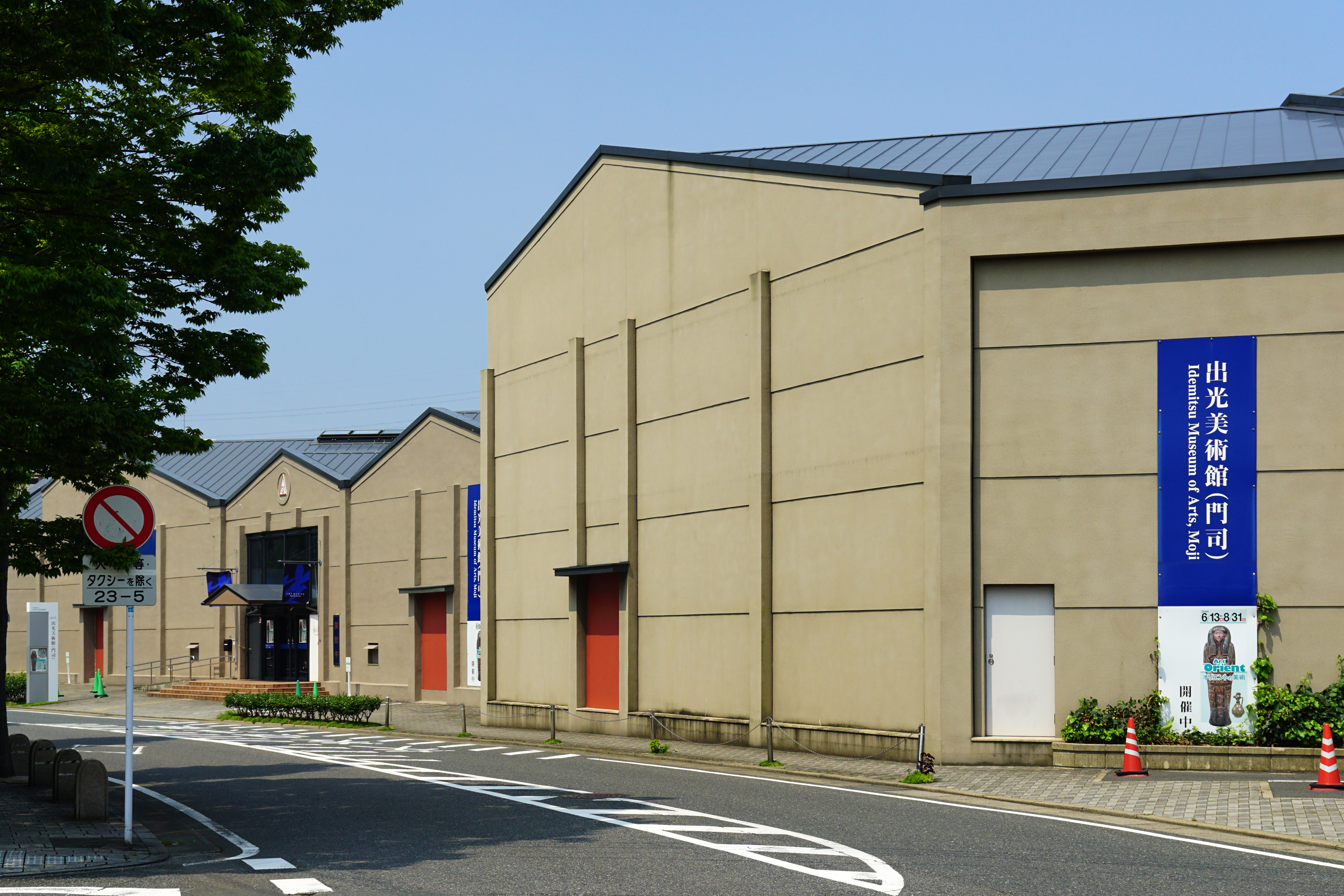
The Idemitsu Museum of Arts: An Oil Baron's Lifetime of Beauty
In 1905, a nineteen-year-old student named Sazo Idemitsu walked into an antique shop in Hakata and saw a Zen painting by the monk Sengai Gibon -- a loose, playful ink rendering of Hotei pointing at the moon. He pleaded with his father to buy it. That single purchase, made before Sengai was widely known or collected, became the first piece in what would grow over seventy years into one of Japan's most extraordinary private art collections: 15,000 works spanning Japanese painting, East Asian ceramics, and Western modernism, including two objects designated as National Treasures by the Japanese government and 57 classified as Important Cultural Properties.
From Lubricant Oil to Luminous Scrolls
Sazo Idemitsu, born in 1885 in Munakata District, Fukuoka Prefecture, founded Idemitsu & Co. in 1911, selling lubricant oil for Nippon Oil in the port town of Moji in northern Kyushu. He expanded into fuel oil for fishing boats in Shimonoseki, then into Manchuria, where the Japanese-owned South Manchuria Railway became a major customer. The business grew into the petroleum giant Idemitsu Kosan. But throughout decades of corporate expansion, Idemitsu never stopped collecting art. He scoured the world for Japanese masterworks -- yamato-e, rimpa, bunjin-ga, ukiyo-e -- alongside calligraphy, ceramics from Japan, China, and Korea, and Western paintings by Georges Rouault and the American abstract expressionist Sam Francis. In 1966, when Idemitsu was eighty years old, he opened the museum. That same year, he stepped down as president of his oil company to become the museum's director.
The Ninth Floor Above the Imperial Gardens
The Idemitsu Museum occupies the ninth floor of the Teigeki Building in Marunouchi, the business district at the heart of Chiyoda ward. Its windows look down over the Imperial Palace gardens, framing seasonal shifts in foliage that change the character of the view with each visit. The museum has operated since 1966 as an incorporated foundation, holding only temporary exhibitions drawn from its own vast holdings. In 2000, a branch opened in Moji, Kitakyushu -- the same port town where Idemitsu had launched his oil business nearly a century earlier, closing a circle between commerce and culture. The intimate scale of the Tokyo gallery, tucked above the bustle of Marunouchi's office towers, gives the experience of viewing these works a quality of private discovery rather than institutional display.
Treasures That Tell Stories
The crown jewel of the collection is the Ban Dainagon Ekotoba, a twelfth-century illustrated handscroll that ranks among Japan's greatest narrative paintings. Acquired in 1982 for 3.2 billion yen, the three scrolls depict the Otemmon Conspiracy of 866, in which the courtier Tomo no Yoshio set fire to the Otemmon gate of Kyoto and blamed his political rival. The scroll is counted alongside the Tale of Genji scrolls, the Shigisan Engi Emaki, and the Choju Jinbutsu Giga as one of Japan's four most celebrated emaki. Beyond this National Treasure, the collection holds ceramics by Itaya Hazan, paintings by Misai Kosugi, and works spanning the full breadth of Japanese artistic tradition. In 2019, the museum purchased 190 works from the renowned American collectors Joe and Etsuko Price, mostly Edo-period paintings including pieces by Ito Jakuchu, Maruyama Okyo, and Sakai Hoitsu.
A Pause Between Buildings
The Teigeki Building that has housed the museum since its founding is aging, and the structure closed on December 25, 2024, for demolition and reconstruction. The reopening date has not been announced. The museum's collection -- those 15,000 works, the National Treasures, the Edo-period paintings acquired from across the Pacific -- waits in storage for a new home to be built around it. When the rebuilt Teigeki eventually opens, the ninth-floor gallery will face the Imperial gardens once again, continuing the vision of a man who started with a single Zen painting of Hotei pointing at the moon and spent a lifetime filling the space between oil and art.
From the Air
Located at 35.677N, 139.761E in Tokyo's Marunouchi business district, immediately southeast of the Imperial Palace. The Teigeki Building sits within the dense grid of office towers between Tokyo Station and the palace moat. From altitude, the Imperial Palace gardens provide the primary visual landmark, with the museum's building on the southeast edge of the palace grounds. Tokyo Haneda International Airport (RJTT) lies approximately 9 nautical miles to the south-southwest. Best viewed at 3,000-5,000 feet AGL, using the distinctive green rectangle of the Imperial Palace grounds as a reference point.