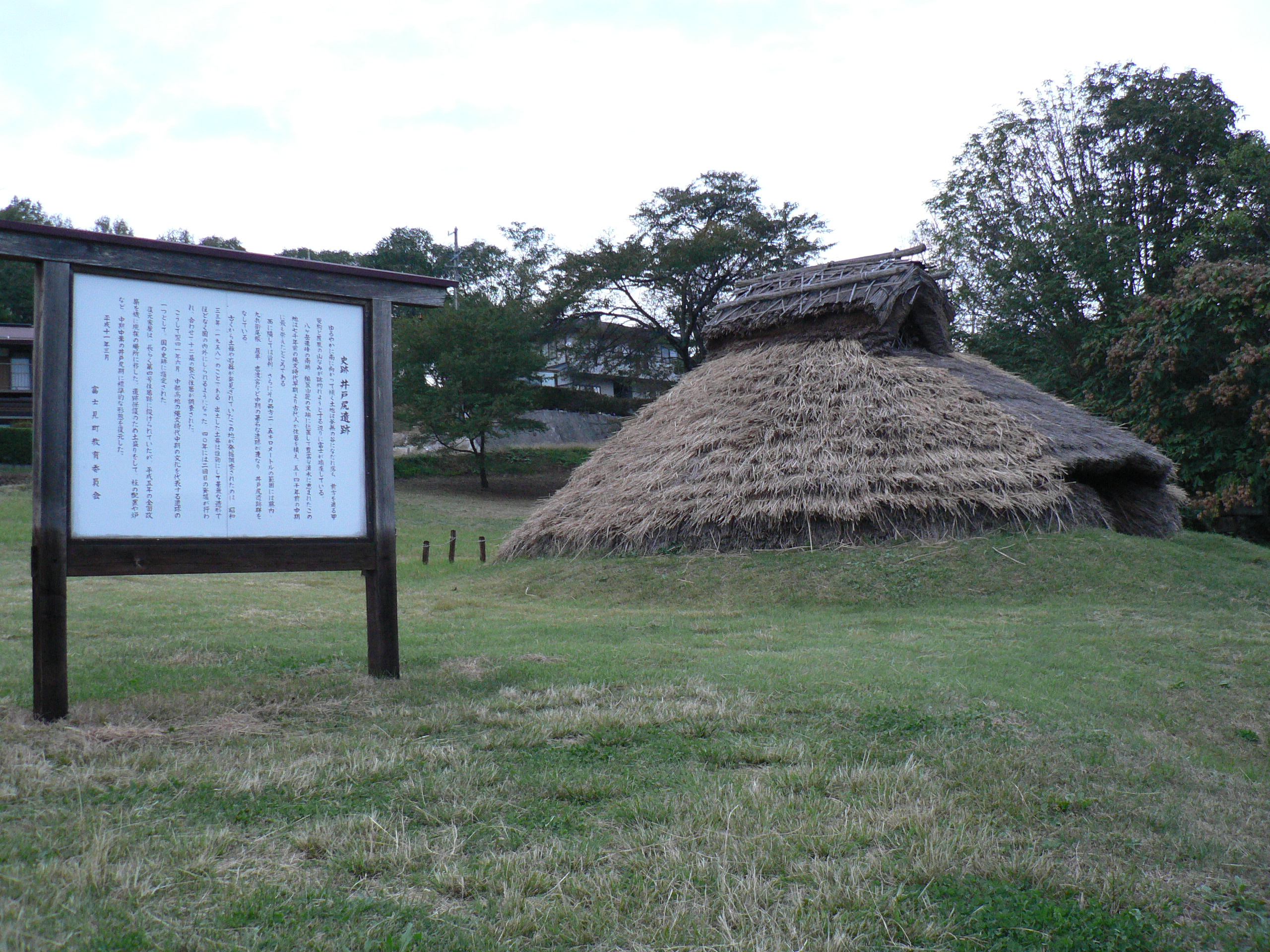
Idojiri Ruins
One of the pots pulled from this hillside was so striking that the Japanese government put it on a postage stamp. Unearthed from a gentle slope at the southeastern foot of Mount Yatsugatake, the Idojiri pottery -- with its swirling abstract patterns, sculpted human figures, and animal heads -- announced that the people who lived here 4,500 years ago were not merely surviving. They were artists. Designated a National Historic Site in 1967, the Idojiri ruins sit between 800 and 1,000 meters elevation in the town of Fujimi, Suwa District, Nagano Prefecture, where spring water still flows in abundance down toward the Fuji River, just as it did when this slope supported one of the densest concentrations of Jomon-period settlements in all of Japan.
A Neighborhood of Villages
The area around Mount Yatsugatake holds a remarkable distinction: more than fifty mid-Jomon period settlement sites cluster within a short radius of one another, drawn here by the same thing that draws them anywhere -- reliable water. The springs that percolate through Yatsugatake's volcanic slopes fed a landscape that could support dense habitation long before rice cultivation arrived in Japan. The Idojiri site alone contained the foundations of over 200 pit dwellings, each one a partially underground structure that kept its inhabitants insulated against highland winters. Just to the north lie the Akyu ruins, another major Jomon settlement. Together, these sites paint a picture not of scattered, isolated bands of hunter-gatherers, but of a thriving network of communities sharing resources, techniques, and artistic traditions across the mountainside.
The Potter's Art
Excavations at Idojiri, which began in 1949 and continued through multiple campaigns, yielded an enormous quantity of pottery shards -- enough to help establish a formal chronology for Jomon-period earthenware. Among the fragments, archaeologists recovered twelve complete pottery containers, a rare find for a site of this age. Nine were large, deep vessels suitable for storage, likely holding the processed nuts and acorns that formed a staple of the Jomon diet. The remaining pots appear to have been used for boiling food. What distinguishes Idojiri pottery from utilitarian ware is its decoration: abstract patterns intertwine with representations of human figures and animal heads, suggesting these vessels served ceremonial or symbolic purposes alongside practical ones. Alongside the pottery, excavators found concave stones, 54 stone axes, and stone dishes -- a toolkit for grinding, chopping, and processing the forest's bounty. Carbonized remains from hearths hinted at something unexpected: burned bread, evidence of a more varied cuisine than the simple image of prehistoric foragers might suggest.
A Community Effort
The story of Idojiri's excavation is itself a distinctly Japanese tale of community archaeology. Beginning in 1958, the digs at Idojiri drew not only professional archaeologists but independent scholars, schoolteachers, and local residents from the surrounding towns. This grassroots participation turned the site into something larger than an academic exercise -- it became a shared project of rediscovery, connecting modern inhabitants of the Yatsugatake foothills with the people who had lived on these same slopes thousands of years earlier. That spirit carries forward today at the Idojiri Archaeological Museum, built on the site itself, where approximately 2,000 unearthed artifacts are on display. Visitors can walk through reconstructed pit dwellings in the adjacent archaeological park, stepping down into the cool, earthen interiors that sheltered Jomon families through the seasons.
Walking the Ancient Ground
The Idojiri site is open to the public as an archaeological park, a fifteen-minute walk from Shinano-Sakai Station on the JR Chuo Main Line. The reconstructed pit dwellings give a tangible sense of scale -- these were not temporary shelters but permanent homes, sunk into the earth and built to last. From the park, the forested flanks of Mount Yatsugatake rise to the northwest, the same backdrop the Jomon residents would have seen. The mountain's volcanic geology created the springs that made habitation possible, and its forests provided the nuts, game, and obsidian that sustained daily life. Standing here, it is easy to understand why more than fifty communities chose this exact stretch of highland. The water is still cold and clear, the slopes still green, and the mountain still dominates the sky.
From the Air
Located at 35.878N, 138.279E at the southeastern foot of Mount Yatsugatake in the Japanese Alps. The site sits at 800-1,000 meters elevation on a gentle slope draining toward the Fuji River. Nearest airport is Matsumoto Airport (RJAF), approximately 50 km northwest. The Yatsugatake mountain range provides a dramatic volcanic backdrop to the north and west. In clear conditions, the patchwork of highland forest and the town of Fujimi are visible below the peaks.