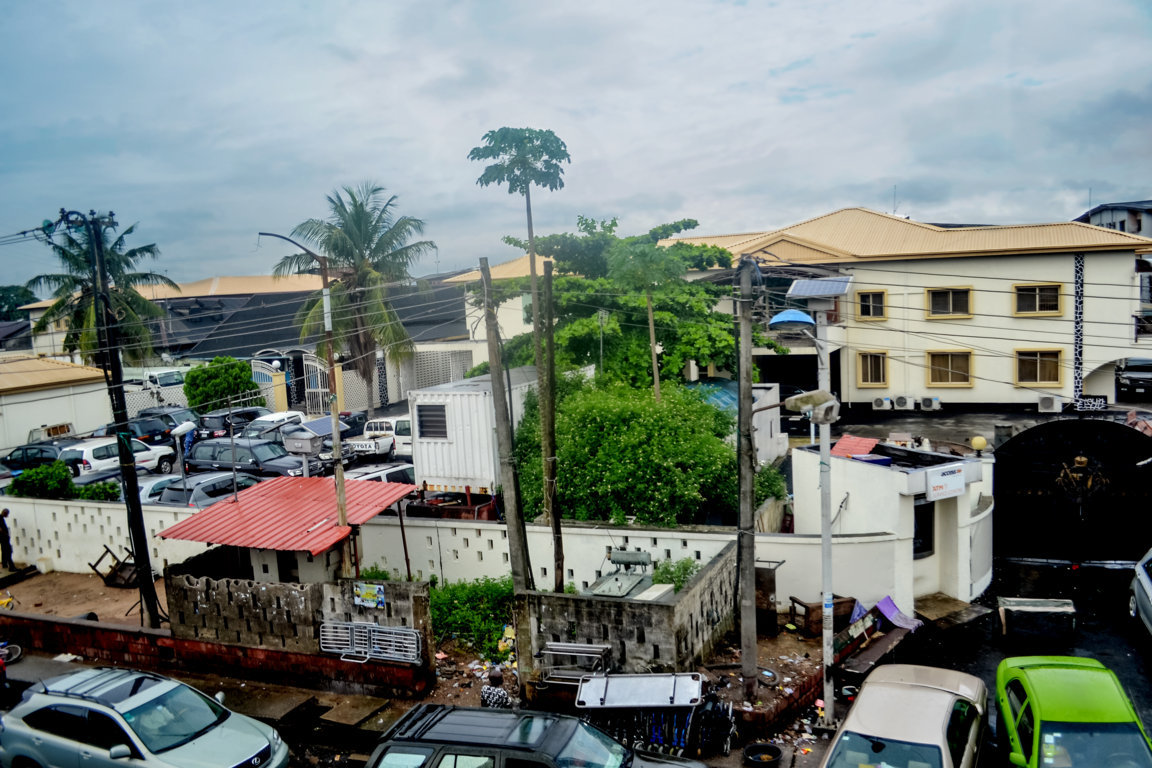
Iga Idunganran
The name gives away the secret. In Yoruba, 'Iga' derives from 'Gaa,' meaning royal home; 'Idun' means land or place; 'Iganran' means pepper. Iga Idunganran -- the palace built on a pepper farm. Before there was a throne, before there were kings of Lagos, there was Chief Aromire, an Ile-Ife nobleman who crossed to this island in the 15th century to fish and grow pepper. His farm became the seat of a dynasty. The palace that stands here today on Lagos Island has witnessed the transformation of a quiet fishing port into one of the largest cities on the African continent, and the orishas venerated within its walls have kept watch through every chapter.
From Pepper Farm to Throne Room
The first palace on this ground was built in 1670 for Oba Gabaro, who reigned from 1669 to 1760. It was a statement of permanence -- a royal complex rising where pepper plants had once grown in rows. The Portuguese, who had been trading along this coast for generations, later refurbished the palace with materials shipped from Portugal, including distinctive tiles that gave the structure a hybrid character. Nearly three centuries later, the modern portion of the complex was completed and commissioned on October 1, 1960 -- Nigerian Independence Day -- by Prime Minister Abubakar Tafawa Balewa. The timing was deliberate. A palace that predated colonial rule was rededicated on the day that rule ended.
The Orishas at the Gate
Shrines to the orishas are woven into the palace grounds, not as museum pieces but as living spiritual infrastructure. At the exit gate stands the shrine of Eshu, where the Oba and his chiefs have prayed before departures since time beyond memory. The ritual is practical as much as spiritual: Will the journey be favorable? Is it safe to leave? Nearby, a small edifice provides immediate access to the shrine of Ogun, the god of iron, whose main sanctuary lies just outside the palace walls under the care of a dedicated priestess. Every sixteen days, the Araba of Lagos leads special rites within the palace. The offerings follow a precise tradition: bitter kola, kola nuts, alligator pepper, palm oil, schnapps or plain gin, chickens, pigeons, goats or rams -- whatever the Ifa oracle decrees, short of a human life.
Where the Dead Kings Rest
The palace holds its own royal necropolis. All Obas of Lagos before Oba Akitoye were buried in Benin City, reflecting the deep historical ties between Lagos and the Benin Kingdom. Akitoye broke that tradition by becoming the first Oba interred within the modern palace grounds. Every Oba since -- with the exceptions of Sanusi Olusi and Kosoko -- has been buried at Iga Idunganran, their tombs accumulating beneath the same soil that once grew Aromire's pepper. The palace doubles as a cemetery for kings, a place where political authority and ancestral presence occupy the same space. Beyond the tombs, the palace has served as an administrative center, hosted the island's market, and provided the stage for the Eyo festival, the elaborate masquerade procession that is one of Lagos's most striking cultural traditions.
A Palace Under Siege
In October 2020, during the End SARS protests against police brutality that swept across Nigeria, Iga Idunganran found itself in the path of popular anger. The palace was looted. Oba Rilwan Akiolu, the reigning Oba of Lagos, was evacuated by soldiers as crowds vandalized the complex. Akiolu later accused the looters of taking two million US dollars and seventeen million naira from the palace. He did not return for two months. The attack was not the first crisis to shake these walls -- the palace has weathered colonial bombardments, political upheavals, and the pressures of a city that grew from a fishing village to a metropolis of over twenty million people around it. But it was a reminder that the palace sits at the intersection of traditional authority and contemporary politics, and that intersection is not always peaceful.
From the Air
Located at 6.465N, 3.390E on Lagos Island, in the dense historic core of Lagos. The palace compound is visible from low altitude as a distinct structure amid the tightly packed urban grid. The Lagos Lagoon lies to the north and west. Nearest airport: Murtala Muhammed International Airport (DNMM), approximately 15 nm to the north-northwest.