The Ninja Republic of Iga
In 1579, an army of samurai marched into the mountains of Iga Province expecting a straightforward conquest. They were annihilated. The peasants and local warriors who destroyed them fought with such devastating effectiveness that the historian Stephen Turnbull called it 'one of the greatest triumphs of unconventional warfare over traditional samurai tactics in the whole of Japanese history.' These were the shinobi -- the people who would later be called ninja -- and they were not lone assassins slipping through shadows. They were citizens of a self-governing republic, bound by an eleven-article constitution, organized into a military confederacy, and willing to kill anyone who committed treason against their league. The Iga ikki was not a gang of mercenaries. It was a nation.
A Constitution in the Mountains
Around 1560, the ninja families of Iga drafted a constitutional document that reads less like martial law and more like the founding charter of a small, paranoid democracy. Article one required every village to unite against invasion. Article two mandated that when an enemy was spotted, every bell in every village would ring, and every member would take up defensive positions with food, weapons, and shields. Article three conscripted every person aged 17 to 50, with a rotation system for prolonged campaigns. Article five offered social mobility unthinkable in feudal Japan: peasant infantry who captured an enemy castle would be promoted to samurai. Article six promised that traitors and their entire clans would be annihilated. Article ten banned hiring any ronin who had served in Yamato Province, due to that province's long-standing aggression. And the eleventh article formalized an alliance with neighboring Koka, creating a cross-border confederacy of mountain warriors who held 'field meetings' along their shared border to discuss governance.
The Terrain That Made Them
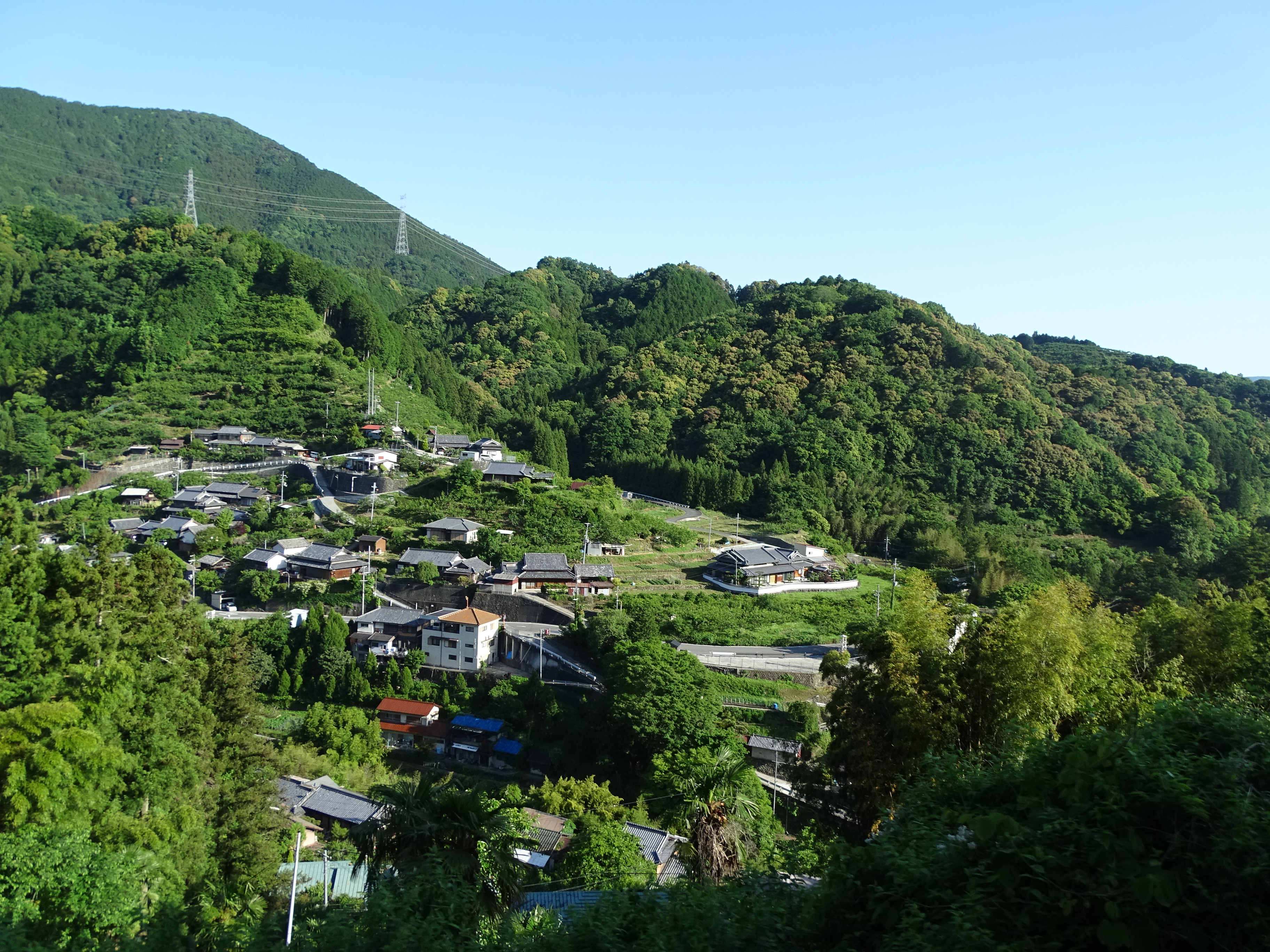
Iga Province was surrounded by mountains and accessible mostly by narrow paths that permitted only one horse-rider at a time. This isolation shaped everything. Without a powerful local lord to impose order, the jizamurai -- warrior-farmers -- and villagers organized themselves. By 1477, Iga was known for rejecting the authority of the provincial governor entirely. The militant yamabushi mountain monks were likely an influence; even the bandits in the area wore yellow scarves imitating those of the monks. Records of the Iga military unit, the Iga-shu, appear as early as June 1470, when they assisted the Hatakeyama clan in an attack near Negoro-ji in Wakayama. Three ruling families divided the province: the Hattori controlled western Iga, the Momochi oversaw the south, and the Fujibayashi held the northeast, according to the Bansenshukai, the great ninja manual whose original manuscript has been lost.
Fire Lanterns and Failed Assassinations
The ninja of Iga did not merely defend their homeland. They projected power across central Japan. On December 23, 1541, seventy to eighty ninja agents from Iga and Koka infiltrated a besieged castle, set fire to the settlement, and captured the first and second baileys. In a separate operation, the legendary Tateoka Doshun led 44 Iga ninja and 4 Koka ninja carrying lanterns decorated with forged replicas of the enemy lord's family crest. They walked through the castle gates unopposed and set the place ablaze. Around the same time, a monk named Sugitani Zenjubo -- presumed to be a mercenary ninja assassin from either Iga or Koka -- ambushed Oda Nobunaga himself and fired at him. The shots were absorbed by Nobunaga's armor. Zenjubo was executed three years later. Nobunaga would not forget.
Nobunaga's Reckoning
The first invasion came in 1579 under Nobunaga's son Nobukatsu, who underestimated the mix of peasants and warriors defending their own terrain. It ended in catastrophe for the invaders. Nobunaga took the failure personally. In 1581, he led a second invasion force of 40,000 to 60,000 soldiers, attacking from seven directions simultaneously, guided by two samurai traitors from northeast Iga. Even troops from Koka -- Iga's former ally, which had surrendered to Nobunaga in 1574 -- marched against their old partners. This time, the guns and cannon crushed Iga's earth-and-wood fortresses. Takino Jurobei commanded the final stand at Kashiwara before surrendering. Half the population fled. The republic was destroyed, but not its people.
From Warriors to Poets
After Nobunaga's assassination in June 1582, the surviving ninja of Iga found a new patron in Tokugawa Ieyasu. Hattori Hanzo, a Tokugawa vassal from Iga, reportedly negotiated with local ninja to guard Ieyasu's escape to Kii Province -- though modern historians note this story does not appear until the 18th century. Under the Tokugawa shogunate, many ninja turned to farming; others became castle guards or were granted land near Edo Castle. The final combat deployment of ninja was during the 1637 Shimabara Rebellion. The last documented use was in 1853, when ninja were allegedly sent to investigate the arrival of Commodore Perry's ships. Perhaps the most unexpected figure to emerge from Iga's ninja tradition was the poet Matsuo Basho, born in Ueno to a powerful ninja family, trained in ninjutsu before leaving to become Japan's greatest haiku master. The warriors of Iga had traded swords for syllables.
From the Air
Located at 34.767N, 136.133E in the mountainous heart of Iga Province, now the city of Iga in Mie Prefecture. From altitude, the Iga basin is distinctly visible -- a pocket of relatively flat land ringed by forested mountains with narrow passes, making it immediately clear why this terrain favored unconventional defenders. Iga Ueno Castle, reconstructed in 1935, stands as the most prominent landmark. The nearest major airport is Chubu Centrair International Airport (RJGG), approximately 85 km northeast. Best viewed at 4,000-6,000 feet AGL to appreciate the basin-within-mountains geography that shaped ninja strategy.