Igbo Landing
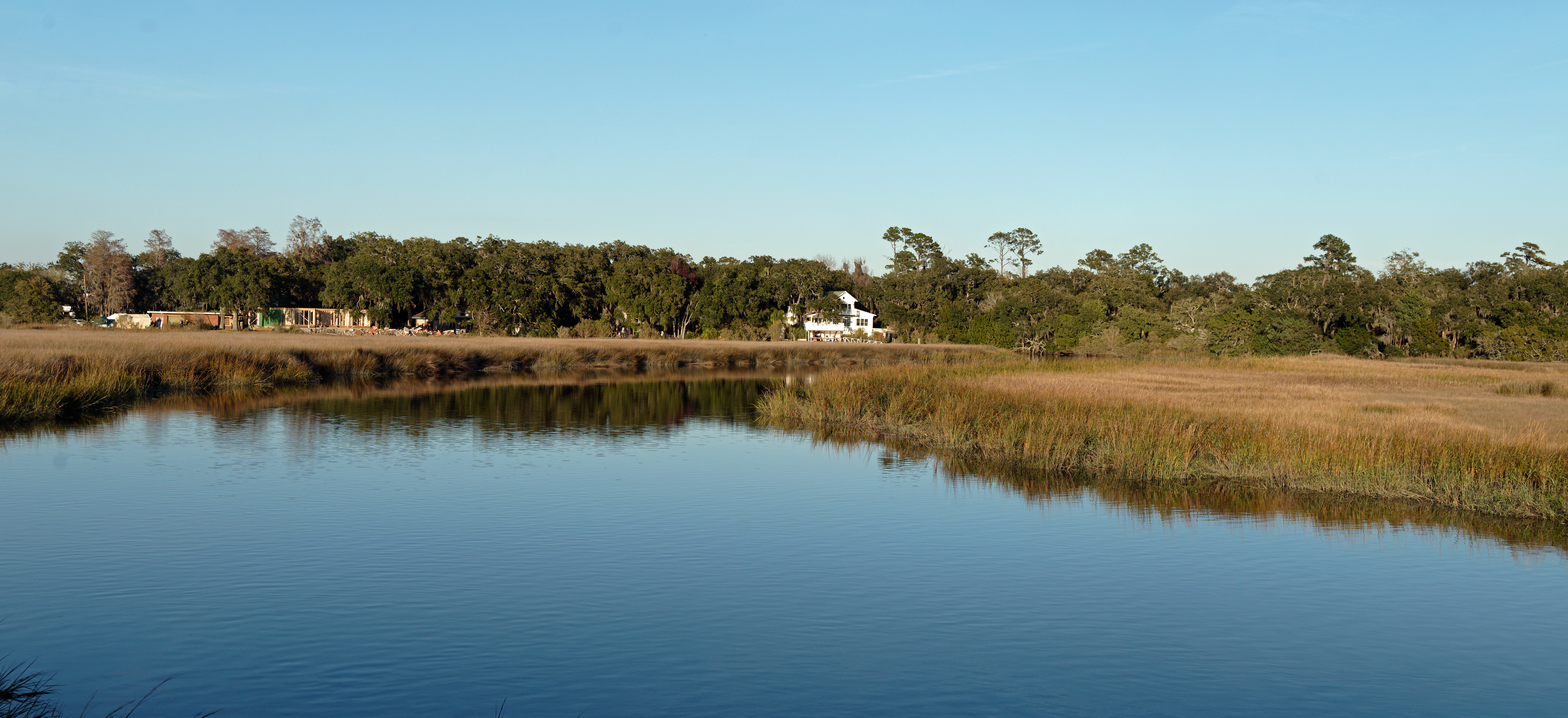
The water at Dunbar Creek barely moves. It curls through the salt marsh in sluggish brown ribbons, indistinguishable from a thousand other tidal creeks along Georgia's barrier islands. But the Gullah-Geechee people who have lived on St. Simons Island for generations say the water here sounds different. They say that if you stand on the bank at low tide and listen carefully, you can hear the clinking of chains beneath the surface. In May 1803, seventy-five captive Igbo people from what is now Nigeria arrived at this unremarkable stretch of marsh and transformed it into something sacred -- a place where the choice between freedom and death was made with unflinching clarity.
The Schooner York
The seventy-five Igbo captives had already survived the Middle Passage when they were sold at a Savannah slave market to agents of John Couper and Thomas Spalding, two of St. Simons Island's most prominent planters, for one hundred dollars each. They were loaded aboard a small coastal vessel called the Schooner York for the final leg of their forced journey. But the Igbo were known throughout the American South for something that made slaveholders uneasy: a fierce, unyielding resistance to bondage. During the short voyage from Savannah, the captives rose up. They overwhelmed their captors, drowning the crew members and seizing control of the ship. The vessel ran aground in the shallows of Dunbar Creek at a site that would come to bear their name.
Walking Into the Water
What happened next has been told and retold for more than two centuries, each version carrying the weight of defiance. According to a letter written by Savannah slave dealer William Mein, the Igbo walked into the marsh after the grounding. Between ten and twelve drowned. Others were captured by bounty hunters who collected ten dollars per head from Spalding and Couper. But the oral tradition that persists among the Gullah-Geechee communities tells a different, more luminous story. In their telling, the Igbo did not simply wade into the water. They walked in together, chanting, and they did not stop. Some versions say they walked all the way back to Africa. Others say they flew. This is the legend of the Flying Africans, one of the most powerful narratives in African American folklore, a story that insists the human spirit cannot truly be held captive.
A First Freedom March
Historians have called the Igbo mutiny and mass suicide the first freedom march in American history. The events of 1803 represented what scholars describe as a major act of resistance, one that predated the organized abolitionist movement by decades. The Igbo people's refusal to accept enslavement resonated through generations of enslaved communities along the Georgia coast. Their story was kept alive not in written records but in the oral traditions of the Gullah-Geechee people, passed from elders to children in a chain of memory that stretches unbroken from the antebellum period to today. The Federal Writers' Project recorded some of these accounts in the 1930s, preserving voices that described the event with vivid certainty, as though it had happened yesterday rather than more than a century before.
The Unquiet Ground
The site at Dunbar Creek bore no official historical marker for most of its existence. In the 1940s, a sewage disposal plant was built beside the landing despite protests from local African Americans who considered the site hallowed ground. For decades, the lack of formal recognition stood in sharp contrast to the story's deep significance within Black communities along the Georgia coast. That changed in May 2022, when a historical marker was finally dedicated at the site, acknowledging the Igbo rebellion and the people who perished there. The event drew historians, descendants of Gullah-Geechee families, and visitors from across the country. The landing has also entered contemporary culture. Julie Dash's 1991 film Daughters of the Dust drew on the Flying Africans legend, and Beyonce's 2016 visual album Lemonade filmed scenes at locations connected to the story. The site has been incorporated into the history curriculum of coastal Georgia schools, ensuring that new generations encounter this chapter of American history.
What the Water Remembers
Dunbar Creek still winds through the same salt marsh it did in 1803. Live oaks draped in Spanish moss line the approaches to St. Simons Island, and the tidal flats still flood and drain with the rhythm of the Atlantic. The landscape appears unchanged, indifferent to what it witnessed. But the story of Igbo Landing has proven more durable than any monument. It lives in the Gullah-Geechee communities that maintain their distinct cultural traditions on Georgia's Sea Islands. It lives in the novels and poems and films that return to the image of people who chose the water over chains. And it lives in the simple, radical idea at the heart of the legend: that freedom is not something granted by others, but something that already belongs to you.
From the Air
Located at 31.187N, 81.387W on the western shore of St. Simons Island, Georgia, along Dunbar Creek. The site sits in the salt marshes visible as the green-brown lowlands between the island and the mainland. Nearest airports: St. Simons Island Airport (KSSI, 2nm southeast), Brunswick Golden Isles Airport (KBQK, 8nm west). Best viewed at 1,500-2,000 feet AGL. The creek is narrow and hard to spot from altitude; look for the distinctive curve of marshland on the island's interior western shore.