Iglesias, Sardinia
The name gives away the obsession: Iglesias means "churches" in the Catalan and Spanish languages that washed over Sardinia during centuries of Iberian rule. And churches are what this hilltop town has in abundance -- so many that the medieval settlement earned the name Villa Ecclesiae, the Town of Churches, from the Pisans who built its walls in the 13th century. But beneath the bell towers and the Gothic arches lies a different story entirely, one written in silver, lead, and zinc. Iglesias was built on mining, and the veins of ore running through the surrounding hills have shaped its fortunes for at least two thousand years.
Walls, Towers, and the Pisan Imprint
Count Ugolino della Gherardesca of Pisa founded Villa Ecclesiae in the 13th century, enclosing the settlement within walls and towers that still define the old town. The Pisans understood the mineral wealth of the Iglesiente region and built their fortified town to protect it. Walking through the old quarter today, you pass through streets laid out on a medieval grid, flanked by churches that span architectural eras: the Cathedral of Santa Chiara, rebuilt after damage across the centuries, and the Church of San Francesco, with its Gothic and Renaissance layers. The Pisan walls, partly restored, still trace the boundary between the historic core and the modern town that has grown around it.
Silver Underground, Power Above
Ancient Roman sources record a settlement called Metalla near modern Iglesias -- a name that needs no translation. Mining has defined this landscape since antiquity, through Nuragic, Punic, and Roman occupations. But the industry reached its peak under the Pisans and then the Aragonese, who codified mining law in the Breve di Villa di Chiesa, a remarkable 14th-century legal code that regulated everything from extraction rights to worker safety. The document survives as one of the earliest mining codes in European history. By the 19th century, industrialization brought new scale to the Iglesiente mines, attracting workers and investment that transformed the town. The legacy is visible in the abandoned mining infrastructure scattered across the surrounding hills -- rusting headframes, collapsed tunnels, and the distinctive scarred terrain of open-cast workings.
Processions and Devotion
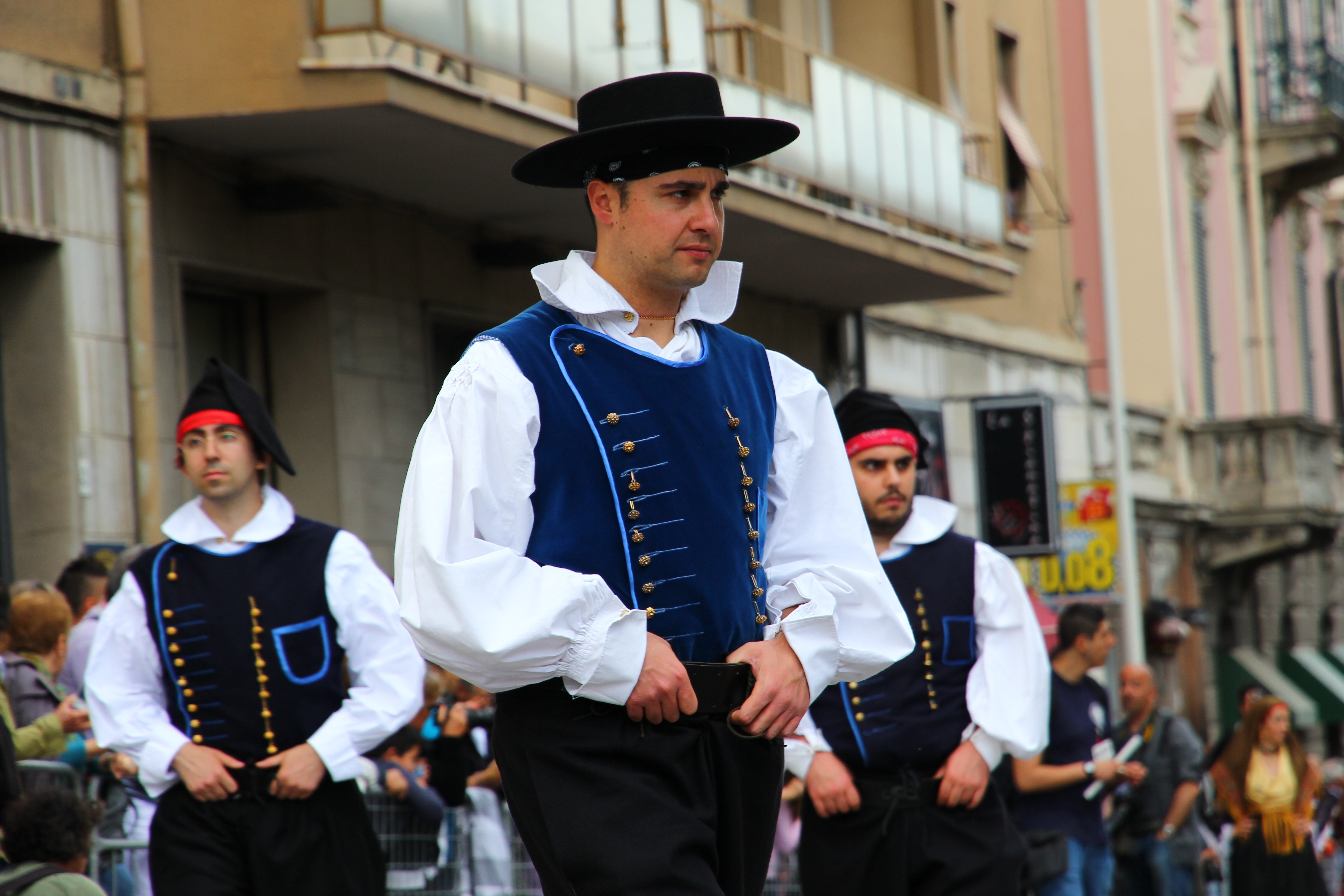
Iglesias preserves one of Sardinia's most distinctive religious traditions in its Holy Week processions. During Settimana Santa, hooded confraternity members carry elaborately decorated floats through the old town's narrow streets in ceremonies that blend Spanish Catholic pageantry with local Sardinian devotion. The processions date back centuries, rooted in the period of Aragonese and later Spanish rule that left a deep cultural imprint on the town. With a population of roughly 24,600, Iglesias feels intimate during these events -- the entire community participates, and the candlelit processions winding beneath medieval walls create an atmosphere that connects modern residents to their Catalan and Pisan predecessors.
Between Memory and Reinvention
The mines that built Iglesias are largely closed now, and the town faces the challenge common to post-industrial communities everywhere: how to honor the past while building a different future. As co-capital (with Carbonia) of the Province of Sulcis Iglesiente, Iglesias serves as an administrative center for southwestern Sardinia, but its economy has shifted toward tourism and cultural heritage. The surrounding Iglesiente landscape -- dramatic limestone hills covered in Mediterranean scrub, punctuated by the ruins of mining operations -- has been recast as heritage. Visitors come for the geology, the archaeology, and the haunting beauty of industrial decline set against wild Sardinian countryside. The town itself, with its medieval core intact and its churches still standing, offers something rarer: a living community whose identity was forged underground but whose future looks increasingly toward the light.
From the Air
Located at 39.31N, 8.54E in southwestern Sardinia's Iglesiente region. Best viewed at 3,000-5,000 feet to appreciate the walled medieval center and the surrounding mining landscape. The town sits in hilly terrain with distinctive scarred hillsides from historical mining operations. Nearest airport: Cagliari-Elmas (LIEE), approximately 55 km east. The Iglesiente coast with its dramatic cliffs is visible to the west.