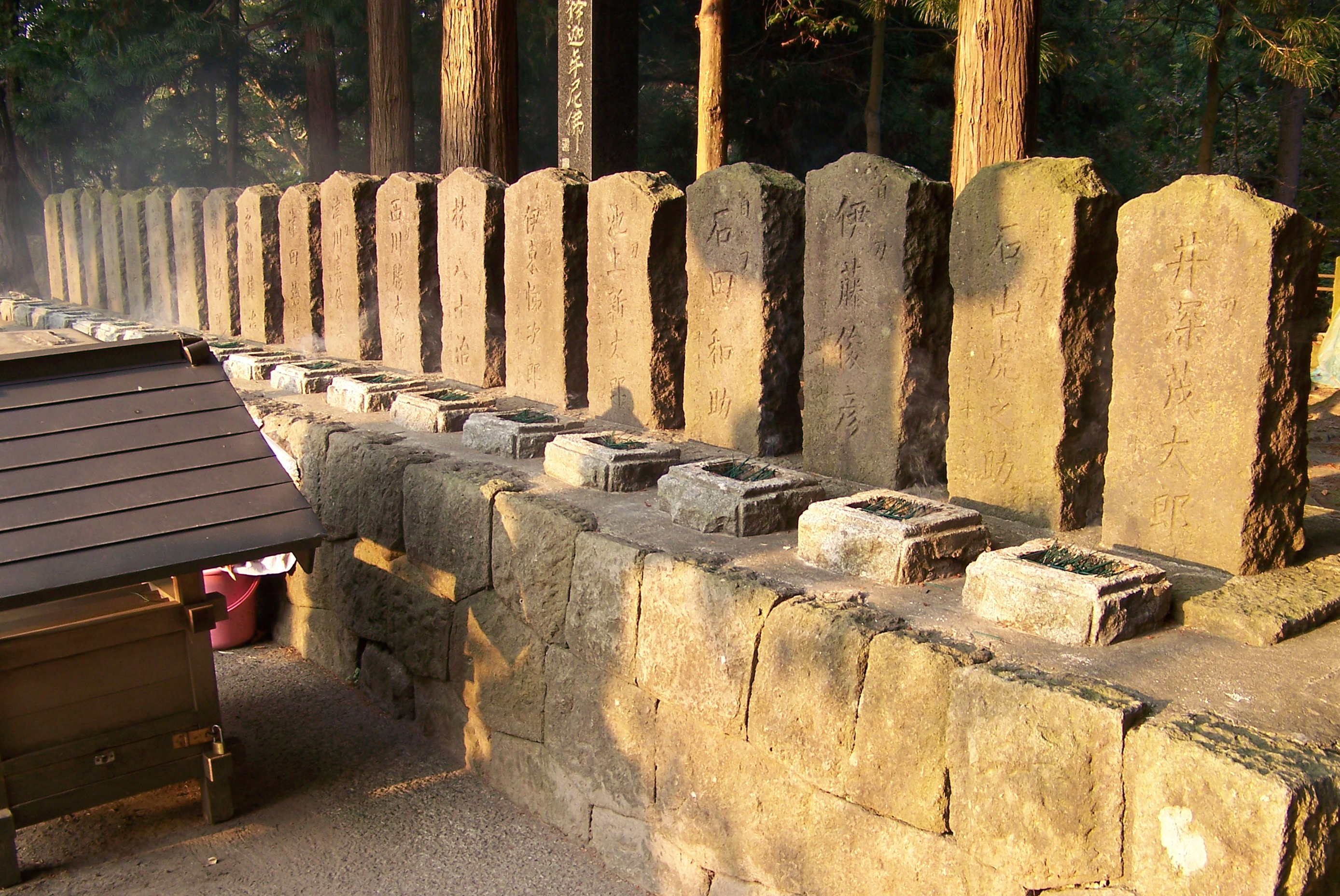
Iimori Mountain
Twenty boys stood on the slope and looked toward home. Through the smoke drifting across the valley, they saw flames consuming the castle town of Aizuwakamatsu and concluded that Tsuruga Castle itself had fallen to imperial forces. They were wrong. The castle still held. But on that autumn day in 1868, the twenty members of the Byakkotai's 2nd shichutai squad -- none older than seventeen -- drew their swords and performed seppuku on the hillside of Iimori Mountain, 1.5 kilometers northeast of the fortress they believed lost. One boy survived. The other nineteen are buried where they fell.
The White Tiger Corps
The Byakkotai was born from desperation. In April 1868, as the Boshin War tore Japan apart between supporters of the Tokugawa shogunate and the forces of the new imperial government, the Aizu domain scrambled to mobilize every available fighter. They organized their military into four units named after mythological creatures: the Genbu (Black Tortoise), Seiryu (Blue Dragon), Suzaku (Vermilion Bird), and Byakkotai (White Tiger). The White Tiger Corps was the reserve -- composed of boys aged sixteen and seventeen, the sons of Aizu samurai families. They were never supposed to see real combat. But the imperial advance was faster and more brutal than anyone anticipated, and the Byakkotai was thrown into battle at Tonoguchihara.
Smoke and Misunderstanding
The twenty members of the 2nd shichutai squad became separated from their unit during the confused fighting. Exhausted and disoriented, they retreated to Iimori Mountain, which offered a clear sightline to Tsuruga Castle across the valley. What they saw was the castle town ablaze -- homes, shops, and storehouses burning in the streets surrounding the inner citadel. But the castle itself had not been breached. The distinction was invisible through the haze. Convinced that their lord and families were dead, and unwilling to face the dishonor of capture, the boys performed seppuku. Only one, Iinuma Sadakichi, failed to die. A local peasant found him and nursed him back to health. Sadakichi lived until 1931, carrying the weight of survival for sixty-three years.
Monuments from Dark Admirers
The story of the Byakkotai's devotion resonated far beyond Japan. In 1928, Benito Mussolini sent a column from the ruins of Pompeii to be erected beside the graves on Iimori Mountain as a tribute from the Italian Fascist Party. Nazi Germany later contributed its own monument. Both still stand at the summit, complicating the site with layers of meaning that many visitors find unsettling. The monuments speak less to the boys who died here than to the 20th-century regimes that co-opted their sacrifice for propaganda. The hillside itself has been heavily commercialized, with souvenir shops and exhibitions lining the approach. A modern escalator runs alongside the steep stone staircases for those unwilling to climb.
The Spiral Temple Below
Downhill from the Byakkotai graves stands one of Japan's most remarkable buildings: the Sazae-do, a hexagonal wooden pagoda built in 1796 that contains the world's only double-helix staircase made entirely of wood. Named for its resemblance to a sea snail shell, the 16.5-meter structure was designed so that worshippers ascending and descending never cross paths -- a feat of architectural ingenuity that predates the discovery of DNA's double helix by more than 150 years. The pagoda once housed 33 statues of Kannon, the Buddhist goddess of compassion, arranged along the spiral path to replicate a famous pilgrimage route. The statues were removed during the Meiji period's Shinbutsu bunri policy separating Buddhism from Shinto, but the building itself earned designation as an Important Cultural Property. Nearby stands a shrine from the late 17th century that deifies a white snake as a god of abundance and fertility.
From the Air
Located at 37.504N, 139.956E, approximately 1.5km northeast of Tsuruga Castle (Aizuwakamatsu Castle), which is itself a prominent landmark with its distinctive white walls and red-tiled roof visible from altitude. Iimori Mountain is a low hill within the urban fringe of Aizuwakamatsu city. Nearest airport: Fukushima Airport (RJSF) approximately 55km to the southeast. The broad Aizu Basin surrounding the city provides good visual references. Lake Inawashiro lies roughly 15km to the east. Mountain weather can bring sudden low clouds, particularly in autumn.