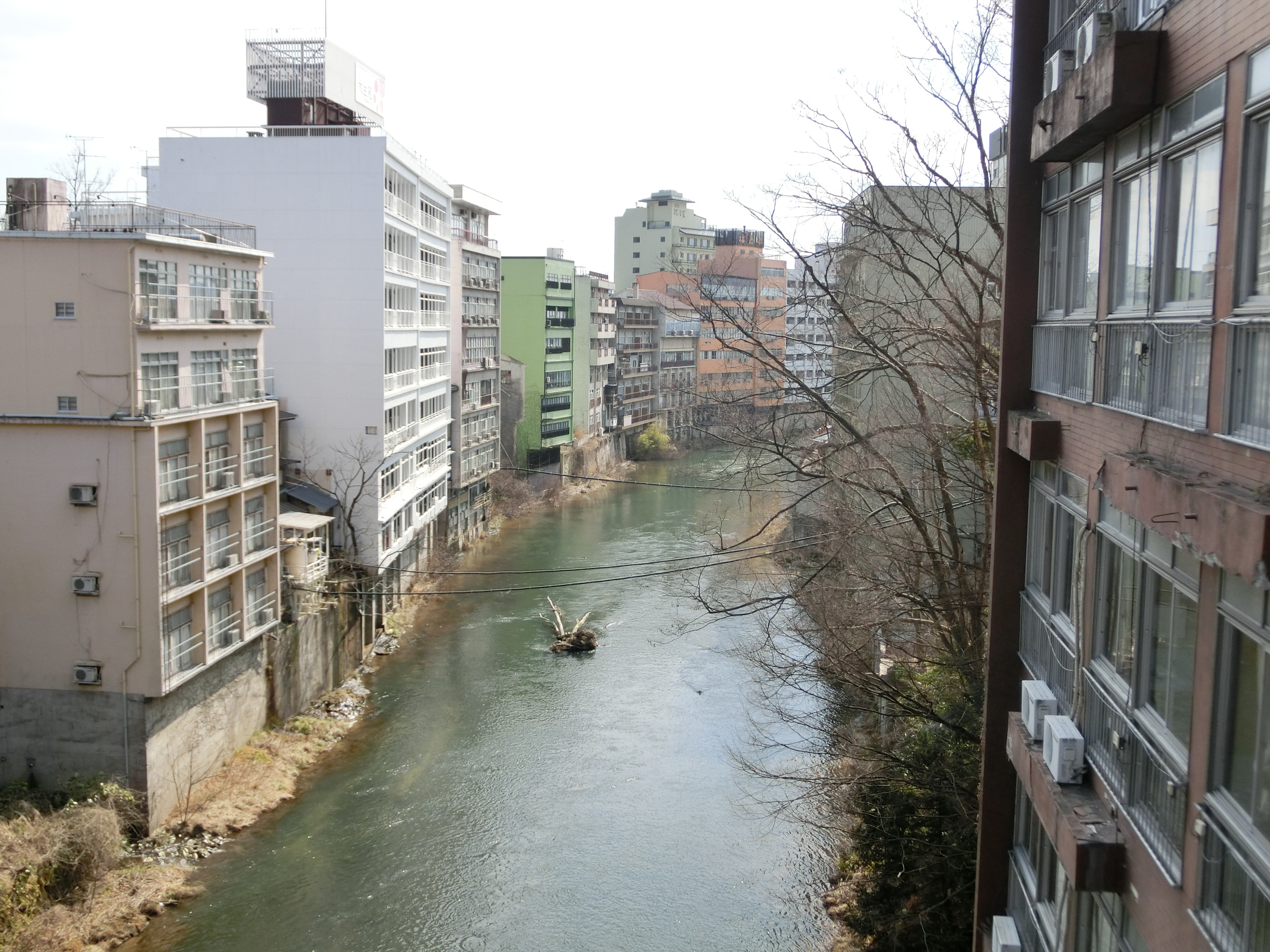
Iizaka Onsen
The bathhouse is called Sabakoyu -- "Mackerel Lake Baths" -- which is not the sort of name you expect for one of the oldest community bathhouses in Japan. The characters used today, 鯖湖湯, are a later substitution; the original spelling was 佐波来湯, and according to legend, the hot spring was already famous when the semi-mythical warrior prince Yamato Takeru passed through during the second century and was cured of his ailments by its waters. Whether or not a prince actually bathed here, someone did, a very long time ago. Iizaka Onsen sits in the northwestern hills of Fukushima city, a short ride on the Fukushima Kotsuu Iizaka Line from Fukushima Station, and it carries the accumulated weight of centuries of travelers who came here to soak away the road.
Where the Narrow Road Turned Warm
The most famous of those travelers arrived in 1689. Matsuo Basho, the haiku master whose journey through the Tohoku region produced "Oku no Hosomichi" (The Narrow Road to the Deep North), stopped at Iizaka Onsen and bathed at Sabakoyu. Basho's travelogue immortalized the places he visited, and Iizaka became one of them. But the poet had another reason to linger in this area: he came to pay tribute to the Sato brothers, Tsugunobu and Tadanobu, loyal retainers of the twelfth-century warrior Minamoto no Yoshitsune. The brothers were born in Iizaka, and their story of sacrifice so moved Basho that he composed haiku in their memory. Those poems are still preserved at nearby Ioji Temple, which was founded in 826 and remains dedicated to the brothers' legacy.
Forty Ryokan and Nine Baths
Iizaka is a working hot spring town, not a museum. Over 40 traditional ryokan line its narrow streets, offering the full ritual of Japanese hospitality: tatami rooms, multi-course kaiseki meals, and baths fed by the mineral-rich waters that bubble up from below. Nine public bathhouses are scattered through the district, each with its own character and clientele. Sabakoyu, the oldest, was long housed in a wooden structure that locals claim was the oldest wooden communal bathhouse in Japan; it was renovated in 1993 but retains its historical atmosphere. Together with Naruko Onsen and Akiu Onsen in neighboring Miyagi Prefecture, Iizaka is counted as one of the three great hot springs of Oshu -- the old name for the Tohoku region -- a distinction that speaks to its endurance across centuries of Japanese bathing culture.
The Night the Town Fights
For most of the year, Iizaka is the picture of hot-spring tranquility: steam rising from bathhouse vents, guests in cotton yukata shuffling along lantern-lit streets. Then October arrives. On the first weekend of the month, the Iizaka Kenka Matsuri -- the Fighting Festival -- transforms the sleepy resort into something wild. Six portable shrines, called mikoshi, and six festival floats, called yatai, are paraded through the streets before converging at Hachiman Shrine in the center of town. The mikoshi are deliberately crashed into each other with enormous force, their bearers surging and shoving in a controlled chaos that is half religious ritual, half barely contained brawl. The festival is one of Fukushima's signature autumn events, drawing visitors who come for the spectacle of a town that spends 51 weeks soaking in peace and one weekend in glorious, sanctioned mayhem.
A Quiet Stop on a Short Line
The Fukushima Kotsuu Iizaka Line is one of those small Japanese railways that feels like it belongs to another era. The train runs from Fukushima Station into the hills, depositing passengers at Iizaka Onsen Station after a ride that costs 370 yen and delivers them to a town that feels far more remote than its actual distance from the prefectural capital. Fruit orchards -- peach, cherry, apple -- line the approaches, and the surrounding hills hold hiking trails and smaller hot spring hamlets. Iizaka's appeal is precisely this: it is close enough to reach easily, far enough to feel like an escape, and old enough to carry the memory of a prince, a poet, and generations of ordinary Japanese who came to let the hot water do its work.
From the Air
Located at 37.833N, 140.452E in the northwestern hills of Fukushima city, Fukushima Prefecture, Japan. The hot spring town is visible from altitude as a compact settlement in a river valley northwest of Fukushima's urban center. The Fukushima Kotsuu Iizaka Line railway is visible running from Fukushima Station to the town. Nearest airport: Fukushima Airport (RJSF), approximately 50 km to the south. Mount Adatara and the Adatara range are visible to the southwest. Hachiman Shrine and the central onsen district are at the core of the town. Expect possible steam plumes from bathhouses visible in cooler weather.