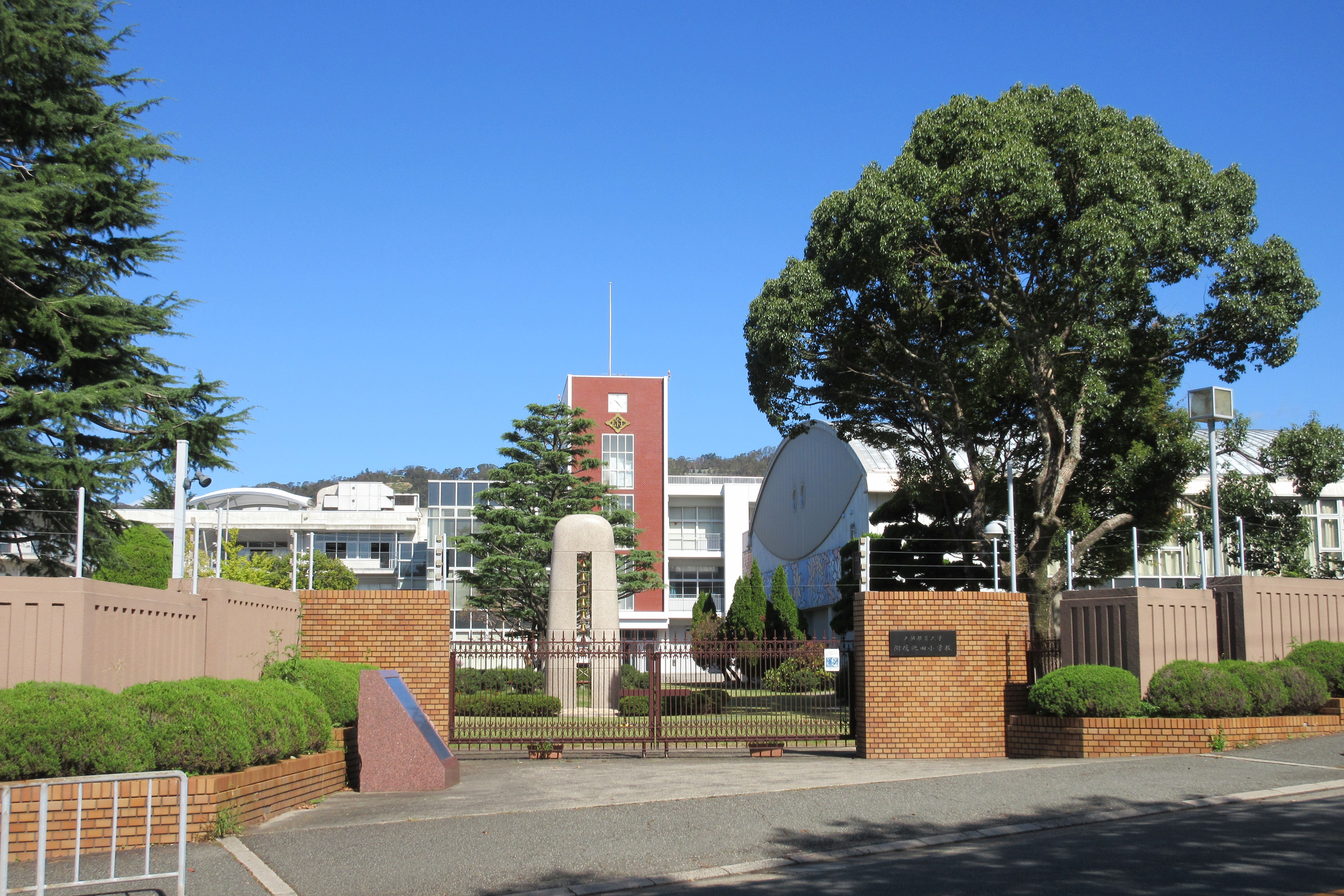
Ikeda Elementary School: From Tragedy to Transformation
Every June 8, at precisely 10:12 in the morning, a bell rings at the elementary school affiliated with Osaka Kyoiku University in the quiet city of Ikeda. Participants bow their heads. The bell hangs beside a monument inscribed with eight names -- all children, seven of them girls in second grade, one a boy in first grade. The silence that follows is the kind that carries weight, the kind a nation remembers. What happened on that date in 2001 did not just scar one school. It broke open a conversation Japan had never had about protecting its children inside the places they were supposed to be safest.
Ten Minutes That Changed Everything
On the morning of June 8, 2001, Mamoru Takuma, a 37-year-old with a long criminal record and a history of violent and erratic behavior, drove to the Ikeda Elementary School campus. Earlier that morning he had tried to set fire to his own apartment. He stopped at a knife shop around 10:00 a.m. and purchased a 15.8-centimeter Deba knife -- a heavy-bladed kitchen knife designed for cutting fish. He parked at the school's east gate and entered the south building, which housed the lower-grade classrooms. Just after 10:10 a.m., Takuma climbed through a window and began attacking students. He moved through three second-year classrooms in rapid succession. Eight children were killed and fifteen others seriously wounded in an assault that lasted only minutes. Teachers and staff -- 34 of them in the building -- struggled to intervene, but the speed and brutality of the attack overwhelmed them.
A System That Missed Every Warning
Takuma's path to the school that day was paved with failures. Expelled from school as a teenager, disowned by his father, convicted of rape, he had cycled through part-time jobs in the Ikeda area, fired repeatedly for violent outbursts. In 1999, while working as a janitor at another elementary school in nearby Itami, he spiked teachers' tea with the sedative temazepam, hospitalizing staff members. He was briefly detained at a psychiatric facility but released. In October 2000, he was charged with assaulting a hotel bellhop while working as a taxi driver. His court hearing for that assault was scheduled for the very morning of June 8, 2001 -- the day he chose instead to drive to Ikeda Elementary. Each incident had been handled in isolation. No system connected the dots.
The Reckoning
Takuma was diagnosed with paranoid personality disorder, convicted, and sentenced to death by hanging. He was executed on September 14, 2004. But the legal conclusion did little to address the deeper questions the massacre raised. At the time, Japanese schools operated on a foundation of trust -- open campuses, unlocked gates, no security personnel. The idea that a school might need a guard was unheard of. When Yoshio Yamane, the school's principal administrator, announced that Ikeda Elementary would hire a security guard, it was a first. The decision rippled outward. Across Japan, local governments began recruiting former police officers to patrol near school grounds. Legislators debated oversight reforms for individuals with histories of violent mental illness. The conversation was painful, overdue, and permanent.
A Monument and a Promise
The school did not close. It rebuilt, both physically and philosophically. A memorial monument now stands on the campus grounds, inscribed with the names of the eight children: Yuki Hongo, Mayuko Isaka, Yuuka Kiso, Ayano Moriwaki, Maki Sakai, Takahiro Totsuka, Hana Tsukamoto, and Rena Yamashita. Each year on June 8 -- now observed as School Safety Day -- a ceremony called Gathering for Prayers and Promises brings together families, school officials, and students. Participants ring the memorial bell at 10:12 a.m., the moment the attack began. In 2010, the school was certified as Japan's first International Safe School, a designation recognizing its comprehensive approach to student safety. The campus that was once the site of Japan's deadliest school attack became a model for preventing the next one.
From the Air
Located at 34.82°N, 135.44°E in the city of Ikeda, on the northwestern edge of Osaka Prefecture. The school campus sits in a residential area near the foot of the Hokusetsu Mountains. Osaka International Airport (Itami Airport, RJOO) lies immediately to the southeast, less than 3 nautical miles away -- its runways and terminal buildings are prominent landmarks. Kansai International Airport (RJBB) is approximately 35 nautical miles to the south on its distinctive artificial island in Osaka Bay. Best viewed at 2,000-3,000 feet AGL approaching from the south, with the dense urban grid of northern Osaka contrasting with the green foothills to the north.