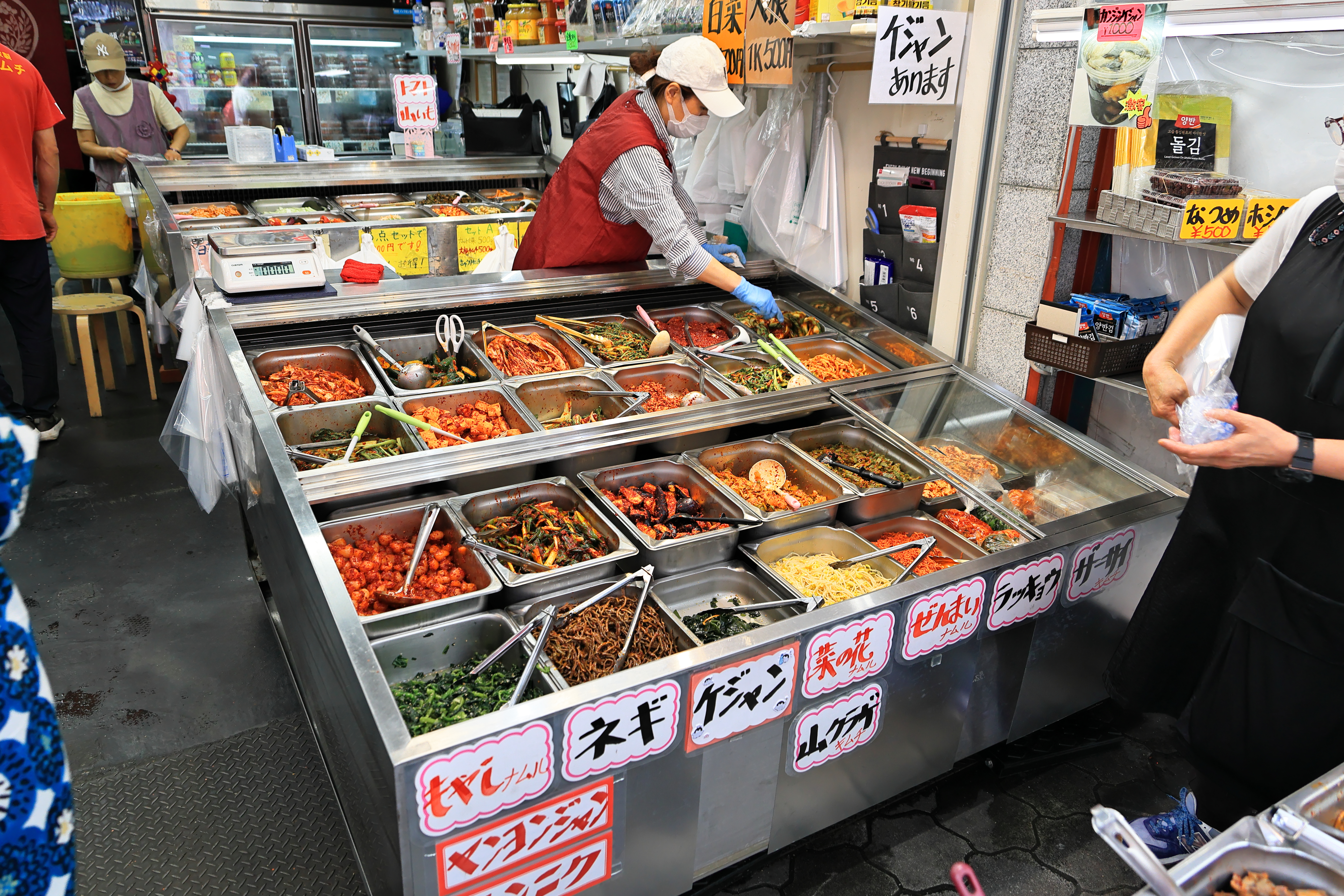
Ikuno Korea Town: Where Kimchi Tells a Complicated Story
Twenty of the 150 shops on this narrow Osaka shopping street sell kimchi. That is a staggering ratio for any neighborhood, but in Ikuno-ku it makes perfect sense. This is Ikuno Korea Town, one of the largest Koreatowns in Japan, where over one in five residents hold foreign nationality and where the smell of fermenting cabbage, grilling meat, and steaming tteok has defined the air since the mid-twentieth century. Two million visitors came here in 2021 -- drawn by K-pop merchandise, Korean street food, and the kind of culinary authenticity that tourist districts in larger cities cannot manufacture. But beneath the cheerful storefronts lies a history rooted in wartime forced labor, generational discrimination, and a community's quiet insistence on existing.
Roots in Wartime Displacement
The Korean presence in Ikuno-ku did not begin by choice. Starting in 1939, millions of Koreans were mobilized to support Japan's World War II effort, and hundreds of thousands were forcibly relocated to the Japanese mainland to perform labor under brutal conditions. Many ended up in Osaka's industrial districts, and Ikuno-ku became one of the primary settlement areas. After the war ended, the community remained -- unable or unwilling to return to a divided Korean peninsula. They opened shops, established schools, and built a neighborhood that reflected both their homeland culture and their new Japanese reality. The area went by several names over the decades -- Ikaino Korea Town, Osaka Korea Town -- before the three local associations officially unified under the name Osaka Ikuno Koreatown in 2021.
A Pedestrian Kingdom of Flavors
The main shopping street becomes a pedestrian-only zone between 10 a.m. and 6 p.m., and that is when Ikuno comes alive. The 150 stores packed along the narrow lane sell everything from traditional Korean clothing to K-pop fan goods, but food dominates. Beyond the twenty dedicated kimchi shops, vendors offer unique local creations that exist nowhere else -- tomato kimchi among them, a fusion that reflects the neighborhood's position between two culinary traditions. Various establishments offer classes in Korean language, culture, and cooking, turning the neighborhood into something between a living museum and an open-air classroom. The Osaka Korea Town Museum, located nearby, provides the historical context, documenting the community's origins and showcasing Korean cultural heritage. It is a ten-minute walk from either Tsuruhashi Station or Momodani Station.
Uncomfortable Truths
Ikuno Korea Town carries complications that its cheerful food stalls do not advertise. According to the 2020 census, 27,600 residents -- 21.8 percent of Ikuno-ku's population -- are foreign nationals, making it one of the most diverse wards in Japan. That diversity has not always been welcomed. The neighborhood has been a target for anti-Korean hate speech rallies, and a video of a junior high school girl shouting for ethnic cleansing of Korean residents in the area went viral, with police officers standing nearby doing nothing to intervene. The district also carries an unexpected geopolitical footnote: Ko Yong-hui, the mother of North Korean leader Kim Jong Un, was born here in 1952 -- a detail that adds yet another layer to an already complex neighborhood identity.
From Discrimination to Destination
The transformation of Ikuno from a stigmatized ethnic enclave to a major tourist draw is one of Osaka's most remarkable neighborhood stories. The 2004 Japanese novel and film Blood and Bones, a semi-autobiographical account of ethnic Korean life in the area, brought wider attention to the community's history. The global Korean Wave -- K-pop, Korean dramas, Korean cuisine -- turned what was once a mark of difference into a source of commercial and cultural cachet. Two million visitors in a single year is a number that would be impressive for a purpose-built attraction; for a residential neighborhood of small family-run shops, it is extraordinary. Both Korean and Japanese customers have been buying food here for decades, but now they are joined by tourists from across Japan and the world, all walking the same pedestrian street, sampling the same kimchi that someone's grandmother began fermenting seventy years ago.
From the Air
Located at 34.66N, 135.53E in Ikuno-ku, southeastern Osaka, Japan. The neighborhood sits in the dense urban grid east of central Osaka, identifiable from altitude by the tight residential blocks characteristic of the ward. Best viewed at 2,000-3,000 feet AGL. Osaka Itami Airport (RJOO) is approximately 12 nautical miles to the northwest; Kansai International Airport (RJBB) is approximately 22 nautical miles to the south across Osaka Bay. Tsuruhashi Station, the nearest major transit hub, is visible as a rail junction where JR and Kintetsu lines converge.