Ilê Axé Iyá Nassô Oká
Three African freedwomen founded it. That fact is worth holding onto when you approach the white-washed building on the hill above Avenida Vasco da Gama in Salvador, because almost everything about Ile Axe Iya Nasso Oka - the Casa Branca do Engenho Velho - is the result of women who had been enslaved, who had bought or been granted their freedom, and who chose to keep practicing their ancestral religion in a city and an empire that had made both those things dangerous. The three women - Iya Nasso, Iya Akala, and Iya Deta - began their community near the Barroquinha church sometime before 1830. The temple they founded is widely considered the oldest Candomble terreiro in Brazil, and the first Afro-Brazilian religious site formally recognized as national heritage by IPHAN, the federal heritage institute.
Yoruba Roots in a Portuguese Port
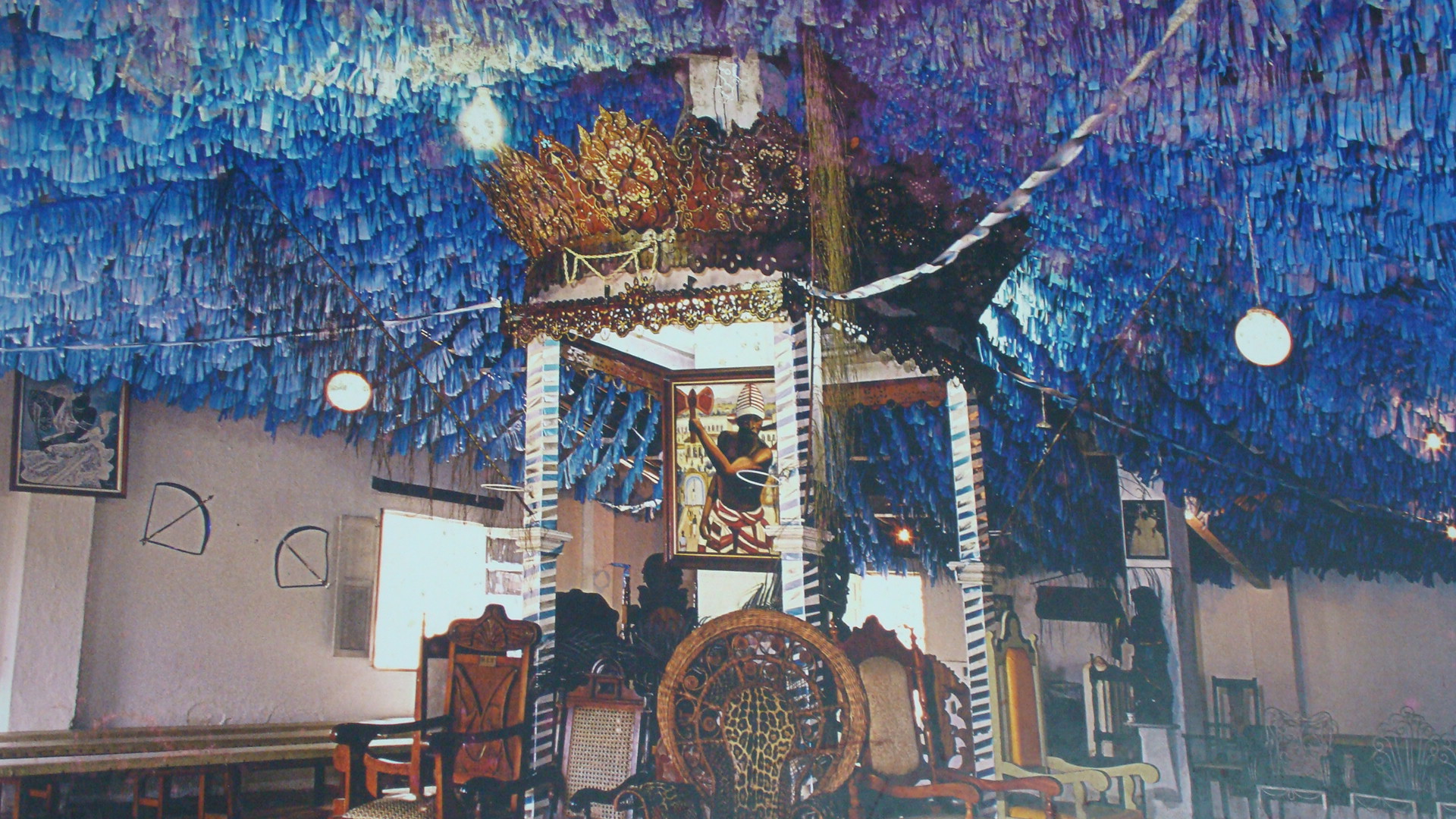
Candomble belongs to a family of African-diasporic religions that took root across the Atlantic world wherever the slave trade carried Yoruba, Fon, and Bantu peoples. In Bahia, the Ketu branch - to which the Casa Branca belongs - draws most directly from Yoruba traditions of West Africa, from the cities of Ketu, Oyo, and Ife. The Yoruba worship orishas, known as orixas in Portuguese, deities associated with natural forces and elements of human life: Ogun of iron, Oxum of the river, Yemanja of the sea, Xango of thunder and justice. The Casa Branca is consecrated to Xango, whose ritual symbols - the double-headed axe carried by his priests - sit atop the tiled roof of the main ceremonial hall. The barracao, as the hall is called, is elongated and simple from the outside, but inside it is a place where the orixas are called down through music, dance, and ritual food prepared in a kitchen dedicated to them.
Iya Nassô and the Return to Africa
The community first operated out of a townhouse in the Pelourinho district of Salvador - the same cobblestoned center that now draws tourists - which Iya Nasso owned with her husband. In 1835 an uprising known as the Male Revolt, the largest urban slave rebellion in the Americas, was crushed by Bahian authorities. Iya Nasso's sons were among those accused of participating. The family chose - or was pressured - to return to West Africa, taking with them several former captives who had been living in their household. Iya Nasso remained in Africa. But in 1839 one of the women who had made the return journey, a former captive named Marcelina, came back to Bahia. Marcelina assumed leadership of the religious community and held it until her death in 1885 - a forty-six year tenure that established the temple's institutional continuity and its right to be remembered as a particular thing founded by particular people. Her name belongs in this story.
A Sanctuary Hidden in the Forest
The temple moved a number of times before settling at its current site, on property leased from a larger estate called the Engenho Velho - the Old Sugar Mill - which gave the terreiro one of its enduring nicknames. In the nineteenth century this was secluded land, well outside the city limits, and the seclusion was not accidental. Candomble was illegal in imperial Brazil and remained heavily persecuted into the twentieth century. Police raids on terreiros are documented in the Bahian newspapers of the period. Placing the sacred ground deep within a forest, far from patrol routes, was a practical measure to allow worship to continue. Nearby, two sister temples survived the same pressures and earned their own heritage status: Terreiro Ile Ache Iba Ogum, and Zoogodo Bogum Male Rundo, known locally as the Terreiro do Bogum. All three are now protected as national heritage.
Women at the Center
Throughout its nearly two centuries, Ile Axe Iya Nasso Oka has been led exclusively by women. Its high priestesses carry the title mae-de-santo or ialorixa - a Portuguese spelling of the Yoruba iyalorisa, "mother of the orisha." The 6,800 square meter grounds hold the main barracao, shrines to individual orixas, personal residences, and a garden of plants and trees sacred to the deities - each plant with a specific ritual use, each tree a living archive. Since the 1940s the community has been registered as a public entity under the name Sociedade Beneficente e Recreativa Sao Jorge do Engenho Velho - a legal shell that protected the religious practice during decades when Candomble was still hounded. The IPHAN listing in 1984, won after years of negotiation, marked the first time the Brazilian state formally acknowledged an Afro-Brazilian religious site as part of the nation's patrimony. Two centuries after Iya Nasso's townhouse, the religion and its mothers remain here, on this hill above the city.
From the Air
Located at 12.997 degrees south, 38.495 degrees west in Salvador, Bahia, on a hill in the Engenho Velho da Federação neighborhood above Avenida Vasco da Gama. Elevation approximately 40 meters (130 ft MSL). The terreiro occupies 6,800 m² of grounds on an urban hillside roughly 4 km inland from the Atlantic. Nearest airport: Salvador Deputado Luís Eduardo Magalhães International (SBSV/SSA), about 20 km north. The neighborhood itself is not visible from the air as a discrete landmark but sits within the dense urban fabric of greater Salvador. Tropical coastal weather - warm and humid year-round with afternoon showers; visibility generally good except during tropical squalls.