Illumina, Inc.
There is a single number that captures what Illumina has done to genomic science: ninety percent. By 2014, ninety percent of all DNA sequence data ever generated by humanity had been produced on Illumina machines. The company did not discover the genome, and it did not invent DNA sequencing — but it built the instruments and the chemistry that made sequencing fast enough and cheap enough to transform medicine, agriculture, forensics, evolutionary biology, and the diagnosis of disease. It accomplished this from a campus in San Diego, beginning on April 1, 1998.
A Technology Looking for a Company
The sequencing chemistry at the heart of Illumina's success was not developed in San Diego. Shankar Balasubramanian and David Klenerman, two chemists at Cambridge University, had developed a method called sequencing by synthesis in the mid-1990s. Their company, Solexa, commercialized the technology and launched the first Solexa sequencer in 2006. The approach worked: instead of reading DNA in fragments one at a time using the older Sanger method, Solexa's technology could read millions of fragments simultaneously, dramatically accelerating the process.
Illumina, which had gone public in July 2000 and was building its position in the genomics tools market, recognized what Solexa had. In 2007, Illumina acquired Solexa for approximately $650 million — a price that seemed high at the time and looks, in retrospect, like one of the more prescient purchases in the history of biotechnology. The Cambridge technology, combined with Illumina's manufacturing capability and its relationships with research institutions, created something powerful enough to reshape an entire field of science.
The company's Genome Analyzer, built on the Solexa platform, launched in 2007. By 2014, Illumina had captured roughly 70 percent of the global genome-sequencing market and was producing instruments capable of sequencing a human genome for less than $1,000 — a threshold the genomics community had identified as the point at which clinical medicine could practically use genome sequencing as a diagnostic tool.
The Infrastructure of Biological Knowledge
Understanding what Illumina does requires a brief detour into what DNA sequencing actually means. Every living organism carries its genetic instructions encoded in sequences of four chemical bases — adenine, cytosine, guanine, thymine — strung along the double helix of DNA. Reading those sequences, letter by letter across billions of base pairs, reveals the instructions for building and running an organism. In humans, the full sequence is roughly 3.2 billion base pairs long.
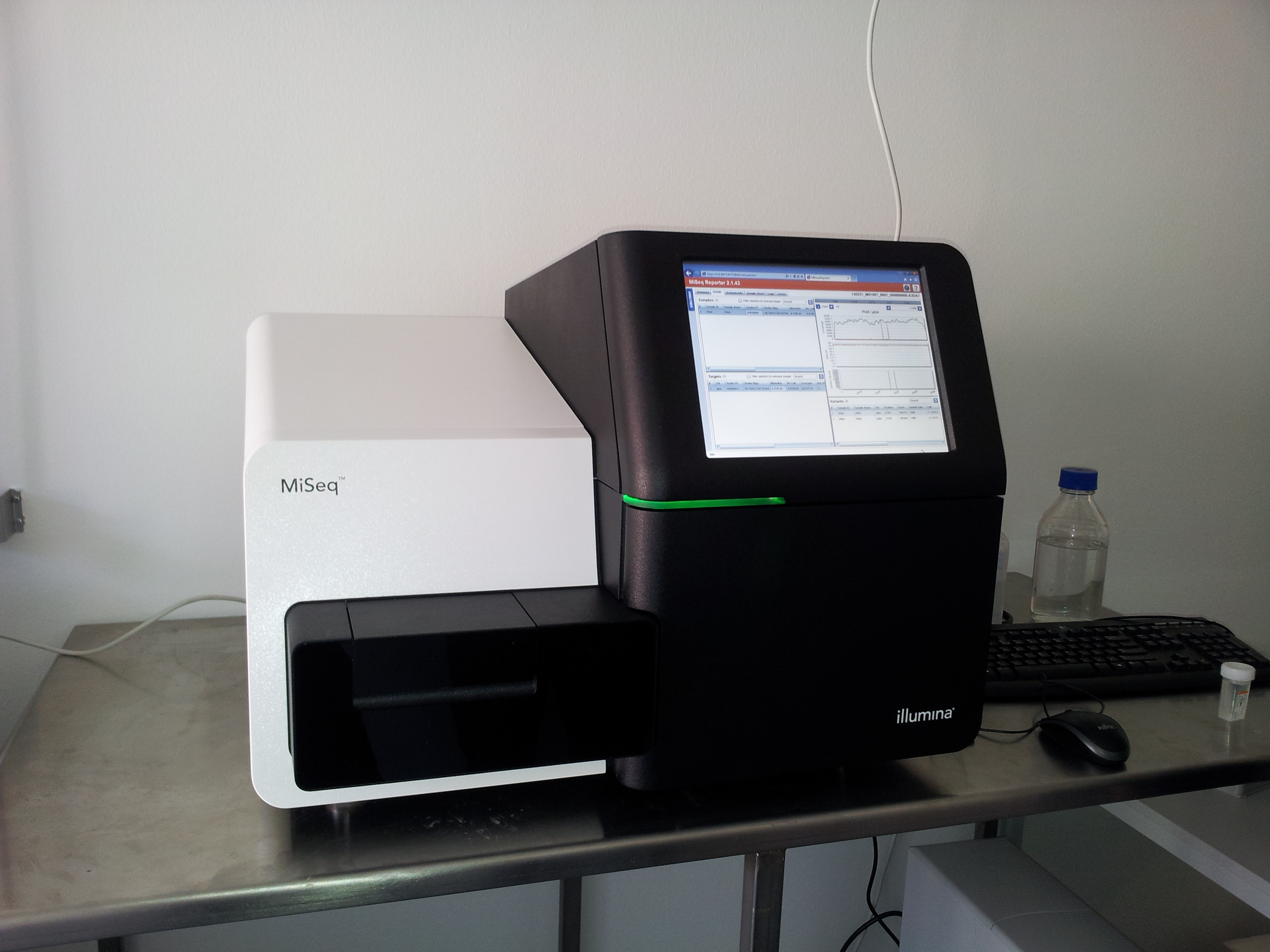
For most of the history of molecular biology, sequencing even small stretches of DNA was laborious, expensive, and slow. The Human Genome Project, which produced the first complete human genome sequence, required thirteen years and approximately $2.7 billion. Illumina's machines compressed that timeline and cost by orders of magnitude. The NovaSeq X Plus, the company's current flagship instrument, can sequence 20,000 human genomes per year — a throughput that makes population-scale genomic studies, which were once fantastically ambitious, now routine.
This capability has consequences that extend well beyond academic research. Clinical oncology now uses tumor genome sequencing to identify which mutations are driving a patient's cancer and which drugs are most likely to work against that specific tumor. Newborn screening programs are beginning to incorporate genome sequencing to catch rare genetic diseases before symptoms appear. Public health agencies used Illumina sequencers to track the evolution of SARS-CoV-2 variants in real time during the COVID-19 pandemic. The infrastructure Illumina built has become inseparable from modern biology.
At the Center of Something Large
Success at Illumina's scale creates its own complications. The company's dominance in genome sequencing has attracted regulatory scrutiny in multiple jurisdictions. The completed acquisition of Grail, a company developing early cancer detection tests through genome sequencing, drew a €432 million fine from European Union regulators who concluded that Illumina had completed the acquisition before receiving regulatory clearance — a violation of merger control rules. Illumina ultimately prevailed in European court, overturning the fine, and divested Grail as an independent public company in June 2024. China placed Illumina on its 'Unreliable Entities List' in February 2025 amid broader tensions over technology and trade.
These frictions are the predictable consequence of operating at the center of a technology that governments, healthcare systems, agricultural companies, and intelligence agencies all recognize as strategically important. DNA sequencing is not merely a scientific tool; it is infrastructure for understanding biological systems, tracking disease, verifying identity, and managing agricultural supply chains. The company that produces the machines on which ninety percent of that work happens sits at a remarkable intersection of science, commerce, and geopolitics. It does all of this from a San Diego campus that, to the uninitiated visitor, looks much like any other corporate research park — except that inside its buildings, machines are reading the code of life at a pace that would have seemed impossible twenty-five years ago.
From the Air
Illumina is headquartered at 32.89°N, 117.17°W in the Sorrento Valley area of San Diego, several miles east of the Torrey Pines Mesa research cluster and near the I-805/I-5 interchange. The corporate campus is within the dense commercial development of the Sorrento Valley biotech corridor. Nearest airports: KMYF (Montgomery-Gibbs Executive, 6 miles northeast) and KSAN (San Diego International, 11 miles south). Sorrento Valley is visible from altitude as a dense cluster of office and research buildings in the canyon south of Miramar.