Iloilo Museum of Contemporary Art
Edwin Valencia started collecting art in the 1980s while working as an investment banker in New York. He was Ilonggo - from Iloilo - and he bought what moved him: Filipino artists, international masters, pieces that spoke across borders. The collection grew. It outgrew shelves, then walls, then rooms. Valencia wanted a family museum, a place where his art could belong to his community and not just his household. But by the time he took stock of what he had accumulated - works by Salvador Dali, Marc Chagall, Joan Miro alongside Filipino National Artists like Arturo Luz and Ang Kiukok - he realized the project was too large for one family. In 2014, he met Kevin Tan of Megaworld Corporation, and the partnership that followed produced ILOMOCA: the Iloilo Museum of Contemporary Art, housed in the Casa de Emperador beside Iloilo Business Park. It opened as the first museum in the Visayas and Mindanao dedicated to modern and contemporary art.
A General on Horseback, A Dove on His Shoulder
Before you enter ILOMOCA, you meet General Martin Delgado. An 8.8-meter bronze statue by Spanish artist Gines Serran-Pagan stands at the museum's facade, depicting the revolutionary hero who became the first Filipino governor of Iloilo province. Delgado sits astride his horse, sword in his left hand, a dove perched above his shoulder - freedom's soldier with peace's symbol riding along. The sculpture establishes the museum's terms from the entrance: this is a place where Philippine history and international art share the same ground, where a revolutionary general guards a building full of surrealist paintings. The juxtaposition is deliberate. ILOMOCA does not separate local and global. It insists they are the same conversation.
Five Halls, Three Floors, One Argument
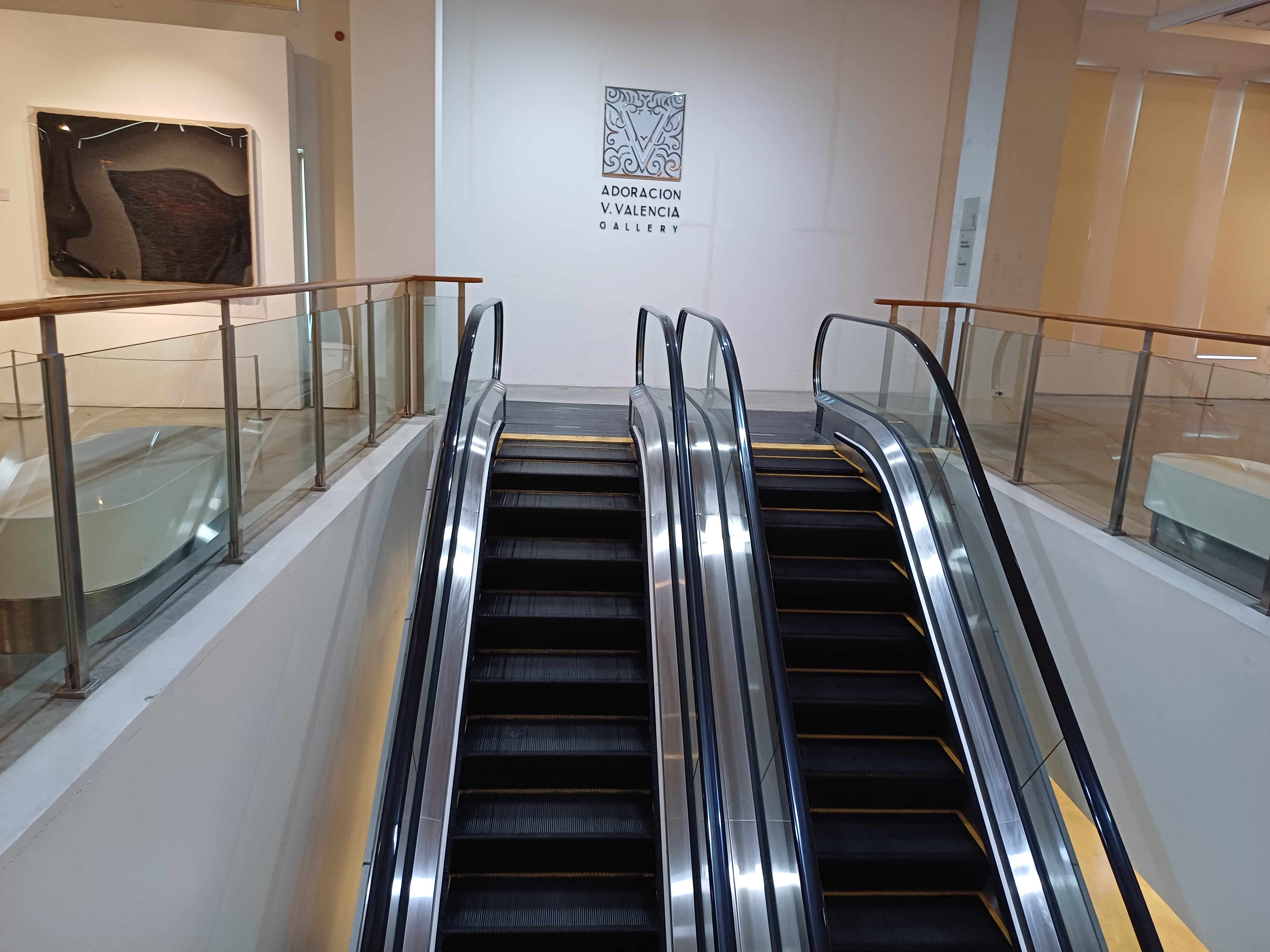
The museum spans 3,000 square meters across three floors and five exhibit halls, and its curatorial philosophy makes a provocative claim: there is no such thing as 'Ilonggo art.' The Gallery on the second floor states this explicitly, choosing instead to present 'art conceived and realized by the many Ilonggo artists from everywhere who continue to contribute to the flourishing Philippine art.' Rock Drilon, Charlie Co, Nelfa Querubin, and other emerging artists who have won national awards hang in Gallery 1. In Gallery 2 - titled 'A Presence Beyond the Native' - the Valencia family's collection of international masters occupies the walls: Dali's surrealism, Chagall's floating lovers, Miro's abstracted forms. Glass heads by Benedicto 'BenCab' Cabrera bridge the two worlds. The ground floor's Hulot Exhibit - named from the Hiligaynon word for room or space - rotates shows by local and international artists and doubles as a commercial gallery where emerging artists can sell their work.
The Box and the Stage
Art museums can feel silent in ways that exclude as much as they preserve. ILOMOCA built its answer into the architecture. The Box, a sixty-seat theater on the second level equipped with state-of-the-art audio technology, hosts performance art, theater productions, workshops, and cultural events that refuse to let the museum become static. The decision to include a live performance venue inside a visual art museum reflects something about Iloilo's cultural character - a city where the Dinagyang Festival fills streets with dancers and drums every January, where theater and music are not separate from visual culture but continuous with it. The Box makes that continuity physical. On any given week, the same building might hold a painting by a twentieth-century Spanish surrealist and a performance by a twenty-first-century Ilonggo theater collective.
From Wall Street to the Visayas
Valencia's journey from New York investment banking to Philippine museum patronage is itself a story about what art collecting can become when it reconnects with place. Many Filipino collectors keep their holdings in Manila, where the galleries and auction houses concentrate. Valencia brought his collection home - not to the national capital but to his home province, to a city that already called itself a museum capital but had no dedicated space for contemporary art. Megaworld's partnership made the scale possible, but the vision was personal: an Ilonggo who left, collected the world, and returned it to Iloilo. The museum sits in Iloilo Business Park in Mandurriao, the city's modern economic center, built on the site of the old airport. Commerce and culture share the footprint, as they have in Iloilo for centuries - from the sugar warehouses of Muelle Loney to the glass-and-steel of ILOMOCA.
From the Air
Located at 10.718°N, 122.548°E in Mandurriao district, within the Iloilo Business Park development on the site of the former Iloilo Airport. The Casa de Emperador building is identifiable within the modern commercial complex. Iloilo International Airport (RPVI / ILO) is approximately 19 km northwest. Best viewed at 1,500-3,000 ft AGL. The museum sits near the Festive Walk complex and the SM Strata twin towers, making the Business Park area visible as a cluster of modern development.