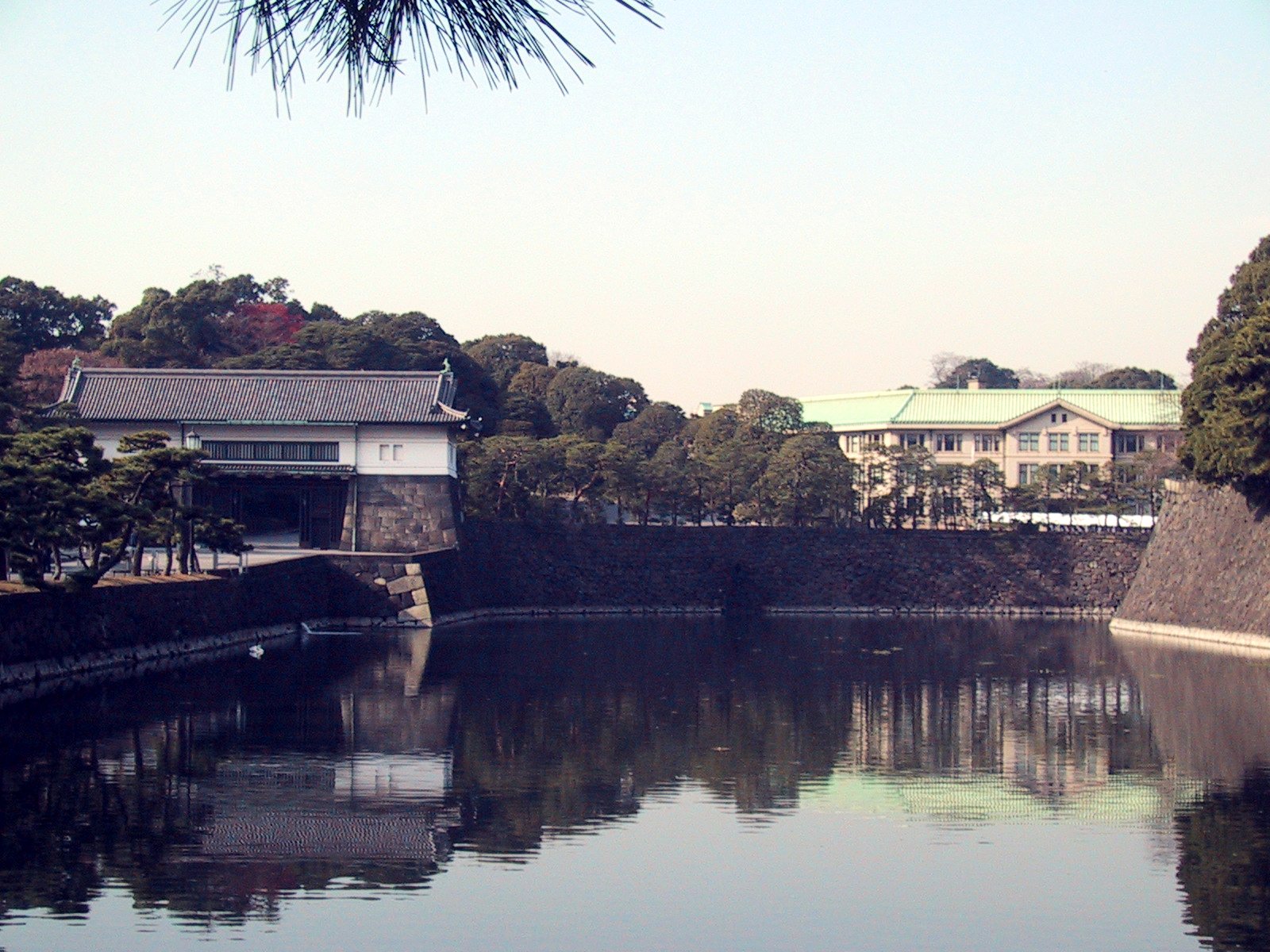
The Imperial Household Agency: Keepers of Japan's Oldest Dynasty
Somewhere inside the walled grounds of Tokyo's Imperial Palace, a government agency operates that answers to no prime minister. The Imperial Household Agency -- the Kunaicho -- manages every aspect of life for Japan's imperial family, from state ceremonies and mausoleum care to the safekeeping of the Privy Seal and the State Seal of Japan. It is a bureaucracy with roots stretching back to the eighth century, when the ritsuryou legal code first established a predecessor office to attend the emperor. Twelve centuries later, the agency still fulfills essentially the same role, making it one of the most enduring administrative institutions on Earth.
A Bureaucracy Older Than Most Nations
The origins of the Imperial Household Agency trace to the ritsuryou system of ancient Japan, which created an office responsible for the emperor's domestic affairs. That basic structure survived the centuries largely intact until the Meiji Restoration of 1868, when the institution was reorganized as the Ministry of the Imperial Household. The ministry wielded enormous power during the Meiji and Taisho eras: an 1908 Imperial Order confirmed that the Imperial Household Minister held responsibility for assisting the Emperor in all matters concerning the Imperial House. After World War II, the American occupation reshaped Japan's government, and in 1949 the ministry was renamed the Imperial Household Agency and placed under the newly created Cabinet Office. Yet even today, it retains a unique status among Japanese government agencies -- it does not report directly to the Prime Minister at the cabinet level.
Inside the Palace Walls
The agency is headed by the Grand Steward, whose appointment and dismissal require the Emperor's personal approval. Beneath the Grand Steward sits an intricate hierarchy: the Grand Steward's Secretariat, the Board of Chamberlains, the Crown Prince's Household, the Board of Ceremonies (whose lineage dates to 1872, when ceremonial functions were first transferred to the imperial office), the Archives and Mausolea Department, the Maintenance and Works Department, and a Kyoto Office overseeing imperial properties in the former capital. The Grand Stewardship is customarily filled by former permanent secretaries from internal-affairs ministries, senior bureaucrats who have first served as Vice-Grand Steward. The Grand Steward wields comprehensive control over the agency's administrative activities and can interact directly with the Prime Minister on matters within the agency's jurisdiction.
The Forbidden Tombs
The agency's most controversial responsibility involves more than 740 tombs from the Kofun Period, roughly the third through sixth centuries. Located primarily in the Kansai region of western Japan, these massive burial mounds are designated as imperial mausolea, and the agency has consistently prevented archaeologists from investigating them. Academics argue the tombs could hold crucial evidence about the origins of Japanese civilization, potentially illuminating formative ties between ancient Japan and contemporary civilizations on the Korean Peninsula and in China. Critics suggest the agency blocks research precisely because findings might reveal how deeply those continental civilizations influenced the founding of the Imperial Household itself. Many scholars contend that a significant number of the tombs are imperial in name only, making the research prohibition all the more frustrating.
The Weight of Tradition in Modern Times
The agency's rigid protocols have generated friction with modern expectations. Empress Masako's struggles became a public flashpoint when the agency officially stated she suffered from an adjustment disorder, while press speculation centered on clinical depression attributed to the pressures imposed by agency officials. The episode exposed the tension between the agency's culture of discretion and Japan's increasingly open public discourse. Within the Chiyoda ward of central Tokyo, the agency continues to operate from the Imperial Palace grounds, managing ceremonies, maintaining mausolea across Japan, and guarding the symbols of an unbroken imperial lineage. From the air, the palace grounds form a striking green void at the heart of one of the world's densest cities -- a walled island of trees and moats surrounded by skyscrapers, concealing an institution that has outlasted shoguns, world wars, and occupations.
From the Air
Located at 35.684N, 139.754E within the Imperial Palace grounds in Chiyoda, central Tokyo. From altitude, the palace grounds are unmistakable -- a large expanse of green space and traditional moats surrounded by the dense urban grid of central Tokyo. Best viewed at 3,000-5,000 feet AGL. Tokyo Haneda International Airport (RJTT) is approximately 8 nautical miles south. Tokyo Narita International Airport (RJAA) is approximately 35 nautical miles east-northeast. The distinctive contrast between the forested palace grounds and the surrounding cityscape is visible from high altitude in clear conditions.