Inauguration of Willem-Alexander
At 10:07 in the morning on 30 April 2013, in a room called the Mozeszaal inside the Royal Palace of Amsterdam, the Dutch throne sat empty for a few seconds. Queen Beatrix had just signed the Instrument of Abdication and laid down her pen. Her son Willem-Alexander signed moments later. In that small gap between two signatures, the Netherlands had no monarch. When it ended, the country had its first king since the death of William III in 1890 - a 123-year stretch in which three queens had reigned in succession, the longest unbroken female line in any modern European monarchy.
A Daughter Hands It On
Beatrix had announced her intention on television three months earlier, on 28 January, in a calm and deliberate address that surprised almost no one. She had reigned for 33 years, taking the throne in 1980 when her own mother Juliana abdicated. Juliana, in turn, had received the crown from Queen Wilhelmina in 1948. Three generations of Dutch queens had treated the throne not as a possession to die holding, but as a duty to pass on while still strong enough to do it gracefully. Beatrix had quietly informed Prime Minister Mark Rutte first, then her family, then the country. The whole transition was choreographed for one day in April, and it was 30 April for a reason: Queen's Day, the public holiday already built around her mother's birthday, the day Amsterdam was already wearing orange and ready to celebrate.
The Walk to the Nieuwe Kerk
The Royal Palace and the Nieuwe Kerk sit a few dozen meters apart on Dam Square - close enough that the procession from one to the other was less a parade than a short, stately crossing. Ahead of the new king walked the delegation carrying the Charter of the Kingdom and the Constitution, then the Sword of State borne by the Chief of Defence, then the gonfalon with the 1815 coat of arms. The choice of bearers said something about what kind of king Willem-Alexander wanted to be: alongside generals walked the astronaut Andre Kuipers and the Olympic equestrian Anky van Grunsven. Soldiers and scientists and athletes, side by side, carrying the symbols of the Kingdom across one of the busiest squares in Europe.
Inside the Nieuwe Kerk
The Nieuwe Kerk has not been a working Protestant parish for a long time. It is now a venue - for exhibitions, for organ recitals, and, every generation or two, for the inauguration of a monarch. There is no coronation in the Dutch tradition. No crown is placed on the new king's head; the crown lies on a credence table beside the orb, the scepter, and the Constitution itself, and they stay there. Willem-Alexander wore evening dress rather than a military uniform under the royal mantle - a small but pointed signal. He took the oath, swearing to uphold the Charter and the Constitution, and then the members of the States General rose and swore in turn to hold him to that oath. The throne itself was a pair of gilded chairs from Het Loo Palace. The original plan had been to use the same chairs Beatrix had sat in for her own inauguration in 1980, but those turned out to be too low to sit in comfortably for an entire ceremony - a small domestic problem solved with practical Dutch grace.
Balcony, Anthem, Children
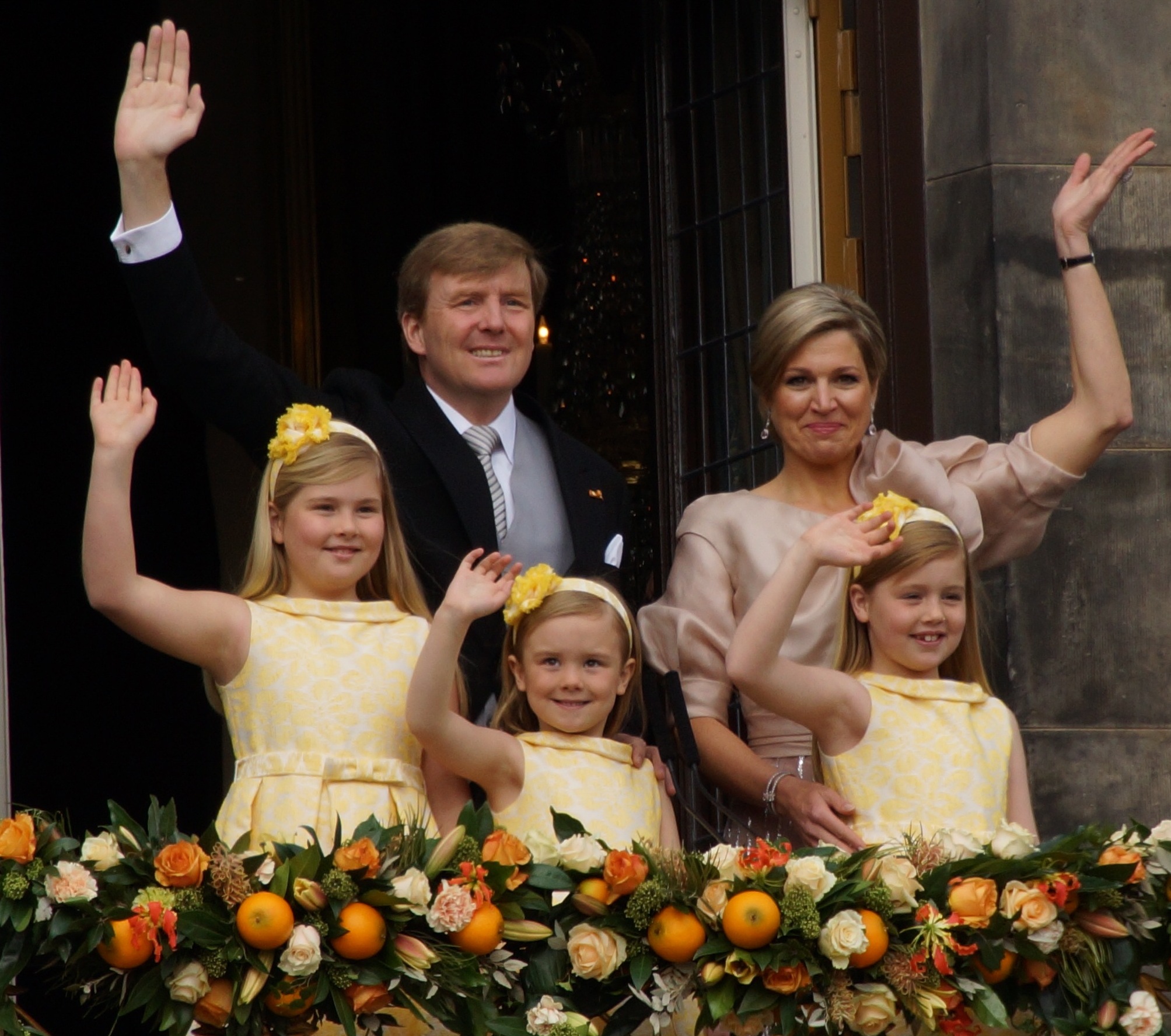
Back at the Royal Palace, the new king, his Argentine-born wife Maxima, and his mother appeared on the balcony overlooking Dam Square. Beatrix spoke first, announcing her son's accession to the crowd packed below. Willem-Alexander then thanked her for her 33 years of service. The Wilhelmus played. Beatrix stepped back inside, and her place on the balcony was taken by the new king's three young daughters - Amalia, Alexia, and Ariane - making, in one carefully staged moment, the line of succession visible to the country and the world. Later that night, in Amsterdam's harbor on Java-eiland, the DJ Armin van Buuren played a celebration concert with the Royal Concertgebouw Orchestra. The royal family showed up unannounced and joined him on stage.
What the Day Meant
Dutch monarchs are inaugurated, not crowned, and they swear themselves to the Constitution rather than to God. The whole ceremony is built around restraint - no anointing, no kneeling subjects, no centuries-old hereditary peers. Willem-Alexander's day kept that tradition intact. Crown princes and presidents from across Europe and beyond sat in the church pews - Felipe of Spain, Frederik of Denmark, Naruhito of Japan, Charles of Wales, Albert of Monaco - alongside the European Council president, the UN's Helen Clark, and former secretary-general Kofi Annan. But the ceremony itself remained quietly Dutch: an oath, a signature, a balcony, a national anthem, and a queen who chose to walk away.
From the Air
The Royal Palace and Nieuwe Kerk sit together on Dam Square in central Amsterdam at 52.3739 N, 4.8918 E. Both are visible from low overflight just south of the IJ waterfront. Nearest airport: Amsterdam Schiphol (EHAM), 9 nautical miles southwest. Lelystad (EHLE) lies 25 nm east. Schiphol airspace is Class A above 1,500 ft and strictly controlled - Amsterdam city center sits directly under several arrival routes.