Inca Road System
Five hundred years after the last chasqui sprinted between relay stations, communities living within twenty kilometers of the old Inca roads still show higher wages, better nutrition, and stronger school attendance than those farther away. A 2021 study confirmed what the landscape has been whispering for centuries: the Qhapaq Nan -- the Inca royal road system -- was not merely a network of trails. It was infrastructure so well conceived that its benefits outlasted the empire that built it, the conquest that dismantled it, and the republics that paved over it.
The Spine of an Empire
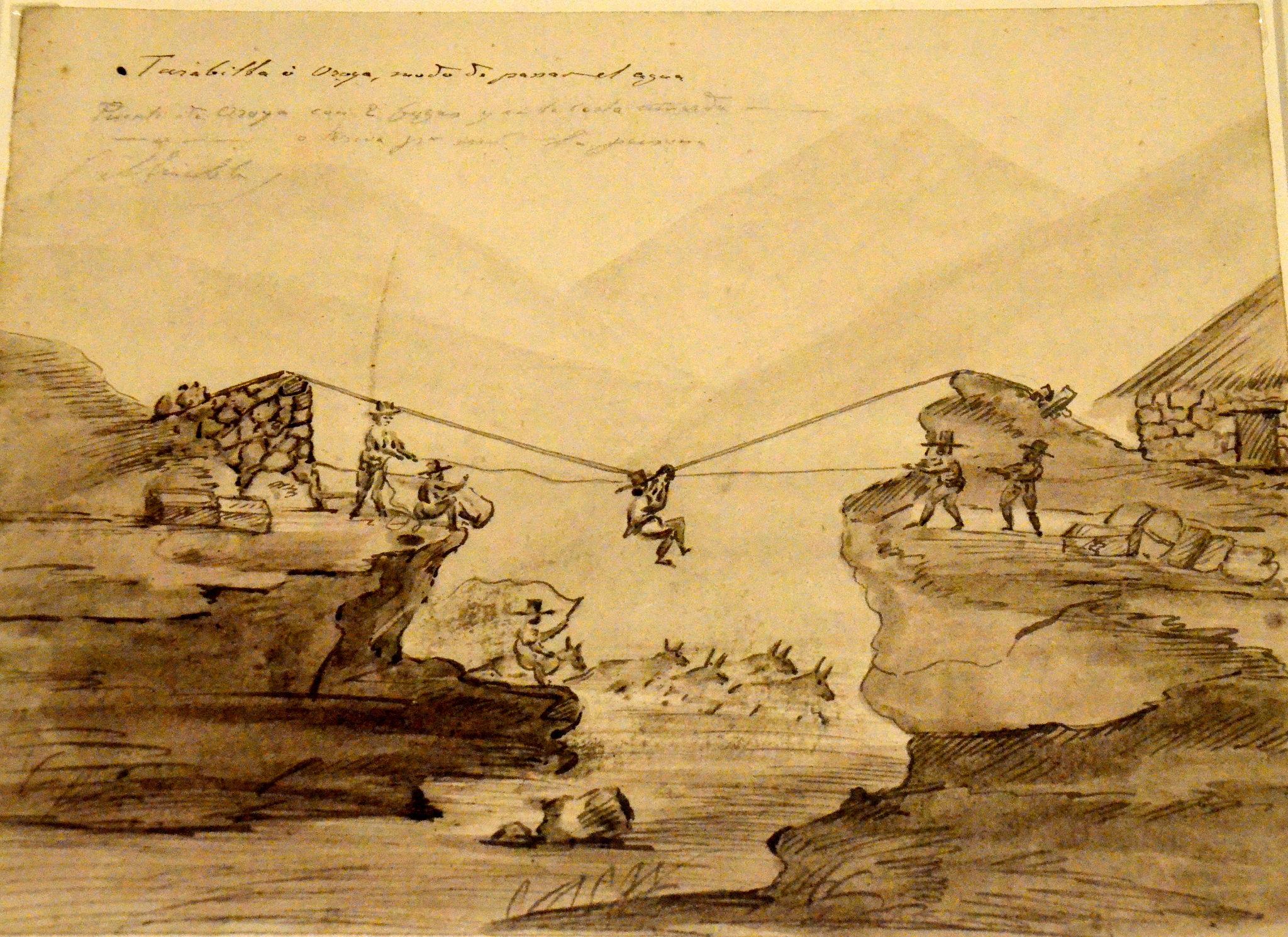
The Inca road system stretched approximately 40,000 kilometers across six modern nations, from the Pasto region of Colombia to the Maipo River near present-day Santiago, Chile. Two great trunk roads formed its spine: one ran along the Pacific coast, and a second -- the more important of the pair -- climbed inland through the high Andes. More than twenty transversal routes crossed the western mountains to link these arteries, while additional branches penetrated the eastern cordillera toward the Amazon basin. The main highland route, passing through Quito, Cusco, and onward to the Mendoza River in Argentina, measured 5,658 kilometers on its own. Some sections reached altitudes above 5,000 meters. The roads were carefully engineered: paved where necessary, fitted with stairways where the terrain demanded elevation gain, reinforced with retaining walls, and drained to prevent water damage. This was not a footpath network. It was state infrastructure.
Runners, Llamas, and the Vertical Archipelago
The Inca never used the wheel for transportation. Instead, the roads served two elegant systems of movement. Chasquis -- relay runners -- carried quipus (knotted string records) and lightweight valuables between stations spaced at short intervals along the route. At a full sprint, messages could cross the empire in days. For heavier cargo, herds of llamas moved goods in organized caravans. A llama of the Q'ara variety could carry about thirty kilograms for twenty kilometers per day, foraging on natural vegetation as it went. Its soft, padded hoofs left the road surface undamaged. The economic logic was centralized: the Inca state controlled all redistribution of goods through a system called the vertical archipelago, moving products between ecological zones -- coastal fish to highland cities, highland potatoes to lowland populations. Tambos, spaced at one-day walking intervals, provided food and shelter to travelers, soldiers, and llama drivers. Qullqas -- state warehouses -- stored surplus goods for redistribution. The administrative center at Huanuco Pampa alone contained 497 storage buildings with a combined capacity of 37,100 cubic meters.
Roads to the Gods
Not every road served commerce or war. Some climbed straight toward the sky. Mountains held sacred status in Inca cosmology -- they were apus, deities whose spiritual power shaped nature and human fate. The Inca formalized this belief by constructing shrines on high peaks and building ritual roads to reach them. One such road ascended Mount Chani to a summit shrine at 5,949 meters. These were not trails worn by pilgrims; they were engineered approaches to the boundary between earth and the sacred. Closer to the capital, the Zeq'e system organized hundreds of wak'as -- holy sites that could be natural features, modified landscapes, or purpose-built structures -- along radiating lines from Cusco. The roads connected these sacred points into a spiritual geography that overlay the administrative one. Walking the Inca roads meant moving simultaneously through political territory and religious meaning.
Conquest, Collapse, and the Twenty-Five Percent
The Spanish Conquistadors used the Inca roads to march on Cusco, but their horses and ox carts were poorly suited to infrastructure designed for human feet and llama hooves. Once the conquest was complete, the roads were largely abandoned. The colonial policy of reducciones -- forced resettlement of indigenous populations into new villages -- severed the relationship between communities and the routes that had connected them. Disease reduced the population from more than twelve million to roughly 1.1 million within fifty years, emptying the landscape the roads traversed. Independence from Spain in the nineteenth century brought no significant restoration. Modern road construction during the nineteenth and twentieth centuries superimposed new highways over pre-Hispanic alignments, erasing much of the original fabric. Today, only about twenty-five percent of the network remains visible. In 2014, UNESCO inscribed the Qhapaq Nan as a World Heritage Site, recognizing a selection of road segments across six countries. What survives -- stone-paved sections crossing high passes, retaining walls above river gorges, the faint outlines of tambos in the grass -- still testifies to an engineering ambition that rivals anything the pre-modern world produced.
From the Air
Located at 18.25S, 69.59W in the high Andes of northern Chile near the Bolivian border. The Inca road system passes through this region along the Qollasuyu route connecting Cusco to the southern empire. Best viewed at 10,000-15,000 ft AGL where road traces may be visible on the altiplano. Nearest airports: SCAR (Chacalluta International, Arica, Chile) and SLLP (El Alto International, La Paz, Bolivia). The terrain is high-altitude desert and altiplano, with volcanoes and sparse vegetation.