Indian Key Historic State Park
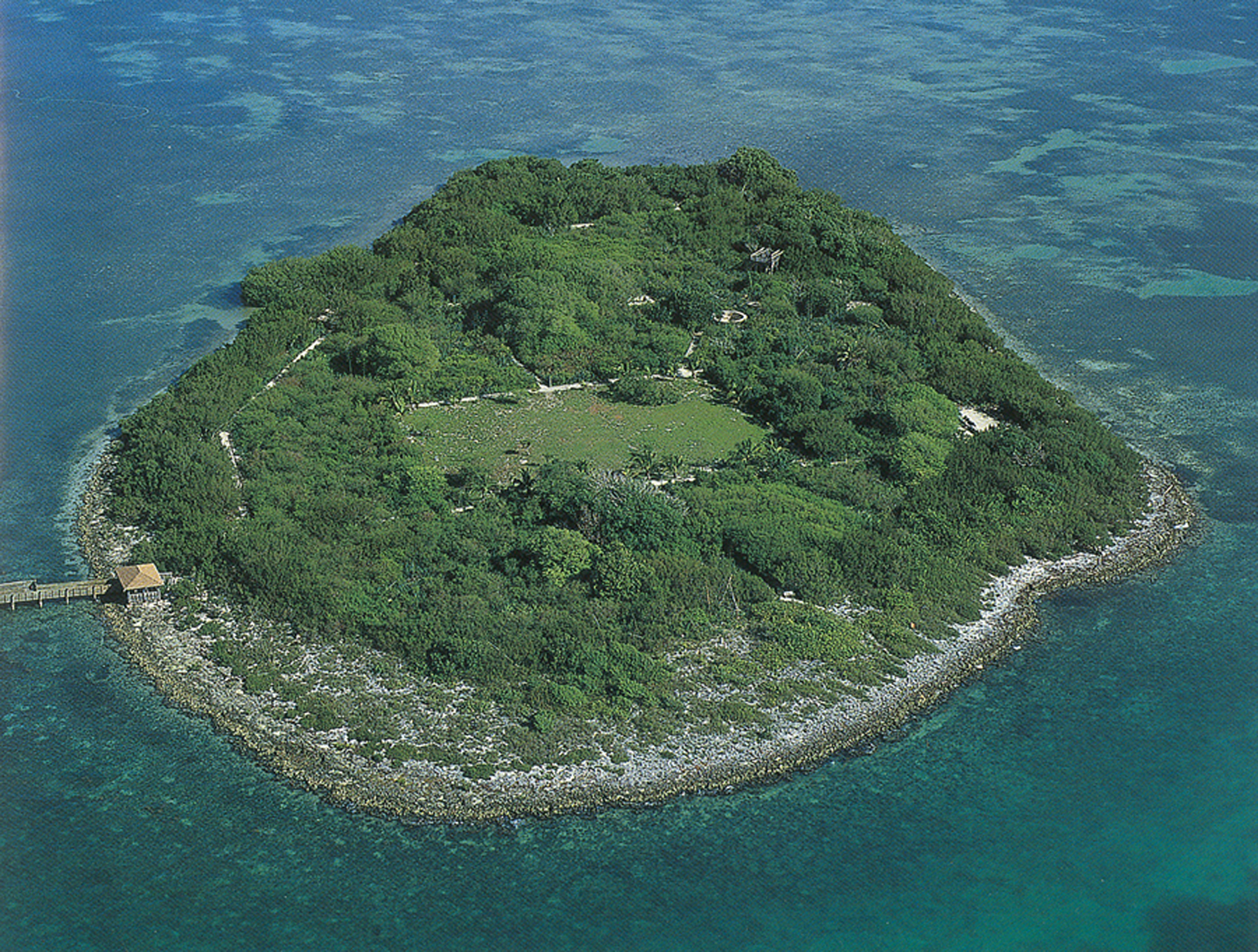
From the air, Indian Key looks like little more than a green smudge in the turquoise water southeast of U.S. Route 1, a few hundred yards off Lower Matecumbe Key. It measures barely eleven acres. Yet this scrap of coral rock once held a hotel, a warehouse, wharves, a post office, and enough political clout to serve as the county seat of Dade County. It was the headquarters of a wrecking empire, the garden of a visionary botanist, and the site of one of the most violent episodes of the Second Seminole War. Today it is an uninhabited ghost town where stone foundations trace the outlines of buildings that have not stood for nearly two centuries.
The Wrecker King's Island
In 1831, a brash young entrepreneur named Jacob Housman purchased Indian Key and set about building a rival to Key West's lucrative wrecking monopoly. Wrecking, the legal salvage of cargo from ships that ran aground on the treacherous reef system of the Florida Keys, was the most profitable industry in territorial Florida. Key West controlled the federal wrecking court, and Housman wanted his own base of operations. He built a store, hotel, warehouses, dwellings, cisterns, and wharves on the tiny island, transforming it into a self-contained settlement. By 1836, Housman had persuaded the Territorial Legislative Council to carve a new county out of Monroe County, with Indian Key as the seat of the newly created Dade County. For a brief, improbable moment, this speck of coral was one of the most important places in South Florida.
A Botanist's Tropical Dream
Among the residents drawn to Indian Key was Dr. Henry Perrine, a physician, horticulturist, and former United States Consul in Campeche, Mexico. In 1838, Congress granted Perrine a township of land at the southern tip of Florida for experiments in introducing tropical plants to American soil. Perrine moved his family to Indian Key in December 1838 to await the end of the Seminole hostilities before claiming his grant on the mainland. While he waited, he established a nursery on nearby Lower Matecumbe Key, cultivating agave, sisal, and other species he had collected during his years in Mexico. Perrine believed that South Florida's climate could support an agricultural revolution, and Indian Key was his staging ground for that vision.
The Dawn Raid
Just before dawn on August 7, 1840, a war party of Seminole warriors under the leadership of Chakaika landed their canoes on Indian Key. The attackers, believed to have numbered between 60 and 130, came for the well-stocked store and warehouses. They looted and burned nearly every structure on the island. Dr. Perrine hid his wife and children beneath the floor of their house and attempted to reason with the attackers through a trapdoor. Some of the warriors spoke Spanish, and for a time the conversation held. But they returned, burst through the trapdoor, and shot him. His family escaped through the water to a nearby boat. Six people died in the attack. Jacob Housman and his wife Elizabeth survived by hiding in a turtle pen partly submerged at the island's edge. Chakaika's warriors departed with as many as 28 canoes and six of Housman's boats filled with plunder.
What the Stones Remember
The attack ended Indian Key as a functioning settlement. Housman moved to Key West and died the following year, crushed between two ships during a salvage operation. Dade County's seat moved to Miami in 1844, and the upper Keys were returned to Monroe County. The island's buildings were never rebuilt. Over the decades, tropical vegetation consumed the ruins, and Indian Key became one of Florida's most atmospheric ghost towns. Archaeological projects have uncovered building foundations, cisterns, and artifacts that map the layout of Housman's settlement. The island was listed on the National Register of Historic Places in 1972 and became a state park accessible only by boat or kayak. Visitors who walk the interpretive trail find coral stone walls rising a few courses above the undergrowth, the remnants of a place that burned bright and brief on the edge of the American frontier.
From the Air
Indian Key sits at 24.89N, 80.69W, just southeast of U.S. Route 1 (the Overseas Highway) in the Upper Florida Keys, between Lower and Upper Matecumbe Keys. The island is tiny, about 11 acres, and appears as a densely vegetated green patch surrounded by shallow turquoise water. Best viewed at 1,000-3,000 feet AGL. Nearby airports include Marathon (KMTH) to the southwest and Islamorada has no airport; the nearest larger field is Key West International (KEYW). Look for the island just off the Hawk Channel passage on the Atlantic side of the Keys chain.