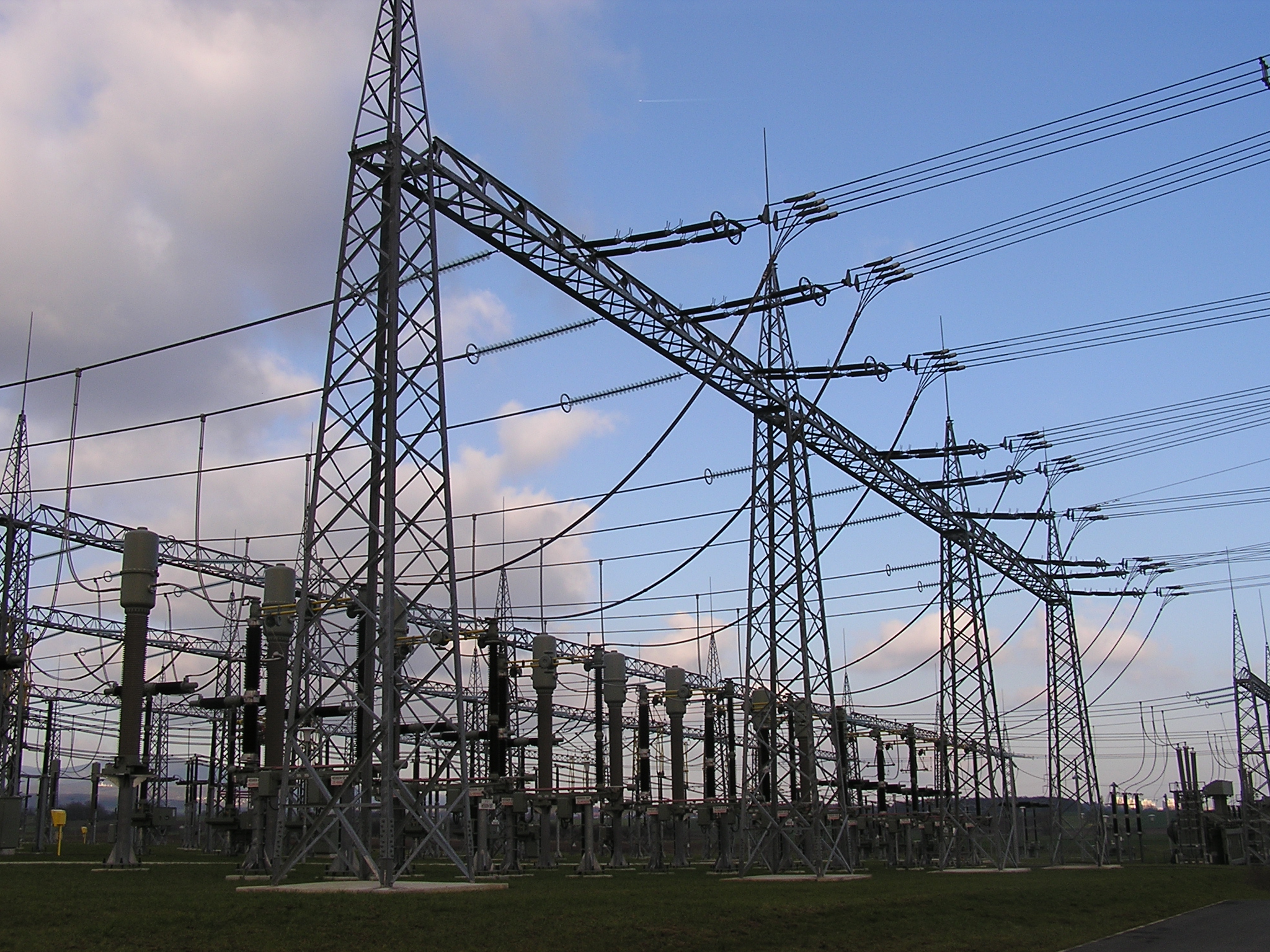
Indian Point Energy Center
On April 30, 2021, the last reactor at Indian Point Energy Center went quiet after 753 consecutive days of operation -- a world record for a commercial light-water reactor. The silence was deliberate. After decades of political battles, environmental lawsuits, and corruption scandals, New York had finally closed the nuclear plant that sat just 41 miles north of Manhattan on the banks of the Hudson River. What replaced its 2,000 megawatts of carbon-free electricity was not solar panels or wind turbines. It was three new natural gas plants. New York City's greenhouse gas emissions from electricity nearly doubled.
Where an Amusement Park Once Stood
Before the containment domes and cooling systems, this bend in the Hudson River held the Indian Point Amusement Park. Consolidated Edison acquired the land on October 14, 1954, and began constructing what would become one of America's most controversial nuclear facilities. Unit 1, a 275-megawatt Babcock & Wilcox reactor, received its operating license in 1962 and pioneered the use of thorium-based fuel -- an experiment that underperformed expectations and was abandoned by 1965 in favor of conventional uranium dioxide. Unit 1 shut down permanently in 1974 when its emergency cooling system failed to meet updated safety regulations. Units 2 and 3, completed in 1974 and 1976, were far more powerful: four-loop Westinghouse pressurized water reactors generating over 1,000 megawatts each, protected by containment domes of steel-reinforced concrete with carbon steel liners. Together they became the backbone of downstate New York's electrical grid.
The Plant That Powered the Subway
The numbers were staggering. Indian Point generated roughly 25% of the electricity consumed by New York City and Westchester County. The New York Power Authority, which supplied the subway system, airports, public schools, and housing, had built Unit 3. Over the last decade of operation, the station maintained a capacity factor exceeding 93% -- consistently above the national nuclear industry average. In 2014 alone, Entergy (which purchased the units from Con Edison and the Power Authority) paid $30 million in state and local property taxes. A Nuclear Energy Institute report estimated the plant's total economic impact at $1.6 billion statewide annually. Former mayors Michael Bloomberg and Rudolph Giuliani both advocated for keeping the plant open. Bloomberg called Indian Point 'critical to the city's economic viability.' The New York Independent System Operator warned that without it, grid voltages would degrade, limiting the ability to transfer power from upstate resources to the city.
Faults and Fears
Indian Point sat in a geologically uncomfortable spot. In 2008, researchers from Columbia University's Lamont-Doherty Earth Observatory discovered a previously unknown seismic zone running from Stamford, Connecticut, to Peekskill, New York -- intersecting the Ramapo Fault less than a mile north of the plant. The Ramapo is the longest fault in the northeastern United States, roughly 200 million years old and the suspected source of many regional earthquakes. NRC studies initially estimated the annual earthquake risk for core damage at 1 in 10,000 for Unit 3 -- the highest of any reactor in the country. The plant's list of incidents was long: a containment dome liner buckled in 1973, Hudson River water flooded a containment building in 1980, tritium and strontium-90 leaked into the river from cracked spent fuel pools in 2005, and transformers caught fire or exploded in 2007, 2010, and 2015. On September 11, 2001, American Airlines Flight 11 flew near Indian Point on its way to the World Trade Center. Hijacker Mohamed Atta had considered targeting nuclear facilities.
The Politics of Shutdown
Governor Andrew Cuomo made closing Indian Point a personal crusade. Anti-nuclear groups like Riverkeeper and the documentary 'Indian Point: Imagining the Unimaginable' -- directed by Rory Kennedy and featuring Robert F. Kennedy Jr. -- amplified public fear. But the politics were murkier than they appeared. Two of Cuomo's former aides, under federal prosecution for influence-peddling, had lobbied on behalf of Competitive Power Ventures, a natural gas company, to kill Indian Point. US Attorney Preet Bharara wrote in the indictment that the importance of CPV's proposed gas plant 'depended at least in part on whether Indian Point was going to be shut down.' Climate scientist James Hansen condemned the closure campaign as 'an orchestrated campaign to mislead the people of New York.' Entergy, facing low wholesale energy prices, political pressure, and unresolved licensing battles, agreed to shut down by 2021.
The Carbon Aftermath
What happened next vindicated the warnings. Three natural gas plants -- Bayonne Energy Center, CPV Valley Energy Center, and Cricket Valley Energy Center -- replaced 90% of Indian Point's 2,000 megawatts of capacity. But gas is not nuclear. New York City's electricity-related CO2 emissions jumped from approximately 500 to 900 tons per megawatt-hour between 2019 and 2022. Environmental Progress estimated the closure equivalent to adding 1.4 million cars to New York roads. About 1,000 workers lost their jobs. Holtec International purchased the plant from Entergy and began dismantling it, drawing community anger over plans to discharge decommissioning wastewater into the Hudson. The New York State legislature passed legislation to prevent the discharge. Today the containment domes still stand on the east bank of the river, monuments to a paradox of the energy transition: a carbon-free power source killed in the name of environmentalism, replaced by the very fossil fuels it was supposed to displace.
From the Air
Located at 41.27N, 73.95W in Buchanan, Westchester County, New York, on the east bank of the Hudson River. The plant's distinctive containment domes are a prominent landmark from the air, visible on a river bend approximately 35nm north of Manhattan. Best viewed at 2,000-4,000 feet AGL following the Hudson River corridor northbound. Nearest airports: Westchester County Airport (KHPN) approximately 12nm southeast; Spring Valley (N72) approximately 10nm west. Note: The site is within the New York Class B airspace outer ring. The Hudson River VFR corridor (the 'Skyline Route') passes to the south. Terrain rises to the east into Westchester hills. Clear weather provides excellent visibility of the domes against the river backdrop.